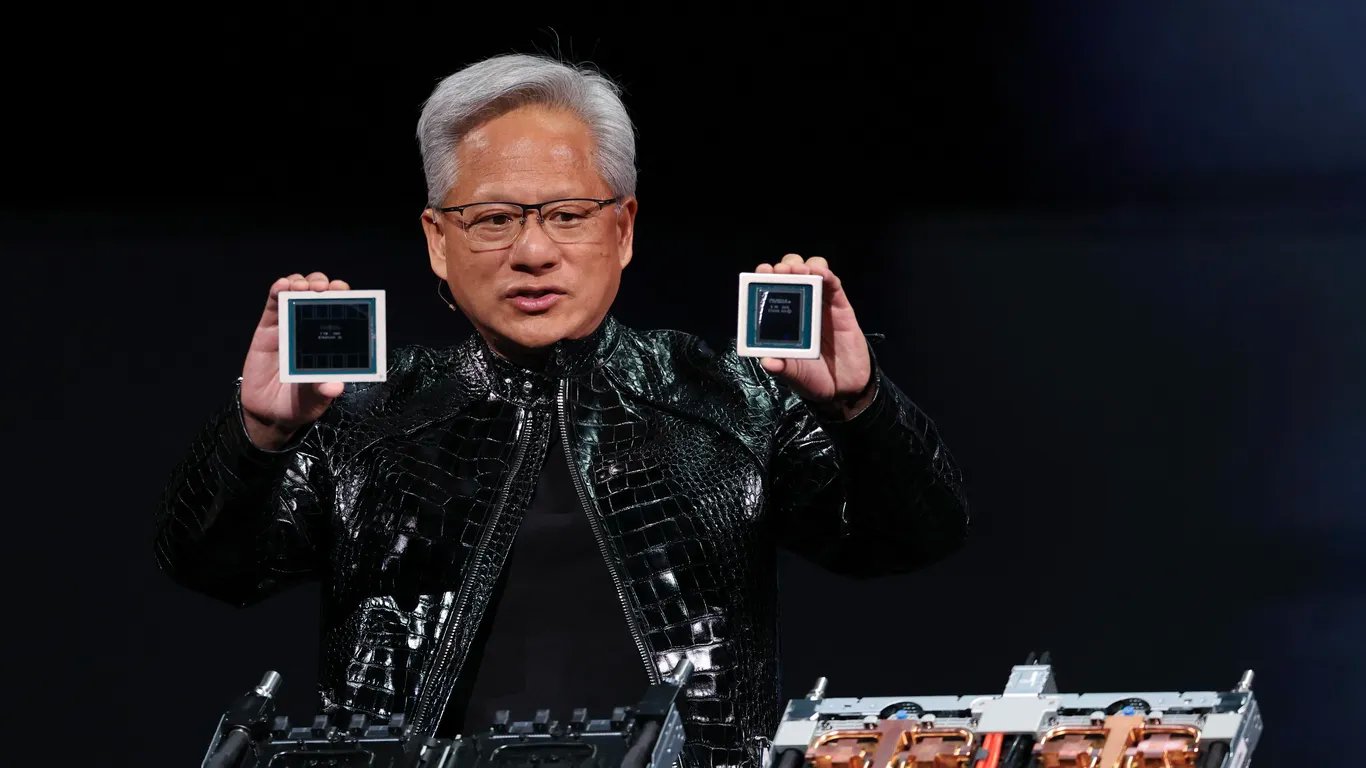
Nvidia has unveiled a new chip that promises to bring AI capabilities directly to laptops and desktop computers, a move that could significantly alter the technology landscape. CEO Jensen Huang announced the RTX Spark superchip at the company's annual Nvidia GTC event in Taipei, stating that it would "reinvent the PC." Developed in collaboration with Taiwan's MediaTek, the chip combines CPU and GPU capabilities and is expected to power new Windows laptop and desktop computer models from brands like Dell, HP, Lenovo, ASUS, Microsoft Surface, and MSI later this year.
In a separate development, the US Department of Commerce has taken steps to prevent the export of advanced AI chips like Nvidia's Rubin and Blackwell processors to Chinese entities located outside China, including subsidiaries of Chinese AI firms based in places such as Malaysia. The Commerce Department's new guidance suggests that advanced AI chips may have been exported to Chinese subsidiaries in Malaysia for nearly a year through a loophole the US had created.
As Nvidia makes strides in the AI chip market, Intel is gearing up to challenge the status quo with its own AI chip, "Crescent Island," which is designed to be more cost-effective by using cheaper memory and cooling technology than rival offerings from Nvidia and AMD. Kevork Kechichian, who leads Intel's data center group, stated that the new chip would start shipping in limited quantities by the end of this year, following an 18-month development process.
The introduction of these advanced AI chips is expected to drive agentic AI applications in every home, with the aim of having an "AI supercomputer" in each household. This development is particularly significant as demand grows for personal AI agents. For consumers, this means more choices and potentially more affordable access to AI technology in their personal computing devices. Market response has been mixed. HP reported last week that AI PCs helped prop up quarterly sales, but Dell said earlier this year that demand fell short of initial expectations. Qualcomm is also capitalizing on AI demand by offering AI PCs with Microsoft.
Nvidia's RTX Spark superchip is bringing advanced AI capabilities directly to consumer laptops and desktops. Meanwhile, Intel's Crescent Island GPU is entering the data center market, where it will compete with Nvidia and AMD.
Nvidia, the world's most valuable company, has unveiled a new chip that promises to bring AI capabilities directly to laptops and desktop computers, a move that could significantly alter the technology landscape. CEO Jensen Huang announced the RTX Spark superchip at the company's annual Nvidia GTC event in Taipei, stating that it would "reinvent the PC." Developed in collaboration with Taiwan’s MediaTek, the chip combines CPU and GPU capabilities and is expected to power new Windows laptop and desktop computer models from brands like Dell, HP, Lenovo, ASUS, Microsoft Surface, and MSI later this year.
In a separate development, the US Department of Commerce has taken steps to prevent the export of advanced AI chips like Nvidia’s Rubin and Blackwell processors to Chinese entities located outside China, including subsidiaries of Chinese AI firms based in places such as Malaysia. This move suggests that despite efforts to limit China's access to semiconductors, these chips may have been finding their way to Chinese subsidiaries for nearly a year.
As Nvidia makes strides in the AI chip market, Intel is gearing up to challenge the status quo with its own AI chip, "Crescent Island," which is designed to be more cost-effective by using cheaper memory and cooling technology than rival offerings from Nvidia and AMD. Kevork Kechichian, who leads Intel’s data center group, stated that the new chip would start shipping in limited quantities by the end of this year, following an 18-month development process.
The introduction of these advanced AI chips is expected to drive agentic AI applications in every home, with the aim of having an "AI supercomputer" in each household. This development is particularly significant as demand grows for personal AI agents. For consumers, this means more choices and potentially more affordable access to AI technology in their personal computing devices. The market response has been mixed so far, with companies like HP reporting that AI PCs helped prop up quarterly sales, while Dell noted that demand fell short of initial expectations. Qualcomm is also capitalizing on AI demand by offering AI PCs with Microsoft.
Nvidia's new chip and Intel's upcoming entry into the AI chip market signal a significant shift in personal computing, bringing advanced AI capabilities directly to consumers' devices. This development, along with the US's efforts to control the export of advanced chips to China, underscores the strategic importance of AI technology in the global tech race. As these chips become more prevalent, consumers can expect a new era of personal AI computing that could redefine their digital experiences.
Highlighted text was flagged by the council. Tap to see feedback.








































































































































































































































































































































































































For example, Intel's new Crescent Island chip is designed to speed up 'inference' tasks, which is when a user makes a request, rather than the training of models.