




New Legal Precedent for Immigration Enforcement
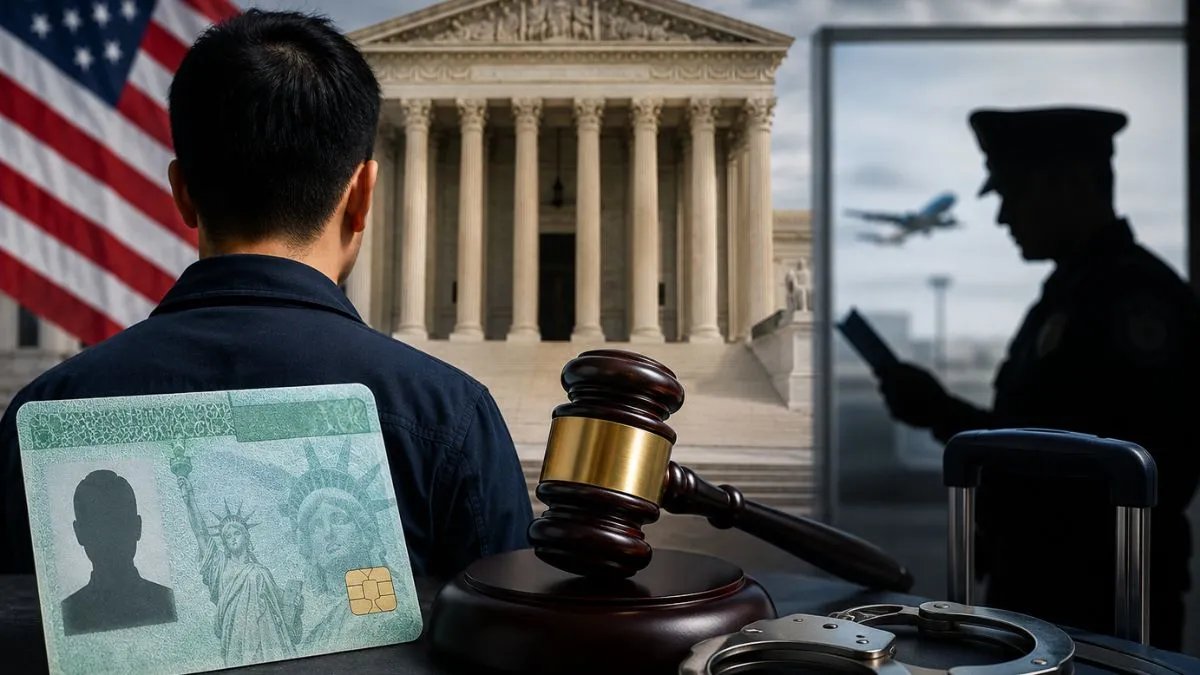
The U.S. Supreme Court's conservative majority on Tuesday issued a 6-3 decision in Blanche v. Lau that alters the evidentiary standard for border agents denying re-entry to green card holders returning from abroad. In the decision authored by Justice Clarence Thomas, the court determined that border agents do not need to prove beyond "clear and convincing evidence" that a green card holder has committed a crime before denying their re-entry to the U.S. Instead, officials only need to demonstrate reasonable belief of wrongdoing.
Implications for Green Card Holders
The decision arose from the case involving Muk Choi Lau, a Chinese citizen and green card holder who faced deportation after returning to New York from China in 2012. Lau was initially allowed conditional re-entry due to pending state charges for trademark counterfeiting, which he later pleaded guilty to. The ruling underscores that green card holders who legally leave the U.S. should generally be allowed to return, barring certain exceptions such as crimes involving "moral turpitude." This change raises concerns about the rights of millions of green card holders, as the court's ruling effectively empowers border officials to act with more discretion.
Dissenting Opinions Highlight Concerns
Justice Ketanji Brown Jackson, joined by Justices Sonia Sotomayor and Elena Kagan, argued that the government must prove a green card holder committed a crime before stripping their status, not after. Jackson expressed concern that the ruling grants the government a "massive blank check," enabling it to classify green card holders as "seeking admission" at the border without sufficient evidence of wrongdoing. She emphasized that this decision undermines established legal protections and may lead to arbitrary and unjust deportations.
Broader Context of Supreme Court Decisions
The Supreme Court issued this ruling the same day it decided Landor v. Louisiana Department of Corrections, a religious freedom case. Advocates for immigrants' rights fear that this decision will embolden federal agents and complicate the lives of lawful residents who might face unjust deportation based on mere allegations rather than proven offenses.
Reactions from Advocacy Groups
Immigrant advocacy groups have reacted strongly to the ruling. Many see it as a significant erosion of the rights of green card holders. Advocates argue that it sets a dangerous precedent that could lead to increased deportations without due process. Organizations like the American Civil Liberties Union have called the decision alarming, warning that it could result in the unjust removal of long-term residents who pose no threat to public safety.
What's Next for Immigration Law?
As the Supreme Court continues to deliberate on other high-profile immigration cases, including those concerning birthright citizenship, the implications of this ruling will likely resonate throughout ongoing discussions about immigration policy and enforcement. Legal experts suggest that the ruling may prompt a reevaluation of how immigration laws are applied and interpreted, particularly regarding the rights of lawful permanent residents. The evolving landscape of immigration law continues to affect millions of individuals and families in the United States, making it critical for those impacted to stay informed and engaged in the legal processes that govern their status.