




Market Impact
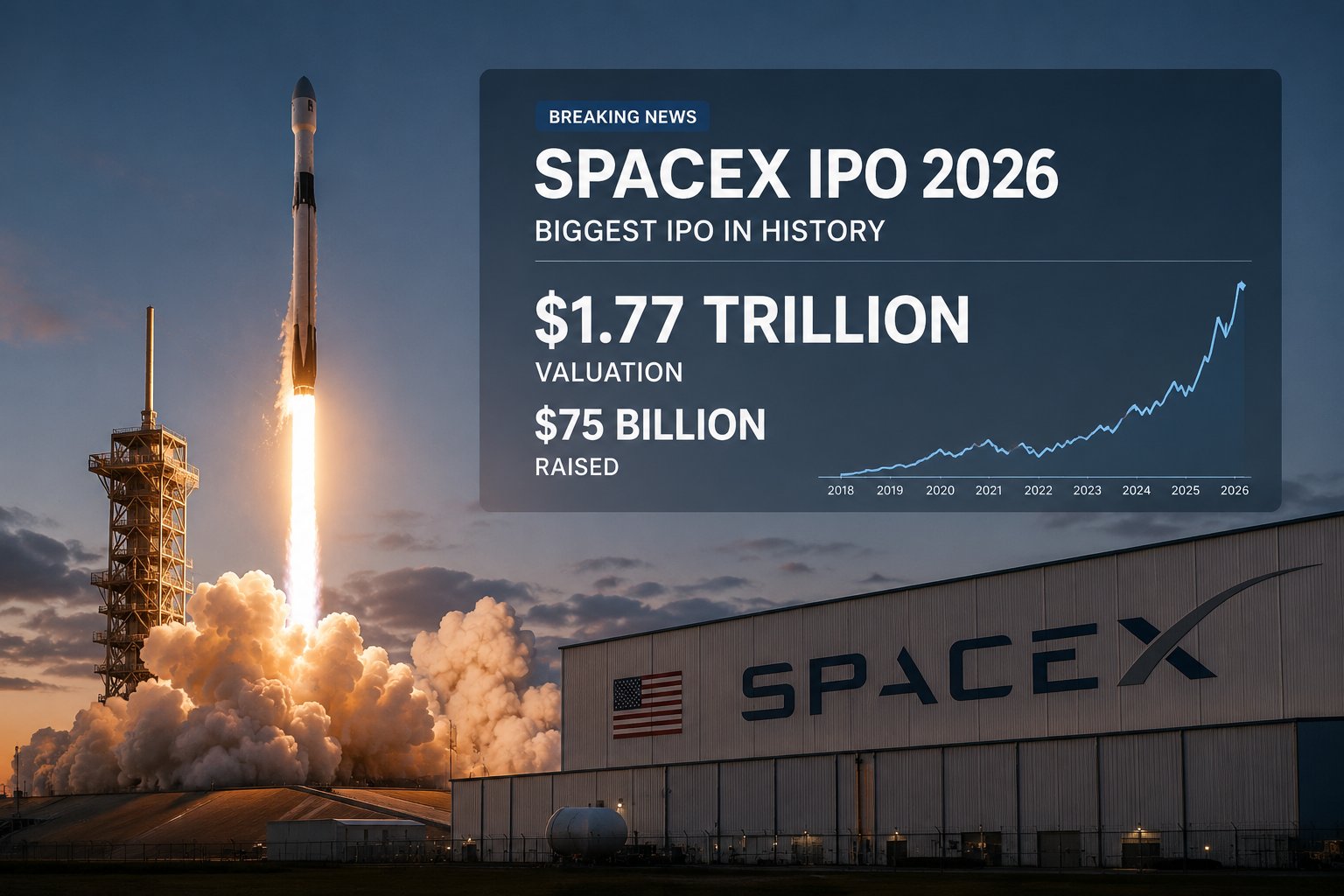
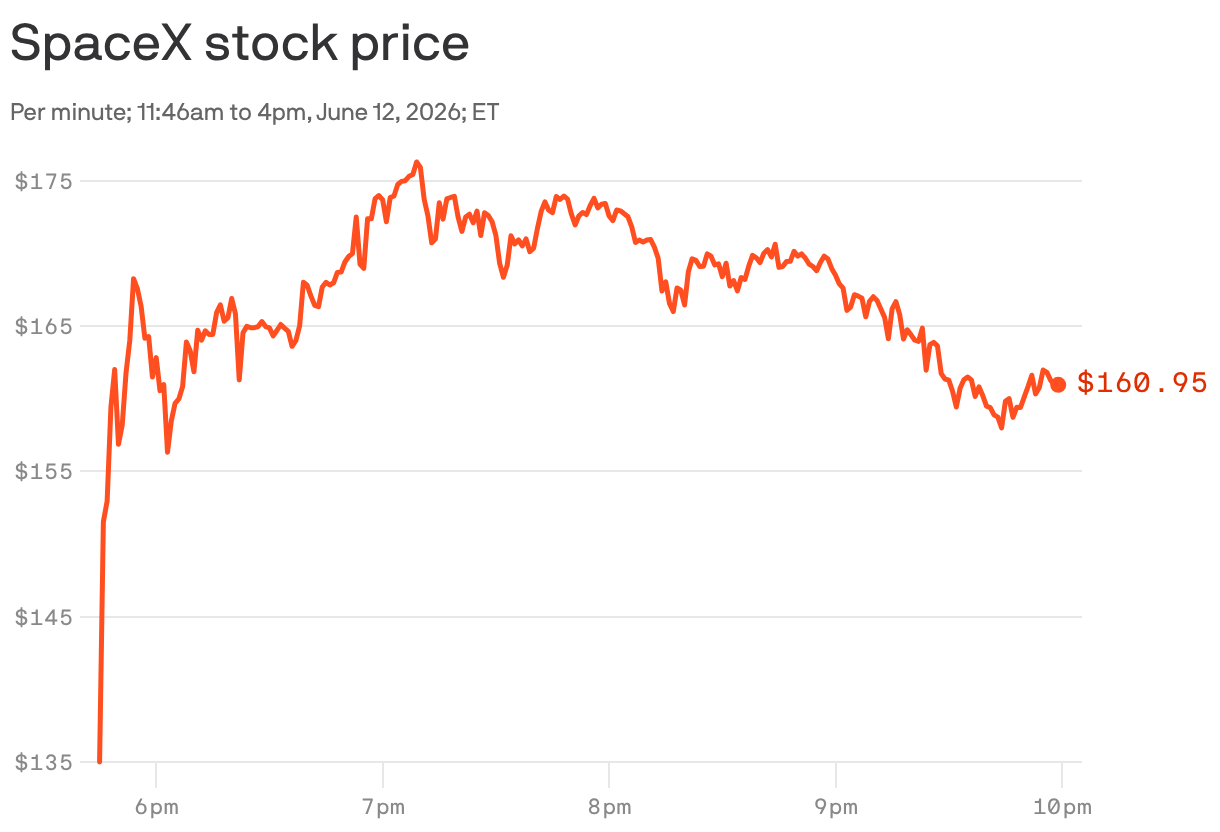
SpaceX's shares closed 19% higher on their first day of trading, a significant surge that underscores investor confidence in the space and technology sectors. This substantial increase has made SpaceX one of the world's most valuable public companies and catapulted its founder, Elon Musk, to become the world's first trillionaire, holding a net worth of around $1.1 trillion according to Forbes magazine.
Valuation and Performance
The company's shares initially priced at $135 each and opened trading at $150, briefly reaching as high as $176.50, before settling at approximately $161. This debut values SpaceX at around $2.1 trillion, making it one of the top 10 largest companies in the U.S. The initial public offering (IPO) raised a record-breaking $75 billion from investors and underwriters.
Musk's Vision and Wealth
Musk's SpaceX now accounts for a significant portion of his wealth, with his shares in the company alone being worth $767.1 billion at the close of trade, in addition to $53.8 billion in SpaceX options. His ownership stake in SpaceX is 42%, granting him unilateral control over the company's operations. This wealth, however, is largely on paper and tied to his stockholdings in both SpaceX and Tesla. He is unable to sell any of his SpaceX stock for at least a year due to lock-up restrictions.
Criticism and Calls for Wealth Tax
The achievement of becoming the world's first trillionaire has sparked discussions about wealth inequality, with Musk's fortune now comparable to the entire economic output of countries like Poland or Switzerland. This has led to condemnation from politicians like U.S. senators Bernie Sanders and Elizabeth Warren, who view this as a "wake-up call" and a sign that wealth taxes are necessary.
Future Prospects and Risks
SpaceX is not yet profitable, having lost $4.9 billion in 2025 due to substantial investments in AI and other infrastructure. The company's valuation is largely based on future potential rather than current profitability. SpaceX acknowledges in its prospectus that many of its initiatives involve unproven technologies that may not achieve commercial viability. Investors and market analysts are now closely watching how the share price will hold over the long term, especially considering the upcoming lock-up period, after which early investors may sell as much as 20% of their holdings, potentially impacting the stock's stability.
Conclusion
SpaceX's IPO marks a significant milestone in the financial markets. As investors and the public closely monitor Musk's next moves, the implications of this event extend beyond the financial realm, sparking debates on wealth distribution and the future of space exploration and technology.