




A Boston judge halts the federal takeover of elections
A federal judge in Boston blocked the Trump administration Thursday from enforcing the core provisions of an executive order designed to restrict mail-in voting by withholding ballots from states that refuse to hand over voter rolls to the federal government. U.S. District Judge Indira Talwani, an Obama appointee, issued an injunction barring the creation of a national list of voters eligible to receive mail-in ballots and blocking new regulations that would give the Postal Service control over voting by mail.
The ruling applies to the general election and earlier races in 22 mostly Democratic-led states plus Washington, D.C., that filed one of five lawsuits challenging the March executive order. Talwani found that Trump's directives to the Postal Service and Department of Homeland Security exceed his constitutional authority, which grants states and Congress the power to set rules for federal elections.
"The Constitution does not grant the President any specific powers over elections," Talwani wrote in her 37-page opinion. She further determined that Congress has not delegated authority to the Postal Service to control mail-in voting and that the agency lacks the ability to promulgate regulations on voting by mail.
What the Postal Service proposed to do
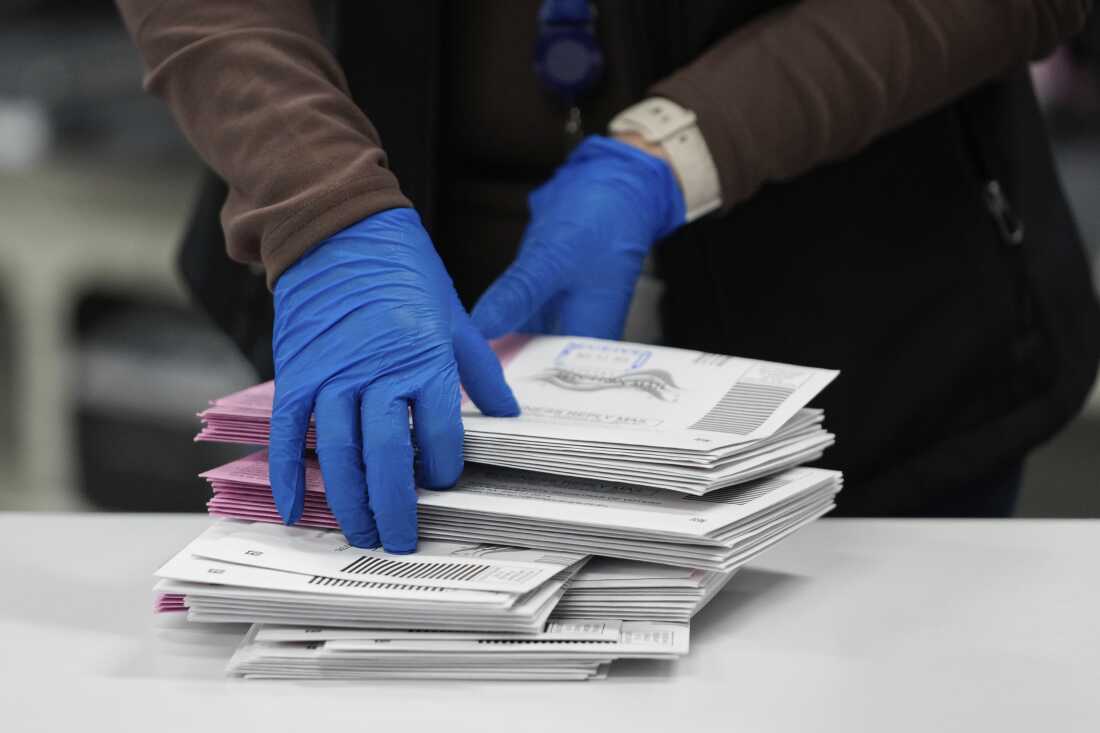
Postmaster General David Steiner told the Senate Homeland Security and Governmental Affairs Committee on Wednesday that under the proposed rule, the Postal Service would refuse to deliver mail-in ballots in states that do not hand over a list of approved voters to the Trump administration. When asked directly by Senator Gary Peters whether USPS would still mail ballots if a state refused to turn over its absentee voter list, Steiner answered: "Under our proposed regulation, no. We would tell the state that we need the manifest."
The proposal required states to provide the Postal Service with names, addresses, and ballot barcode numbers for individuals eligible to receive mail-in ballots. Steiner argued the policy was routine and designed to ensure ballots were delivered "securely, efficiently, and accurately." The comment period for the proposed rule remained open for one week after his testimony.
Senator Elissa Slotkin, a Michigan Democrat, characterized the effort differently during the hearing. "The U.S. Postal Service is now part of this bigger story of this president desperate to federalize our elections," Slotkin said. "He has tried every which way to say that if he and his party don't win in these November elections, they were rigged."
The constitutional argument against federal control
Talwani's ruling emphasized that states retain exclusive authority over voter eligibility. "The Constitution reserves the power to determine voter eligibility to the States alone," she wrote. "Neither the Executive Branch nor Congress may interfere with this power." She noted that the President "plays no direct role in the process of appointing electors, nor does he have authority to control the state officials who do."
New York State Attorney General Letitia James, whose state challenged the order, said Talwani's decision protects voting rights from "another unlawful attack." James stated that the executive order "would have caused chaos for states, election officials, and voters across the country. It has no place in our nation."
The 22 states covered by Talwani's ruling include Arizona, California, Colorado, Connecticut, Delaware, Illinois, Maine, Maryland, Massachusetts, Michigan, Minnesota, Nevada, New Jersey, New Mexico, North Carolina, Oregon, Pennsylvania, Rhode Island, Vermont, Virginia, Washington, and Wisconsin.
The White House response and expected appeal
White House spokesperson Abigail Jackson said in a statement that Trump remains "committed to ensuring that Americans have full confidence in the administration of our elections." She argued that the order "lawfully protects our elections, and we are confident that we will ultimately prevail in its implementation." Jackson did not indicate whether the administration would appeal.
The Trump administration is expected to appeal Talwani's ruling as a separate appeal of an earlier federal judge's decision moves forward in lawsuits based in Washington, D.C. Talwani also ordered the administration to file a status report within one week describing steps taken to ensure compliance with her order.
On Wednesday, a federal judge permanently barred the administration from implementing key provisions of an earlier executive order requiring proof of citizenship to register to vote. On Monday, another federal judge blocked a Trump administration voter-screening database, ruling that the government's "haphazard" system unlawfully consolidated private information of millions of Americans in an effort to purge non-citizens from voter rolls.