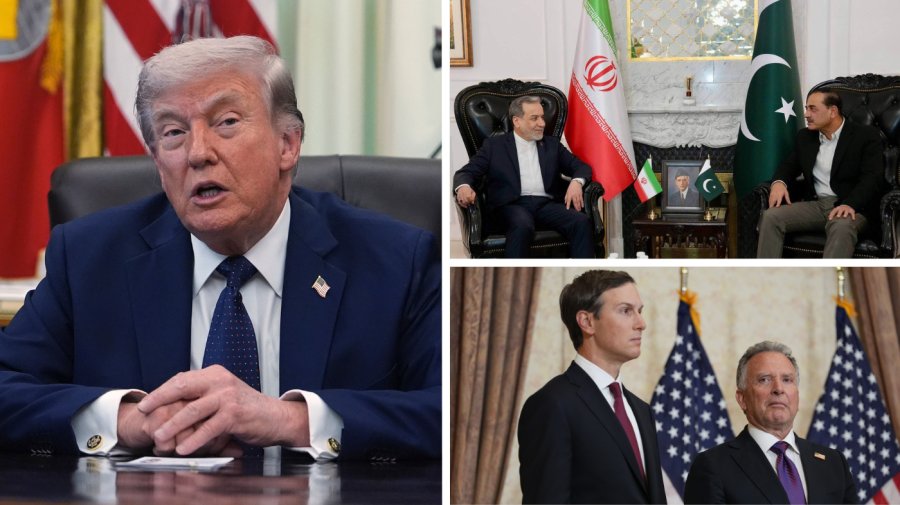
President Donald Trump canceled the trip of envoys Steve Witkoff and Jared Kushner to Islamabad on Saturday, ending planned peace talks with Iran. Trump announced the decision in a Truth Social post, citing wasted time and confusion in Iran's leadership as key factors. This move followed Iranian Foreign Minister Abbas Araghchi's departure from Pakistan after unproductive meetings with local officials.
Trump told reporters that Iran's initial offer was inadequate, describing it as a paper that "should have been better." Within ten minutes of the cancellation, Iran submitted a new proposal that Trump called "much better," though he insisted it still fell short. He emphasized that the U.S. holds "all the cards," a phrase he repeated in his social media statement, underscoring America's strong position in the ongoing standoff.
Abbas Araghchi met with Pakistan's prime minister, army commander, and foreign minister in Islamabad but left without committing to further discussions. Araghchi stated on X that Iran demands the lifting of the U.S. naval blockade as a precondition for talks, reflecting Tehran's firm stance. Iranian officials, including Araghchi, expressed doubts about U.S. seriousness, with him thanking Pakistan for their mediation efforts amid the stalemate.
Steve Witkoff and Jared Kushner, as Trump's special envoy and son-in-law, were set to lead the negotiations in Pakistan. White House Press Secretary Karoline Leavitt said on Friday that Iran had requested these talks, despite public denials from Tehran. Trump had extended a ceasefire earlier this week, building on initial discussions that failed to produce a deal, as reported by U.S. officials.
Sen. Lindsey Graham urged continued pressure on Iran, stating on X that establishing control over the Strait of Hormuz is a top priority for the U.S. Former Secretary of State Mike Pompeo said he is "not optimistic" about a deal, highlighting the lack of progress in recent days. Rep. Michael McCaul said on Bloomberg This Weekend that talks are unlikely to advance quickly, pointing to ongoing complications in the conflict.
President Donald Trump canceled the trip of envoys Steve Witkoff and Jared Kushner to Islamabad on Saturday, ending planned peace talks with Iran. Trump announced the decision in a Truth Social post, citing wasted time and confusion in Iran's leadership as key factors. This move followed Iranian Foreign Minister Abbas Araghchi's departure from Pakistan after unproductive meetings with local officials.
Trump told reporters that Iran's initial offer was inadequate, describing it as a paper that "should have been better." Within ten minutes of the cancellation, Iran submitted a new proposal that Trump called "much better," though he insisted it still fell short. He emphasized that the U.S. holds "all the cards," a phrase he repeated in his social media statement, underscoring America's strong position in the ongoing standoff.
Abbas Araghchi met with Pakistan's prime minister, army commander, and foreign minister in Islamabad but left without committing to further discussions. Araghchi stated on X that Iran demands the lifting of the U.S. naval blockade as a precondition for talks, reflecting Tehran's firm stance. Iranian officials, including Araghchi, expressed doubts about U.S. seriousness, with him thanking Pakistan for their mediation efforts amid the stalemate.
Steve Witkoff and Jared Kushner, as Trump's special envoy and son-in-law, were set to lead the negotiations in Pakistan. White House Press Secretary Karoline Leavitt noted on Friday that Iran had requested these talks, despite public denials from Tehran. Trump had extended a ceasefire earlier this week, building on initial discussions that failed to produce a deal, as reported by U.S. officials.
Sen. Lindsey Graham urged continued pressure on Iran, stating on X that establishing control over the Strait of Hormuz is a top priority for the U.S. Former Secretary of State Mike Pompeo said he is "not optimistic" about a deal, highlighting the lack of progress in recent days. Rep. Michael McCaul predicted that talks are unlikely to advance quickly, pointing to ongoing complications in the conflict.
The failed talks have disrupted global shipping, with the Strait of Hormuz closure affecting oil supplies and raising costs for consumers worldwide. Protesters in Tel Aviv rallied on Sunday, fearing a resumption of the war that could lead to more civilian casualties and economic instability. Trump's decision leaves the ceasefire in limbo, potentially forcing ordinary people to face higher energy prices and heightened security risks in the region.
Highlighted text was flagged by the council. Tap to see feedback.