




Wave of Assaults
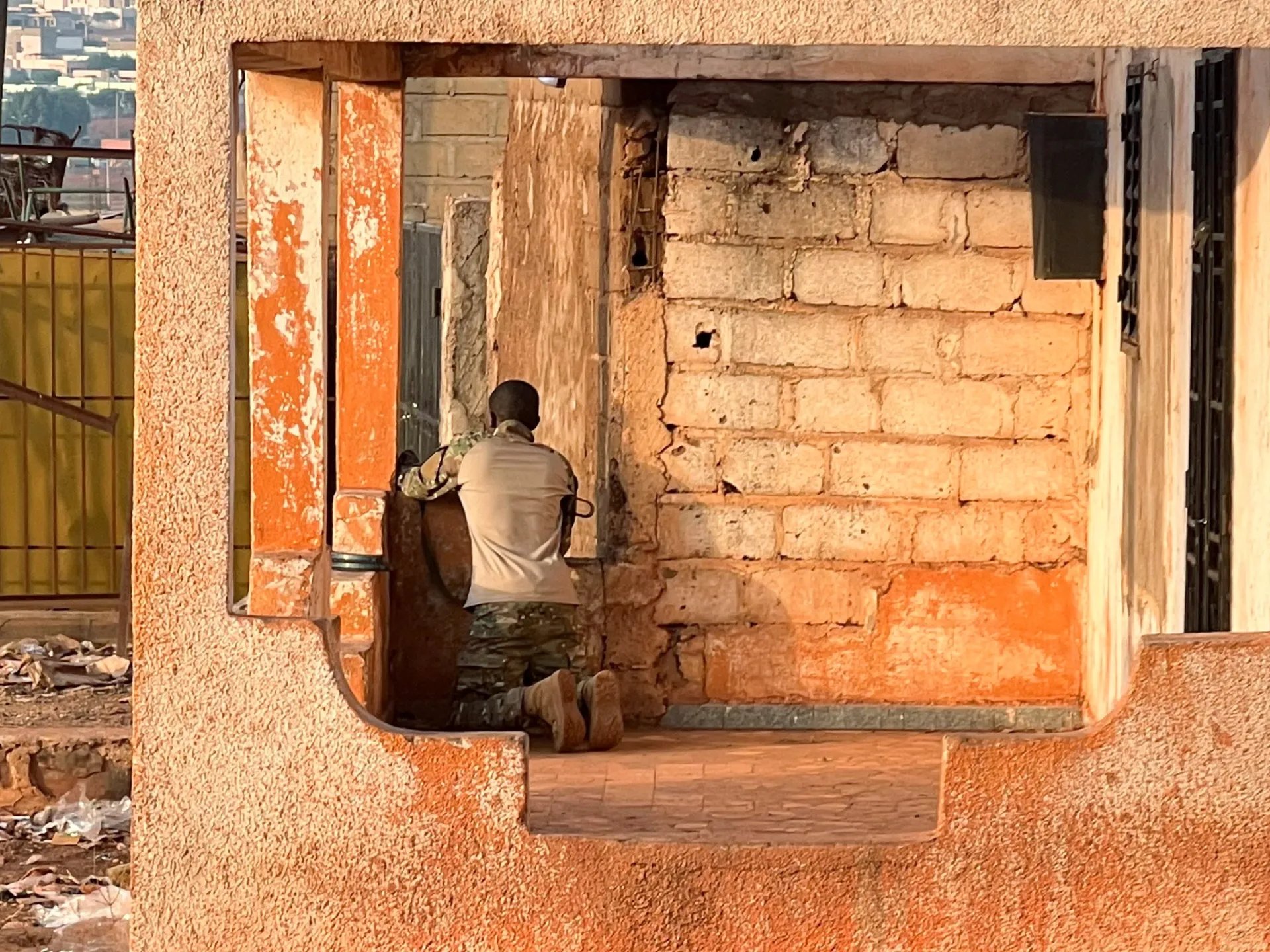
Armed groups launched coordinated attacks across Mali, striking the capital Bamako and key northern cities, including Kidal and Gao. Gunfire and explosions were reported near the main airport in Bamako, forcing the cancellation of incoming and outgoing flights.
The attacks affected at least three other locations, including Sevare. The Malian military reported the attacks on Saturday, stating that "unknown armed terrorists" targeted military barracks and other locations. Fighting was ongoing, according to the military.
Joint Operation Claimed
The Al-Qaeda-linked militant group Jama'at Nusrat al-Islam wal-Muslimin (JNIM) claimed responsibility for the attacks, stating they were carried out jointly with the Azawad Liberation Front (FLA), a Tuareg-led separatist group. Mohamed Elmaouloud Ramadane, a spokesperson for the FLA, said the groups had been planning the operation for a long time, coordinating in alliance with JNIM. JNIM confirmed the joint operation in a statement.
Ramadane claimed that fighters had seized control of multiple areas. He added that it is difficult to find any solution without their participation.
Government Response and Casualties
The Malian army stated that soldiers were "engaged in eliminating the attackers." Mali's government spokesperson Gen. Issa Ousmane Coulibaly said on state television that 16 people were wounded in the attacks, including civilians and military personnel. The Malian army claimed that "several hundred" militants were killed, but the BBC has not been able to independently verify this claim.
A resident of Kati, a town near Bamako where junta leader General Assimi Goita resides, reported being woken by gunfire and explosions. Residents of other cities including Gao and Sevare also reported attacks.
Regional and International Reactions
The U.S. Embassy in Mali urged American citizens to shelter in place and avoid all travel. The UK Foreign Office advised against all travel to Mali following the attacks. Bamako International Airport had been temporarily closed. Mahmoud Ali Youssouf, chair of the African Union Commission, said he was following the situation with "deep concern," adding he "strongly condemns these acts which risk exposing civilian populations to significant harm".
The US State Department's Africa bureau strongly condemned the attacks, extending condolences to the victims and affirming support for the Malian people and government.
Security Situation Worsens
Mali has faced escalating instability in recent years, with groups linked to al-Qaeda, including JNIM, and others aligned with the Islamic State group operating across the country, alongside a long-running Tuareg-led separatist rebellion in the north. Ulf Laessing, head of the Sahel programme at the Konrad Adenauer Foundation, described the incident as the largest coordinated jihadist attack on Mali for years. In Bamako, checkpoints have been established on roads leading to the airport and vehicles are being searched. A curfew has been imposed from 21:00 to 06:00 local time for the next three nights.