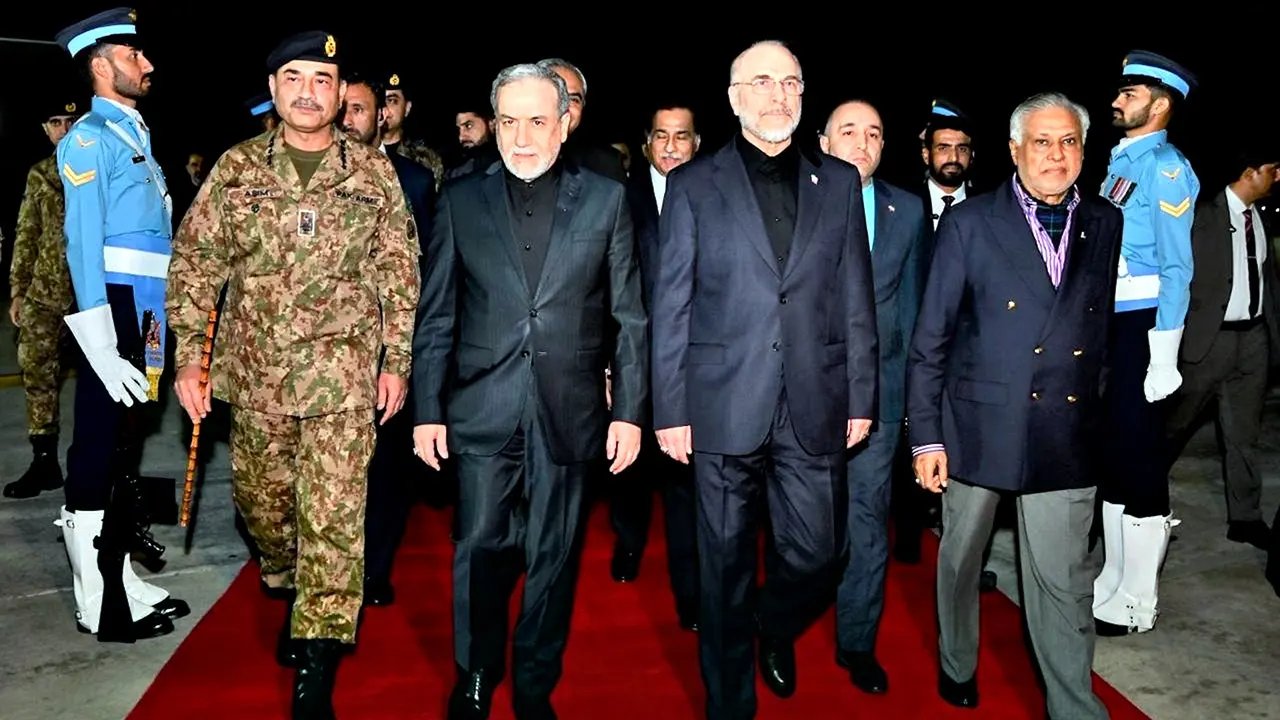
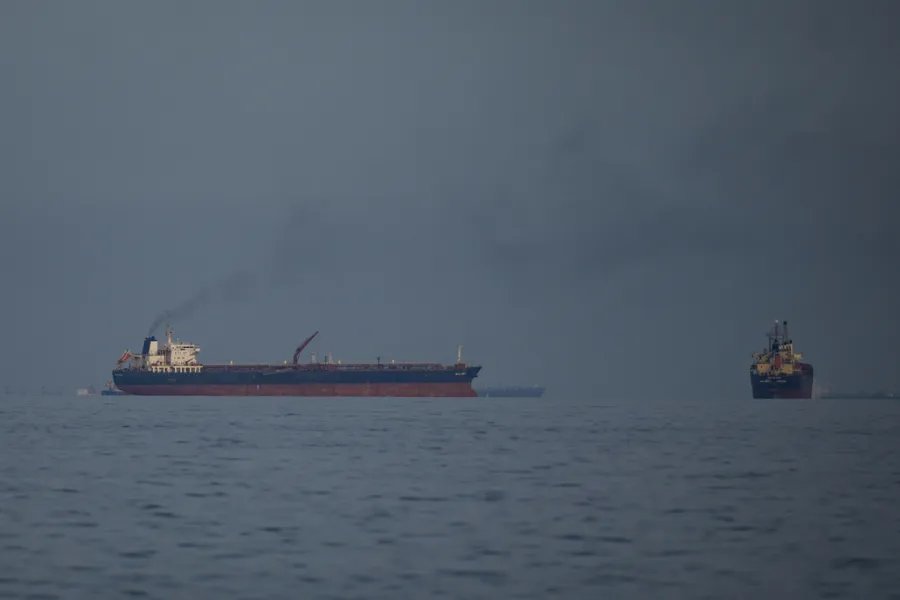
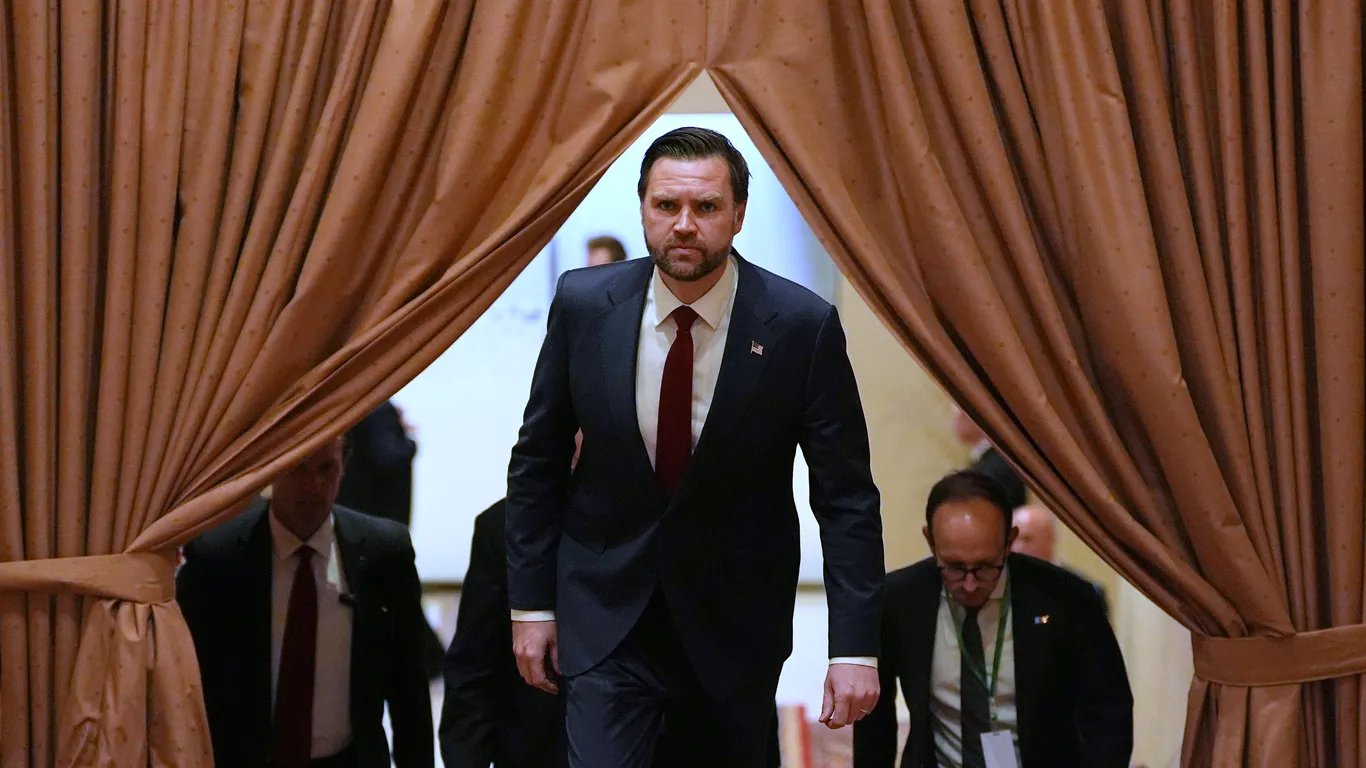
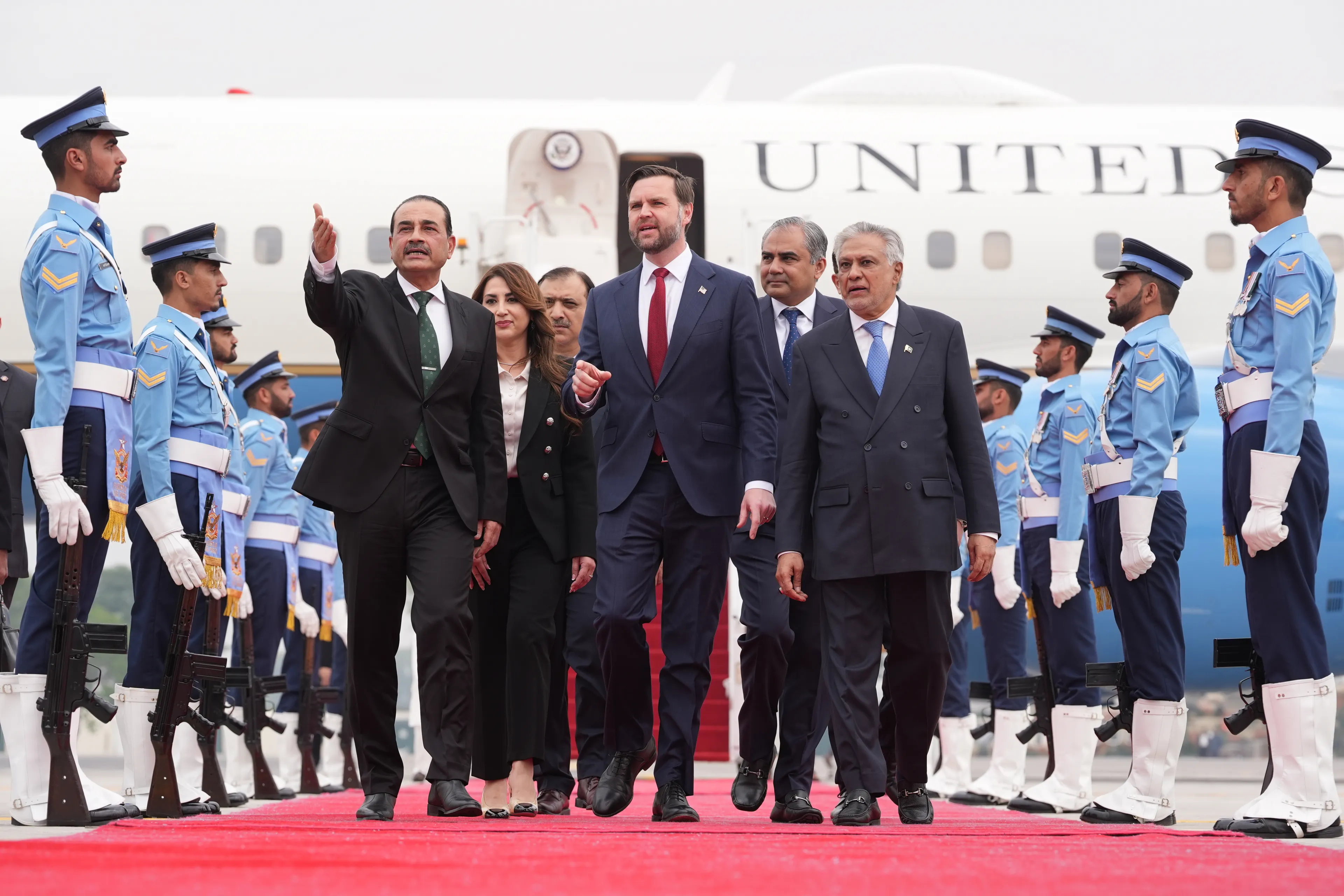
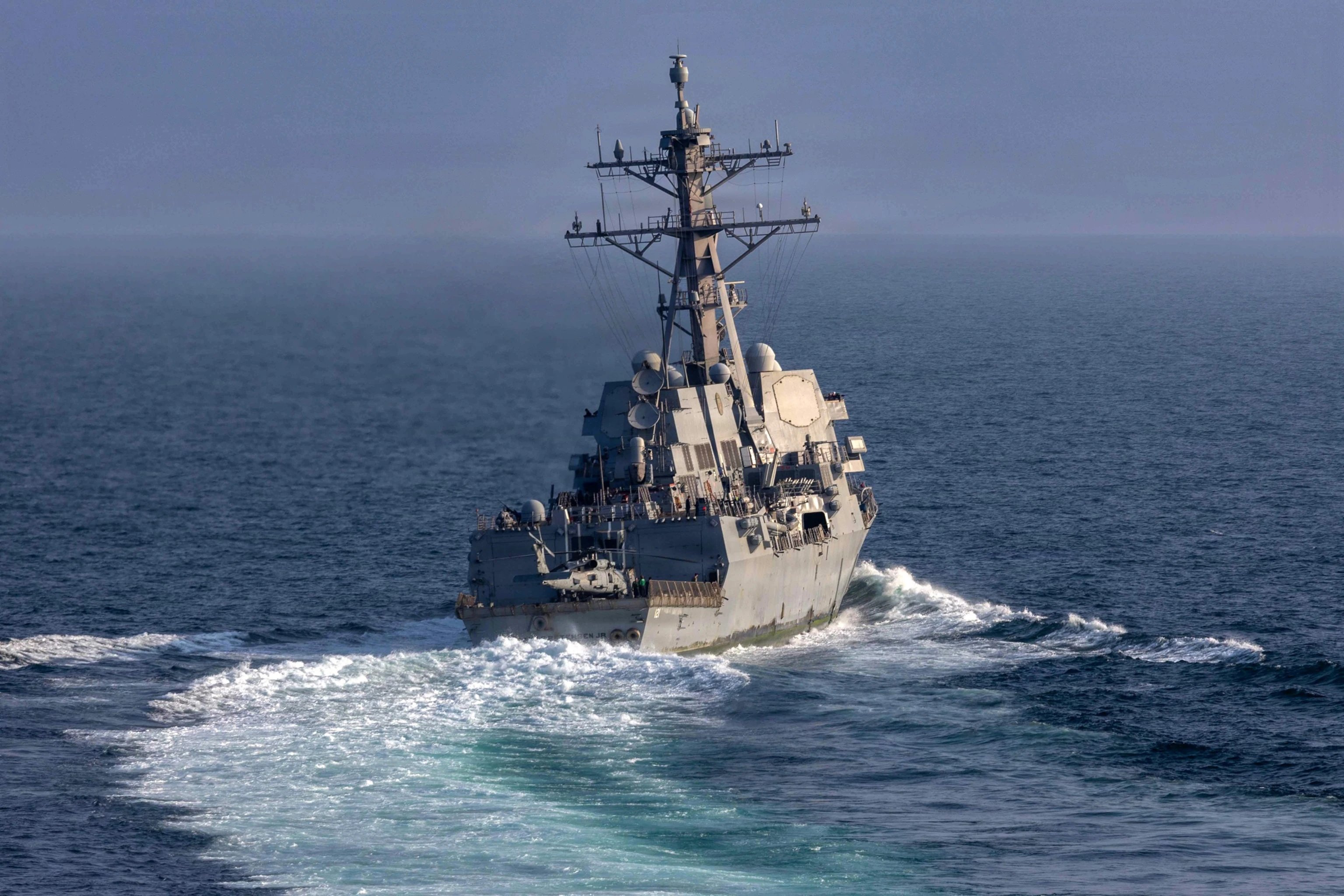
The U.S. Navy will begin blockading maritime traffic entering and leaving Iranian ports on Monday at 10 a.m. New York time. This action follows President Donald Trump's announcement after U.S.-Iranian talks in Islamabad broke up without an agreement. Vice President JD Vance said that "we have not reached an agreement" following face-to-face talks with Iranian and Pakistani negotiators.
During the talks, which lasted about 21 hours, the U.S. sought an affirmative commitment from Iran that they will not seek a nuclear weapon.
A U.K. government spokesperson said they continue to support freedom of navigation and the opening of the Strait of Hormuz. The spokesperson added that the Strait of Hormuz must not be subject to tolling. Omani Foreign Minister Badr Albusaidi urged that the ceasefire be extended and talks continue.
Iranian parliament speaker Mohammad Bagher Qalibaf posted a map of gas stations near the White House, saying, "Enjoy the current pump figures." On X, formerly known as Twitter, Qalibaf added that with the so-called 'blockade', people will soon be nostalgic for $4–$5 gas.
President Trump said the U.S. and the U.K. are sending minesweepers to the Strait of Hormuz to clear mines laid by Iran in the waterway. Iran's Revolutionary Guard said the Strait of Hormuz remained under Iran's "full control" after President Trump's blockade announcement Sunday. The guard added that military vessels attempting to approach the strait will be met with a "forceful response."
The U.S. Central Command said additional information will be provided to commercial mariners through a formal notice prior to the start of the blockade. All mariners are advised to monitor Notice to Mariners broadcasts and contact U.S. naval forces on bridge-to-bridge channel 16 when operating in the Gulf of Oman and Strait of Hormuz approaches.
The U.S. Navy will begin blockading maritime traffic entering and leaving Iranian ports on Monday at 10 a.m. New York time. This action follows President Donald Trump's announcement after U.S.-Iranian talks in Islamabad broke up without an agreement. President Trump said on Truth Social that the U.S. Navy will begin blockading ships trying to enter or leave the Strait of Hormuz, effective immediately.
Vice President JD Vance said that "we have not reached an agreement" following face-to-face talks with Iranian and Pakistani negotiators. During the talks, which lasted about 21 hours, the U.S. sought an affirmative commitment from Iran that they will not seek a nuclear weapon. A U.S. official said Iranian delegates could not agree to end uranium enrichment, dismantle major nuclear enrichment facilities, allow the retrieval of its highly enriched uranium, and accept a framework for broader peace.
A U.K. government spokesperson said they continue to support freedom of navigation and the opening of the Strait of Hormuz. The spokesperson added that the Strait of Hormuz must not be subject to tolling. Omani Foreign Minister Badr Albusaidi urged that the ceasefire be extended and talks continue.
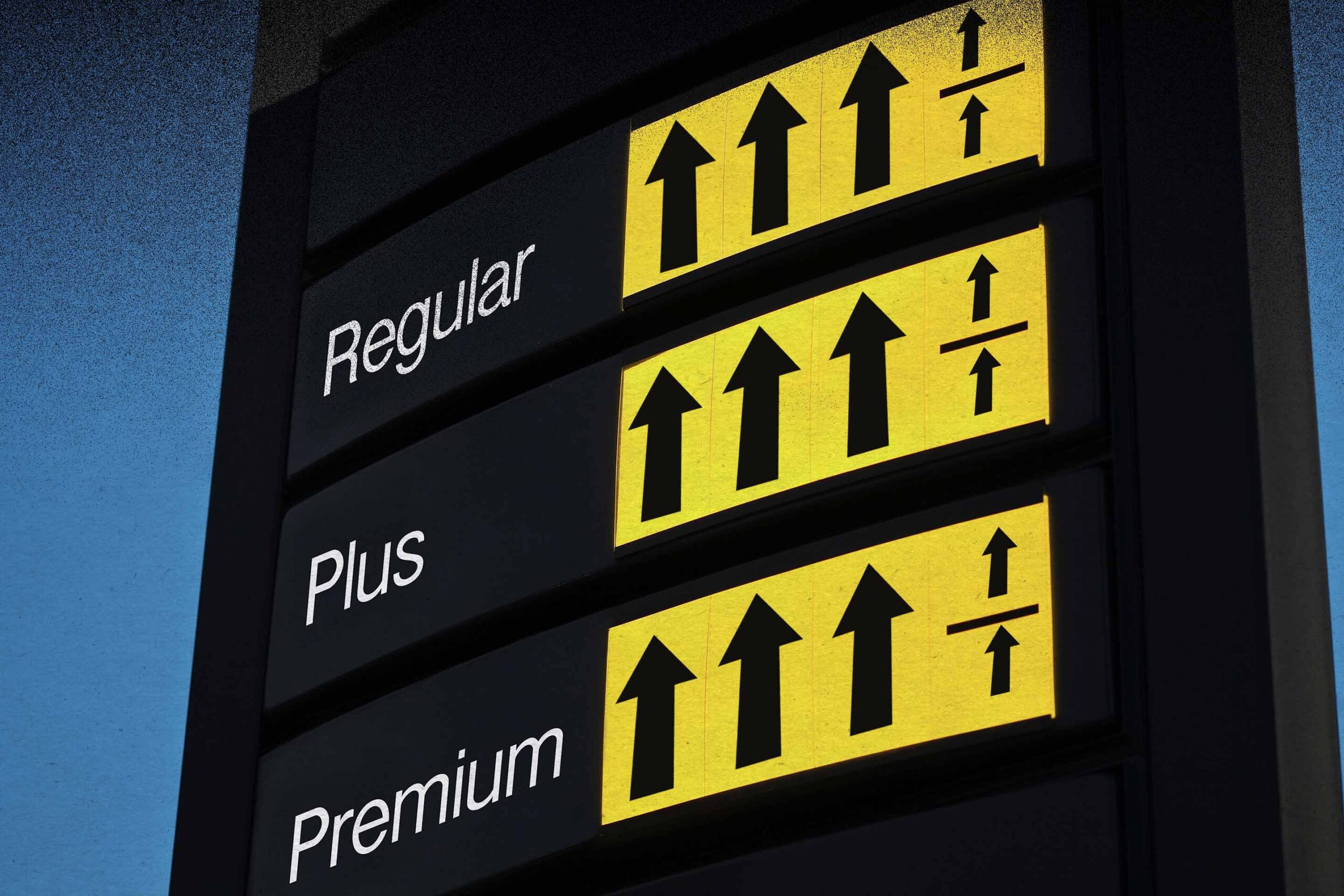
Iranian parliament speaker Mohammad Bagher Qalibaf posted a map of gas stations near the White House, saying, "Enjoy the current pump figures." Qalibaf added that with the so-called 'blockade', people will soon be nostalgic for $4–$5 gas on X. As the situation in the Strait of Hormuz sends global energy costs skyrocketing, AAA reports the price of a gallon of regular has increased 40% since the day before the war with Iran began.
President Trump said the U.S., U.K. and other countries are sending minesweepers to the Strait of Hormuz to clear mines laid by Iran in the waterway. Iran's Revolutionary Guard said the Strait of Hormuz remained under Iran's "full control" after President Trump's blockade announcement Sunday. The guard added that military vessels attempting to approach the strait will be met with a "forceful response."
The U.S. Central Command said additional information will be provided to commercial mariners through a formal notice prior to the start of the blockade. All mariners are advised to monitor Notice to Mariners broadcasts and contact U.S. naval forces on bridge-to-bridge channel 16 when operating in the Gulf of Oman and Strait of Hormuz approaches.
Highlighted text was flagged by the council. Tap to see feedback.












The sources also report that the U.K. will not be involved in the U.S. blockade of the Strait of Hormuz, contradicting President Trump's statements.