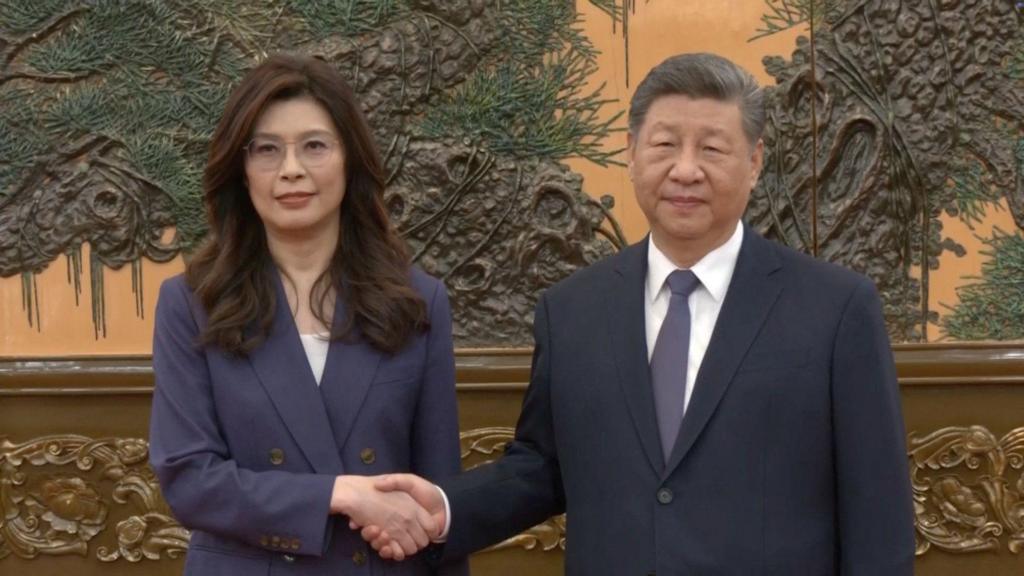
Chinese President Xi Jinping shook hands with Kuomintang leader Cheng Li-wun at Beijing's Great Hall of the People on Friday, marking the first official encounter between the two parties' heads in a decade. Xi told Cheng that China welcomes peaceful development across the Taiwan Strait and views people on both sides as one family, according to state media. This rare dialogue occurs as Xi prepares for a May summit with U.S. President Donald Trump.
Cheng Li-wun, as the KMT's first sitting leader to visit China in 10 years, stressed shared cultural heritage and called for reconciliation to avoid war. She praised China's poverty reduction efforts and argued that both sides should transcend political confrontation, even as she opposes Taiwanese independence. Cheng's trip aims to demonstrate that dialogue can ease tensions.
Taiwan's Democratic Progressive Party, led by President Lai Ching-te, criticized the meeting as a risk to democracy, with Lai urging the KMT to support defense plans in a public statement. The DPP views Cheng's engagement as enabling Beijing to undermine Taiwan's sovereignty, pointing to Beijing's refusal to dialogue with them since 2016.
Xi warned that China would not tolerate Taiwanese independence. Cheng suggested slowing Taiwan's military build-up, contrasting with U.S. backing for the defense budget, which includes purchases from American suppliers.
The KMT's push for closer Beijing ties, as voiced by Cheng, risks isolating Taiwan further, with polls showing the party holds less than a third of popular support. As the Trump summit nears, voters in Taiwan face decisions on defense spending that could determine local safety measures against potential conflicts.
Chinese President Xi Jinping shook hands with Kuomintang leader Cheng Li-wun at Beijing's Great Hall of the People on Friday, marking the first official encounter between the two parties' heads in a decade. Xi told Cheng that China welcomes peaceful development across the Taiwan Strait and views people on both sides as one family, according to state media. This rare dialogue occurs as Xi prepares for a May summit with U.S. President Donald Trump, potentially affecting global trade routes and regional security that influence everyday costs like shipping prices.
Cheng Li-wun, as the KMT's first sitting leader to visit China in 10 years, stressed shared cultural heritage and called for reconciliation to avoid war. She praised China's poverty reduction efforts and argued that both sides should transcend political confrontation, even as she opposes Taiwanese independence. Cheng's trip aims to demonstrate that dialogue can ease tensions, potentially delaying Taiwan's $40 billion defense budget for advanced weapons, which could alter personal financial burdens through changes in taxes or military spending.
Taiwan's Democratic Progressive Party, led by President Lai Ching-te, criticized the meeting as a risk to democracy, with Lai urging the KMT to support defense plans in a public statement. The DPP views Cheng's engagement as enabling Beijing to undermine Taiwan's sovereignty, pointing to Beijing's refusal to dialogue with them since 2016. This division highlights how KMT actions, such as blocking the defense bill alongside their coalition, might expose residents to greater threats from Chinese military drills around the island.
Xi warned that China would not tolerate Taiwanese independence and linked the meeting to opposing U.S. arms sales, as reported by Taiwanese media. Cheng suggested slowing Taiwan's military build-up, contrasting with U.S. backing for the defense budget, which includes purchases from American suppliers. These exchanges could reshape U.S.-Taiwan ties ahead of Trump's summit, where topics like arms deals might affect international alliances and economic cooperation that impact job markets in allied countries.
The KMT's push for closer Beijing ties, as voiced by Cheng, risks isolating Taiwan further, with polls showing the party holds less than a third of popular support. Analyst George Yin from National Taiwan University noted that Cheng's strategy might corner the KMT into Beijing's framing, potentially leading to reduced defense options for citizens. As the Trump summit nears, voters in Taiwan face decisions on defense spending that could determine local safety measures against potential conflicts.
Highlighted text was flagged by the council. Tap to see feedback.











The sources report that Taiwan's president Lai has requested $40 billion for an eight-year investment, while the KMT has delayed the bill and proposed a much smaller amount.