Hungarian voters ousted Prime Minister Viktor Orbán on Sunday after 16 years in power, delivering a landslide victory to pro-European challenger Peter Magyar in a result that will reshape Hungary's relationship with the European Union and reverberate across global far-right movements. Turnout reached nearly 80%, a record in Hungary's post-Communist history, with young people turning out in large numbers. The election saw Magyar's Tisza party capture more than 53% support compared to 37% for Orbán's governing Fidesz party, positioning Tisza to win 94 of Hungary's 106 voting districts with 93% of votes counted.
Orbán conceded defeat after what he called a "painful" election result, telling followers: "I congratulated the victorious party. We are going to serve the Hungarian nation and our homeland from opposition." The swift concession marked an unexpected end to Orbán's 16-year tenure as prime minister.
Magyar, 45, broke with Orbán's Fidesz party and rapidly formed Tisza, quickly establishing himself as Orbán's most serious challenger. His campaign focused on everyday issues including health care and public transport, while he toured Hungary relentlessly, visiting up to six towns daily in a campaign blitz across settlements large and small.
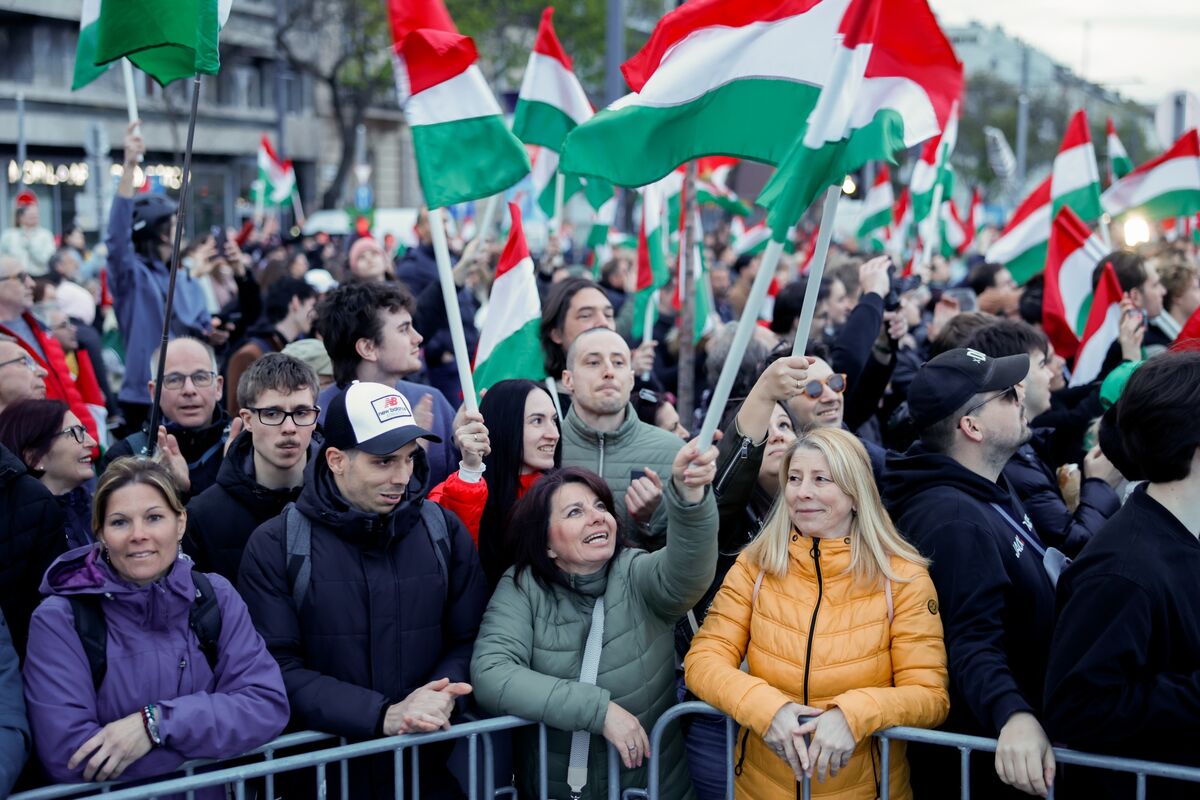
At a victory party along the Danube River, Magyar told tens of thousands of jubilant supporters that his voters had rewritten Hungarian history. "Tonight, truth prevailed over lies. Today, we won because Hungarians didn't ask what their homeland could do for them—they asked what they could do for their homeland," he said. Tisza is a member of the European People's Party, the mainstream center-right political family with leaders governing 12 of the EU's 27 nations.
During his tenure, Orbán launched harsh crackdowns on minority rights and media freedoms, subverted many of Hungary's institutions, and faced accusations of siphoning large sums of money into the coffers of his allied business elite, allegations he denies. He heavily strained Hungary's relationship with the EU by repeatedly using his veto to block decisions requiring unanimity. He blocked a 90-billion euro ($104 billion) EU loan to Ukraine, prompting his partners to accuse him of hijacking critical aid.
Orbán's control of Hungary's public media, transformed into a mouthpiece for his party, and vast swaths of the private media market had given him an advantage in spreading his message. The unilateral transformation of Hungary's electoral system and gerrymandering of its 106 voting districts by Fidesz required Tisza to gain an estimated 5% more votes than Orbán's party to achieve a simple majority.
European leaders quickly congratulated Magyar, recognizing the election's significance for EU dynamics. Orbán had frequently frustrated EU efforts to support Ukraine in its war against Russia's full-scale invasion while cultivating close ties to Putin and refusing to end Hungary's dependence on Russian energy imports.
Magyar has pledged to rebuild Hungary's relationships with the European Union and NATO, ties that frayed under Orbán. In an interview earlier this month, Magyar said the election would be a "referendum" on whether Hungary continues its drift toward Russia or can retake its place among the democratic societies of Europe. On Budapest's streets, revelers chanted "Ruszkik haza!"—"Russians go home!"—a phrase used during Hungary's 1956 anti-Soviet revolution that had gained currency amid Orbán's drift toward Moscow.
Hungarian voters ousted Prime Minister Viktor Orbán on Sunday after 16 years in power, delivering a landslide victory to pro-European challenger Peter Magyar in a result that will reshape Hungary's relationship with the European Union and reverberate across global far-right movements. Turnout reached nearly 80%, a record in Hungary's post-Communist history, with young people turning out in large numbers. The election saw Magyar's Tisza party capture more than 53% support compared to 37% for Orbán's governing Fidesz party, positioning Tisza to win 94 of Hungary's 106 voting districts with 93% of votes counted.
Orbán conceded defeat after what he called a "painful" election result, telling followers: "I congratulated the victorious party. We are going to serve the Hungarian nation and our homeland from opposition." The swift concession marked an unexpected end to the tenure of a leader who had become a close ally of both U.S. President Donald Trump and Russian President Vladimir Putin.
Magyar, 45, broke with Orbán's Fidesz party in 2024 and rapidly formed Tisza, quickly establishing himself as Orbán's most serious challenger. Two years earlier, on a Saturday morning, Magyar had declared his resignation from his state job in protest against what he described as a system that had made families around Orbán rich at the expense of other Hungarians. His campaign focused on everyday issues including health care and public transport, while he toured Hungary relentlessly, visiting up to six towns daily in a campaign blitz across settlements large and small.
At a victory party along the Danube River, Magyar told tens of thousands of jubilant supporters that his voters had rewritten Hungarian history. "Tonight, truth prevailed over lies. Today, we won because Hungarians didn't ask what their homeland could do for them—they asked what they could do for their homeland," he said. Tisza is a member of the European People's Party, the mainstream center-right political family with leaders governing 12 of the EU's 27 nations.
During his tenure, Orbán launched harsh crackdowns on minority rights and media freedoms, subverted many of Hungary's institutions, and faced accusations of siphoning large sums of money into the coffers of his allied business elite, allegations he denies. He heavily strained Hungary's relationship with the EU by repeatedly using his veto to block decisions requiring unanimity. Most recently, he blocked a 90-billion euro ($104 billion) EU loan to Ukraine, prompting his partners to accuse him of hijacking critical aid.
Orbán's control of Hungary's public media, transformed into a mouthpiece for his party, and vast swaths of the private media market had given him an advantage in spreading his message. The unilateral transformation of Hungary's electoral system and gerrymandering of its 106 voting districts by Fidesz required Tisza to gain an estimated 5% more votes than Orbán's party to achieve a simple majority.
European leaders quickly congratulated Magyar, recognizing the election's significance for EU dynamics. Orbán had frequently frustrated EU efforts to support Ukraine in its war against Russia's full-scale invasion while cultivating close ties to Putin and refusing to end Hungary's dependence on Russian energy imports. Recent revelations showed a top member of Orbán's government frequently shared the contents of EU discussions with Moscow, raising accusations that Hungary was acting on Russia's behalf within the bloc.
Magyar has pledged to rebuild Hungary's relationships with the European Union and NATO, ties that frayed under Orbán. In an interview earlier this month, Magyar said the election would be a "referendum" on whether Hungary continues its drift toward Russia or can retake its place among the democratic societies of Europe. On Budapest's streets, revelers chanted "Ruszkik haza!"—"Russians go home!"—a phrase used during Hungary's 1956 anti-Soviet revolution that had gained currency amid Orbán's drift toward Moscow.
Highlighted text was flagged by the council. Tap to see feedback.