




Federal Judge Orders University of Pennsylvania to Comply With Subpoena for Jewish Employee Information
The Ruling
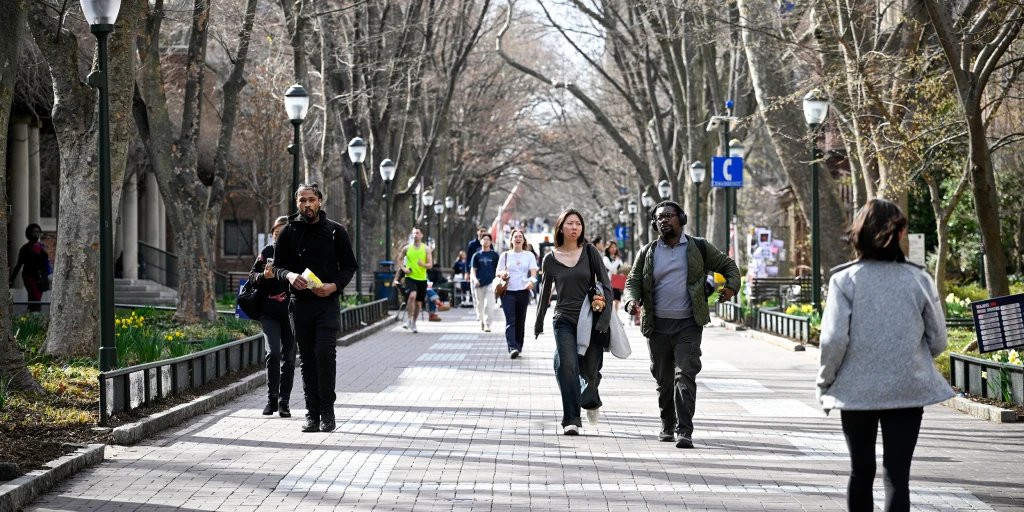
A federal judge ruled Tuesday that the University of Pennsylvania must comply with a Trump administration subpoena seeking lists of Jewish faculty, staff, and student organization members as part of a discrimination investigation. U.S. District Judge Gerald Pappert found that the Equal Employment Opportunity Commission, the federal agency conducting the probe, has a constitutional right to collect the information. Pappert wrote that though the request was "ineptly worded," it had "an understandable purpose—to obtain in a narrowly tailored way, as opposed to seeking information on all university employees, information on individuals in Penn's Jewish community who could have experienced or witnessed antisemitism in the workplace."
The EEOC is investigating what it describes as a "pattern or practice" of harassment of Jews at the Ivy League school. The subpoena requested lists of school groups and organizations related to the Jewish religion, along with personal contact information for Penn employees in those groups.
What Penn Must and Must Not Disclose
The judge imposed one significant limitation on the disclosure order. Pappert ruled that Penn "need neither reveal any employee's affiliation with a specific Jewish-related organization, nor provide information regarding MEOR, Penn Hillel and the Chabad Lubavitch House." The university will not be required to identify which employees belong to these particular campus organizations, though it must provide the broader lists and contact information the EEOC requested.
Penn said it intends to appeal the ruling. A university spokesperson questioned the constitutionality of the subpoena, stating that "requiring Penn to create lists of Jewish faculty and staff, and to provide personal contact information, raises serious privacy and First Amendment concerns." The spokesperson added that the university does not maintain employee lists organized by religion and emphasized Penn's commitment to "confront antisemitism and all forms of discrimination."
Background of the Investigation
The EEOC first accused Penn of antisemitic harassment against faculty and staff in late 2023. The agency initially requested the identities of witnesses for its investigation but did not pursue enforcement at that time. The commission filed a lawsuit in November, arguing that the university was not complying with the agency's requirements and asking a judge to enforce the subpoena. Penn challenged the request in January, saying it would not disclose "sensitive personally identifiable" employee information.
The Trump administration has launched investigations into higher education institutions across the country for alleged antisemitism. Penn's former president, Liz Magill, stepped down in December 2023 following a congressional hearing on antisemitism claims. The EEOC accused Penn of antisemitic harassment in late 2023, initiating the investigation that led to this ruling.