The Supreme Court hears oral arguments on March 31, 2026 in a case regarding birthright citizenship, potentially reshaping the long-standing interpretation of the Constitution's 14th Amendment. The Trump administration is citing the 1884 Supreme Court case *Elk v. Wilkins*, which denied birthright citizenship to Native Americans, to support its efforts to limit birthright citizenship. In *Elk v. Wilkins*, the court ruled against John Elk, a Native American man, who argued he was a citizen because he was born within U.S. territory.
President Trump's executive order seeks to limit birthright citizenship to individuals with at least one parent who is a U.S. citizen or a legal permanent resident. The American Civil Liberties Union is leading the challenge to Trump's executive order, arguing the case is an attempt to strip citizenship from children of immigrants. The executive order is currently on hold due to lower court rulings.
Solicitor General D. John Sauer referenced *Elk* in court papers, arguing the Supreme Court has rejected the idea that anyone born in U.S. territory is automatically a citizen. White House spokeswoman Abigail Jackson said in a statement that the case gives the Supreme Court the chance to "restore the meaning of citizenship in the United States to its original public meaning." ACLU lawyer Cody Wofsy counters that the Native American questions raised by the government are beside the point.
Leonard Fineday, general counsel of the National Congress of American Indians, said relying on *Elk* to deny birthright citizenship to children of undocumented immigrants is a misreading and misunderstanding. Monte Mills, director of the Native American Law Center at the University of Washington School of Law, finds it ironic that the government would rely on such a ruling. Since 1924, Native Americans have been guaranteed birthright citizenship via statute.
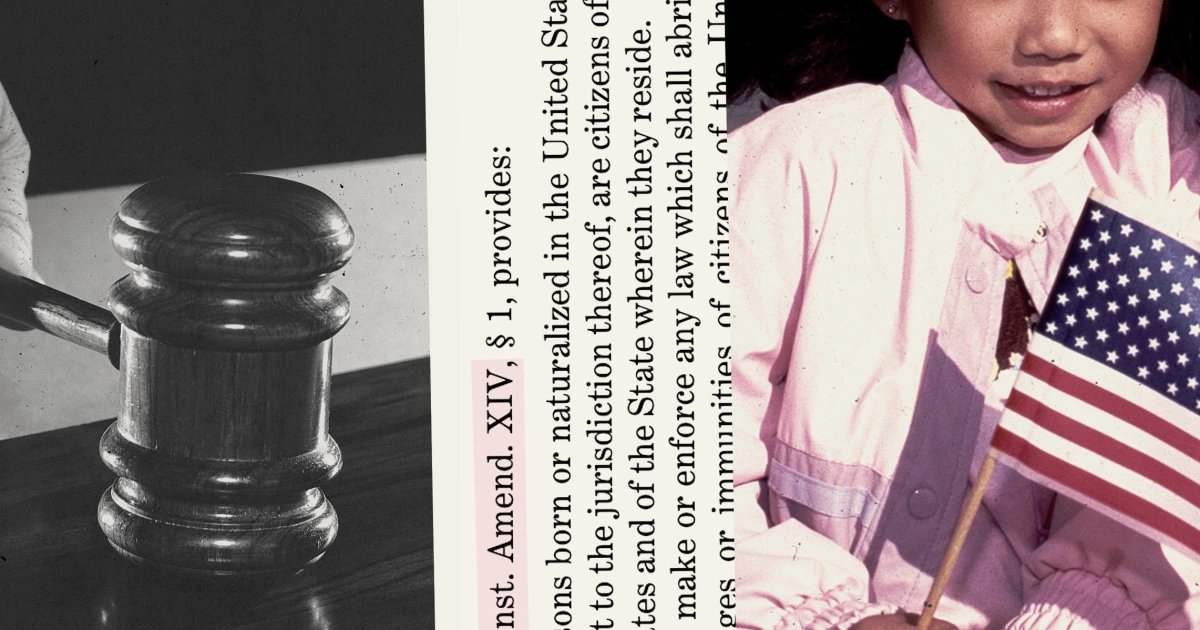
The 14th Amendment, ratified in 1868, states that "All persons born or naturalized in the United States, and subject to the jurisdiction thereof, are citizens of the United States." The Trump administration argues that the phrase "subject to the jurisdiction thereof" excludes children of those who entered the country illegally or those with temporary legal status. Sauer quoted the *Elk* ruling, arguing the citizenship clause was mainly intended to address the issue of freed slaves after the Civil War.
Those backing the traditional understanding of birthright citizenship point to the 1898 ruling in *United States v. Wong Kim Ark*, in which the court ruled that a man born in San Francisco to Chinese parents was an American citizen at birth. Justice Horace Gray authored both the *Elk* and *Ark* opinions. Ilan Wurman, a professor at the University of Minnesota Law School, said it is unclear how much weight the Supreme Court will give the *Elk* case.
The Supreme Court is set to hear oral arguments on Wednesday in a case regarding birthright citizenship, potentially reshaping the long-standing interpretation of the Constitution’s 14th Amendment. The Trump administration is citing the 1884 Supreme Court case *Elk v. Wilkins*, which denied birthright citizenship to Native Americans, to support its efforts to limit birthright citizenship. In *Elk v. Wilkins*, the court ruled against John Elk, a Native American man, who argued he was a citizen because he was born within U.S. territory.
President Trump's executive order seeks to limit birthright citizenship to individuals with at least one parent who is a U.S. citizen or a legal permanent resident. The American Civil Liberties Union is leading the challenge to Trump’s executive order, arguing the case is an attempt to strip citizenship from children of immigrants. The executive order is currently on hold due to lower court rulings.
Solicitor General D. John Sauer referenced *Elk* in court papers, arguing the Supreme Court has rejected the idea that anyone born in U.S. territory is automatically a citizen. White House spokeswoman Abigail Jackson stated the case gives the Supreme Court the chance to "restore the meaning of citizenship in the United States to its original public meaning." ACLU lawyer Cody Wofsy counters that the Native American questions raised by the government are beside the point.
Leonard Fineday, general counsel of the National Congress of American Indians, said relying on *Elk* to deny birthright citizenship to children of undocumented immigrants is a misreading and misunderstanding. Monte Mills, director of the Native American Law Center at the University of Washington School of Law, finds it ironic that the government would rely on such a ruling. Since 1924, Native Americans have been guaranteed birthright citizenship via statute.
The 14th Amendment, ratified in 1868, states that "All persons born or naturalized in the United States, and subject to the jurisdiction thereof, are citizens of the United States." The Trump administration argues that the phrase “subject to the jurisdiction thereof” excludes children of those who entered the country illegally or those with temporary legal status. Sauer quoted the *Elk* ruling, arguing the citizenship clause was mainly intended to address the issue of freed slaves after the Civil War.
Those backing the traditional understanding of birthright citizenship point to the 1898 ruling in *United States v. Wong Kim Ark*, in which the court ruled that a man born in San Francisco to Chinese parents was an American citizen at birth. Justice Horace Gray authored both the *Elk* and *Ark* opinions. Ilan Wurman, a professor at the University of Minnesota Law School, said it is unclear how much weight the Supreme Court will give the *Elk* case.
Meanwhile, the Supreme Court is also considering a plea from 98-year-old Judge Pauline Newman, who is seeking to be reinstated after being sidelined over competency concerns. Newman joined the U.S. Court of Appeals for the Federal Circuit in 1984. A committee rejected Newman's due process claims in a March 24 decision, stating she still holds an office, employs a law clerk, and receives a paycheck and benefits.
The Supreme Court's decision on birthright citizenship could redefine who is considered a citizen of the United States, impacting millions and potentially leading to legislative action to clarify citizenship laws.
Highlighted text was flagged by the council. Tap to see feedback.