




The Exemption and Its Scope
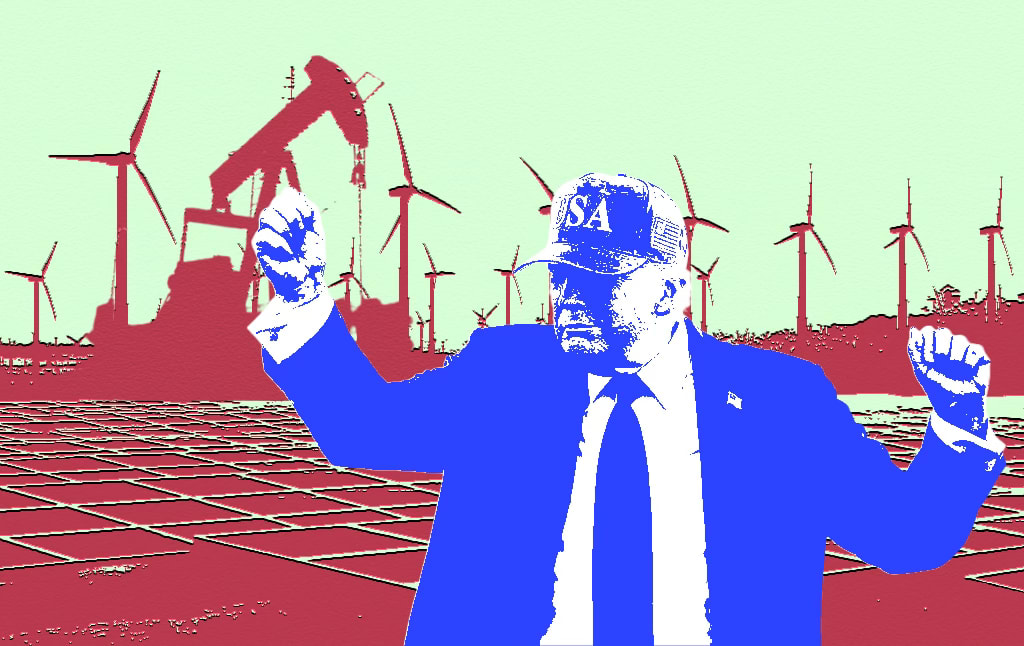
The Trump administration's Endangered Species Committee voted Tuesday to exempt all oil and gas drilling in the Gulf of Mexico from the Endangered Species Act, marking the first time the panel has cited national security as justification for overriding wildlife protections. Defense Secretary Pete Hegseth notified Interior Secretary Doug Burgum on March 13 that the exemption was "necessary for reasons of national security." The committee, chaired by Burgum and comprising seven federal officials including the secretaries of agriculture and the Army, voted unanimously in favor. The exemption applies broadly to federally regulated fossil fuel operations across the Gulf rather than targeting specific projects.
The committee, nicknamed the "God Squad" for its power to determine a species' fate, had not convened in more than three decades before Tuesday's meeting.

The sources also report that the committee previously convened in 1979 for a Wyoming dam project affecting the whooping crane and in 1992 for Oregon logging impacting the northern spotted owl.
The National Security Argument
Hegseth told committee members that Iran's efforts to block shipping through the Strait of Hormuz, the world's busiest oil route, underscored the imperative of robust domestic oil production. He argued that environmental lawsuits threatened to halt Gulf operations. "Disruptions to Gulf oil production doesn't hurt just us, it benefits our adversaries," Hegseth said. "We cannot allow our own rules to weaken our standing and strengthen those who wish to harm us. When development in the Gulf is chilled, we are prevented from producing the energy we need as a country and as a department."
The timing coincides with soaring energy prices. The Gulf of Mexico produces 2 million barrels daily and accounts for almost 15 percent of annual U.S. crude output.
Yet experts question whether the exemption serves genuine security needs. Charles McConnell, executive director for the Center for Carbon Management in Energy at the University of Houston, questioned whether the exemption serves genuine security needs. "Last time I looked, we weren't actually running short on oil at all," McConnell said. He characterized the move as political rather than security-driven: "It's about power and control. It's more political than it is energy security."
The Endangered Species at Risk
Environmental groups say the exemption threatens the Rice's whale, found exclusively in the Gulf of Mexico, where only about 50 individuals remain. Patrick Parenteau, emeritus professor of law at Vermont Law School, warned of unprecedented consequences. "If Trump is successful here, he could be the first person in history to knowingly extirpate a species from the face of the earth. That's how precarious the condition of the Rice's whale is," Parenteau said.
The whales are vulnerable to multiple drilling-related hazards. A 2025 National Marine Fisheries Service analysis found that Gulf oil and gas operations are likely to harm several whale species, sea turtles and Gulf sturgeon through ship strikes, oil spills and other impacts. Jeremy Kiszka, a biological sciences professor at Florida International University, explained that Rice's whales dive to the Gulf floor during the day for fatty fish and rest near the surface at night, making them susceptible to vessel collisions. Noise from drilling could disrupt their foraging behavior, while increased fossil fuel burning compounds climate change impacts on their prey.
The 2010 BP Deepwater Horizon blowout killed 11 workers and spilled 134 million gallons of oil, reducing the Rice's whale population by 22 percent.
Industry Support and Legal Challenges
Erik Milito of the National Ocean Industries Association, which represents offshore developers, said the exemption streamlines project approvals. "Serial litigation from activist groups targeting a lawful, well-regulated industry should not be allowed to indefinitely obstruct projects of clear national importance," Milito said. The Trump administration approved BP's $5 billion ultra-deepwater drilling project in mid-March.
Environmental groups immediately pledged legal challenges. Andrew Bowman, president of Defenders of Wildlife, called the action unprecedented and unlawful. "The Endangered Species Act has not slowed an iota of oil from being extracted from the Gulf," Bowman said. Zygmunt Plater, a Boston College Law School professor who was lead counsel in a 1970s lawsuit that gave rise to the creation of the Endangered Species Committee, said the administration bypassed procedural safeguards designed to make the exemption a rare emergency measure. "This is not carefully done. This is the antithesis of the way the God committee has worked in the past," Plater said.
Michael Jasny, director of the Natural Resources Defense Council's marine mammal protection project, warned the exemption could extend beyond the Gulf. "If you can declare an emergency to just kill sea turtles and manatees and whales in the Gulf, you know no species is safe," Jasny said.
















The sources also report that the committee, known as the 'God Squad,' had convened just three times prior to this meeting, issuing only two exemptions since its formation in 1978.