




Excess Deaths Linked to Heatwave Surge Past 1,300
The World Health Organization (WHO) reported on Sunday that over 1,300 excess deaths have been linked to the current heatwave sweeping across Europe, which began around June 21. WHO chief Tedros Adhanom Ghebreyesus emphasized the urgency of the situation, stating, "Heat stress is often called the 'silent killer' — and European homes, workplaces, and schools were not built for these temperatures." WHO chief Tedros Adhanom Ghebreyesus noted that Europe is the fastest-warming continent on Earth, heating at twice the global average, highlighting the continent's vulnerability.
Record Temperatures Across Europe
Germany set a new temperature record of 41.7 degrees Celsius in Coschen, Brandenburg, marking the third consecutive day of record-breaking heat. This came after previous records of 41.5 degrees Celsius in Drewitz and 41.3 degrees Celsius in Saarbrücken were logged earlier in the week. The Czech Republic also reported a staggering 41.1 degrees Celsius, and Poland recorded 40.5 degrees Celsius in Slubice, showcasing the widespread impact of the heatwave across Central and Eastern Europe.
Impact on Public Health
France has reported around 1,000 additional deaths since the onset of the heatwave, with a significant portion of these fatalities occurring among individuals aged 65 and older. The French Health Ministry noted that the mortality rate is expected to rise further as more data becomes available, particularly from nursing homes and residential care facilities. Authorities are concerned about the strain on public health systems as emergency services struggle to respond.
Infrastructure Strain and Emergency Measures
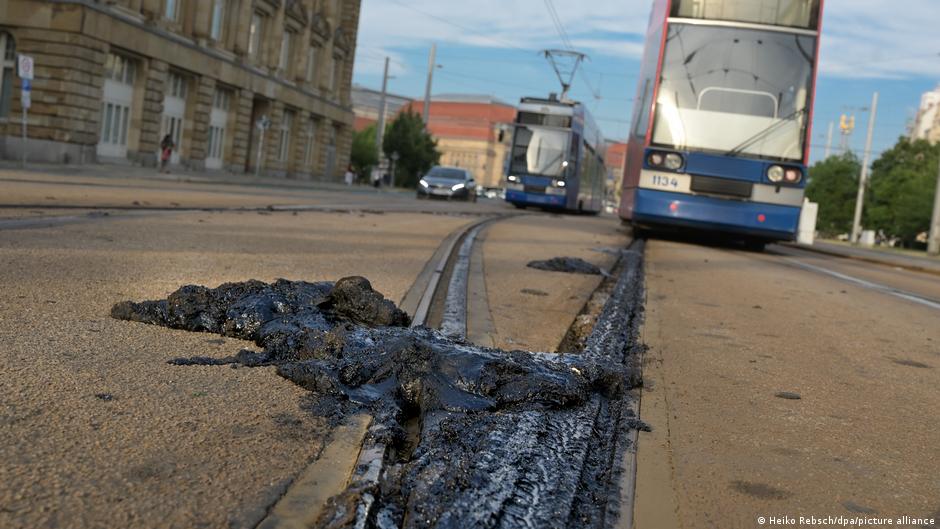
The extreme heat has strained infrastructure across Europe, with reports of melted tram tracks in Leipzig, Germany, leading to a suspension of services. Local authorities have also taken drastic measures, such as cancelling outdoor events and banning public alcohol consumption to manage the emergency. In France, 74 drowning incidents have been reported as individuals flock to lakes and rivers to escape the heat.
Urgent Calls for Action
In response to the crisis, political leaders are urging immediate action. Katharina Dröge, co-leader of Germany's Greens, called for the rapid installation of air conditioning units in public buildings, emphasizing the need for sustainable energy sources like solar power to support these efforts. "Germany needs an immediate cooling-off program, to air condition hospitals, care facilities, daycares, and schools," Dröge stated.
Climate Change Connection
Scientists have warned that this unprecedented heatwave is a direct consequence of climate change. A rapid study indicated that the extreme conditions would have been "virtually impossible" without human-induced climate change. The WHO has urged European nations to implement heat health action plans to safeguard their populations against future heatwaves, which are becoming increasingly common.
Looking Ahead
As the heatwave shifts eastward, countries like Hungary and Romania are bracing for similar extreme temperatures. The WHO continues to work with member states to bolster health systems and improve preparedness for such climate-related events. With millions across Europe currently enduring oppressive heat, the call for comprehensive climate action grows ever more urgent.