
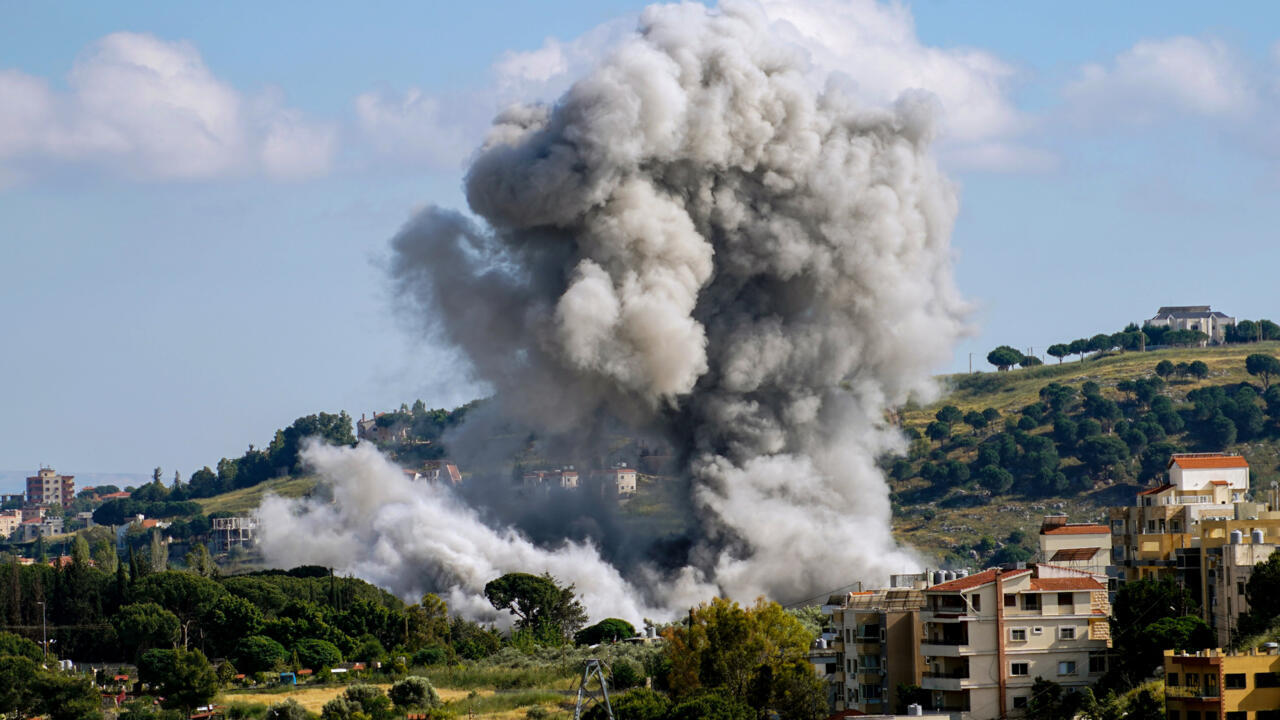





Strikes Continue Despite Ceasefire Deal
Israel kept up airstrikes on southern Lebanon on Tuesday, even as a partial truce with Hezbollah announced by President Donald Trump appeared to hold in its narrowest form. France 24 reported that Israeli strikes on Tuesday killed eight people, including children.
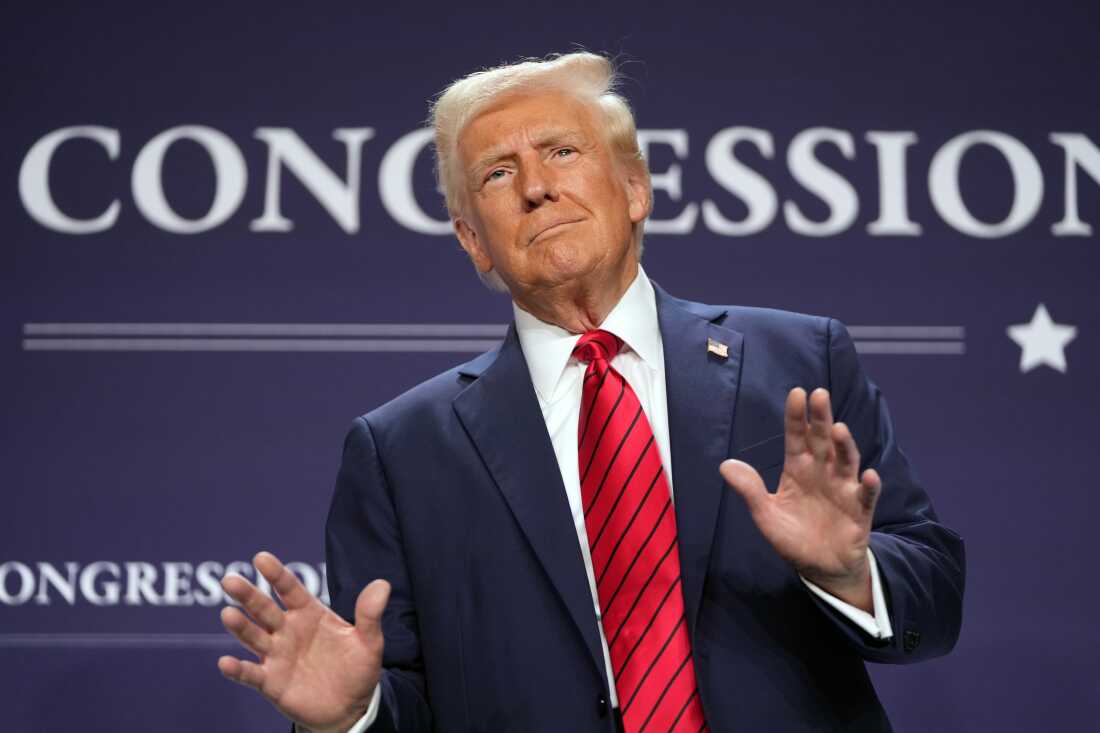
The agreement was confirmed by Lebanon's embassy in Washington after President Joseph Aoun called U.S. Secretary of State Marco Rubio. Trump subsequently informed Lebanese ambassador Nada Moawad that he had secured Israeli Prime Minister Benjamin Netanyahu's approval. Under the arrangement, Israel will not launch a broad offensive on Beirut in exchange for Hezbollah refraining from launching attacks against Israel.
Yet the fighting on the ground tells a different story. The Israeli military issued a fresh evacuation order for Nabatieh town on Tuesday afternoon, warning residents that it was "compelled to act forcefully" against Hezbollah because of the group's "violation of the ceasefire agreement." A dentist from the Christian village of Qlayaa was killed along with his daughter and son in a drone strike on the road between Marjayoun and Nabatieh, according to Lebanon's National News Agency.
Hezbollah's military wing said its fighters had targeted Israeli tanks and troops in the southern Lebanese towns of Haddatha, Bayada and Zawtar al-Sharqiya with drones, missiles and shells. The Israeli foreign ministry countered that Hezbollah had violated the agreement by launching "multiple missile and drone attacks from Lebanon against Israeli communities." Following the ceasefire announcement, the Israeli military said it had intercepted two projectiles fired into northern Israel.
Hospital Devastation in Tyre
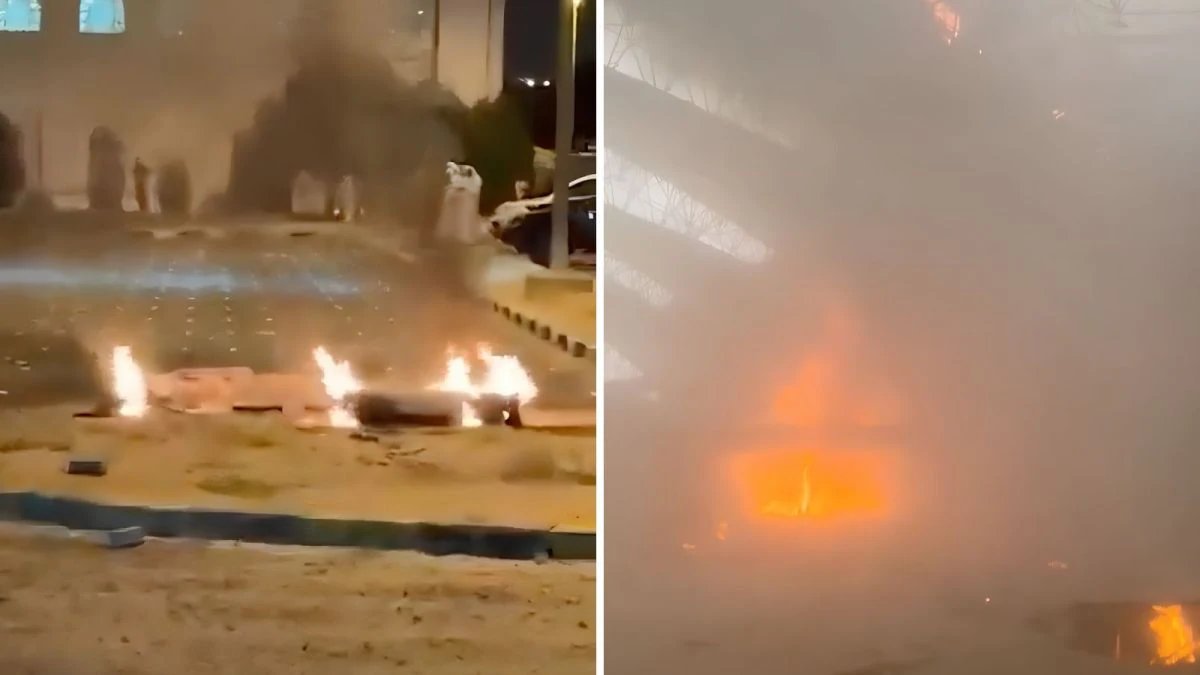
Jabal Amel Hospital in the southern city of Tyre sustained "significant damage" in Monday afternoon airstrikes, with the Lebanese health ministry reporting four people killed and 127 injured in strikes on buildings next to the facility. Thirty-nine hospital staff were among the injured, with four in critical condition.
Dr. Wael Mroueh, the hospital's director, described the attack as sudden and without warning. "We were working with patients and displaced people. Business was as usual, and suddenly, 'boom,'" he said. "It happened without any prior warning. Pictures speak volumes." He denied that any military target existed in the vicinity, stating: "The Israeli enemy targets journalists, ambulance workers, medical staff. It makes no difference, and all it wants is to kick us out of our country."
Inside the hospital, corridors were littered with broken glass, ceiling panels had collapsed onto floors, and a row of incubators stood cracked and damaged by the blast force. The Israeli military said it had struck "Hezbollah terrorist infrastructure" in the area but acknowledged the damage to the hospital, emphasizing that it "was not targeted." The military accused Hezbollah of embedding itself within civilian infrastructure and population centers, without providing evidence.
The Lebanese health ministry says 128 paramedics and healthcare workers have been killed in 159 attacks on ambulances and medical facilities over the past three months. On Tuesday morning, Lebanon's civil defence agency reported another Israeli strike hit its centre in Kfar Sir in Nabatieh district, causing damage but no casualties.
Trump Pressure and Netanyahu's Constraints
According to two U.S. officials cited by Axios, Trump told Netanyahu not to follow through on a plan to strike Beirut's southern suburbs, a Hezbollah stronghold. Trump made the demand in "an expletive-laden call" after Netanyahu announced he had ordered strikes on the area in response to rocket and drone attacks on Israeli civilians.
The Israeli prime minister then issued a statement saying he had told Trump that "if Hezbollah does not stop firing at our cities and citizens, Israel will strike terrorist targets in Beirut." He also said the Israeli military would "continue to operate as planned in southern Lebanon." Some Israeli politicians criticized Netanyahu for accepting Trump's demand. National Security Minister Itamar Ben Gvir said: "Now is the time to tell... our friend 'no.'" Opposition leader Yair Lapid said Israel had become a "client state in full." There has been no comment from Netanyahu's office.
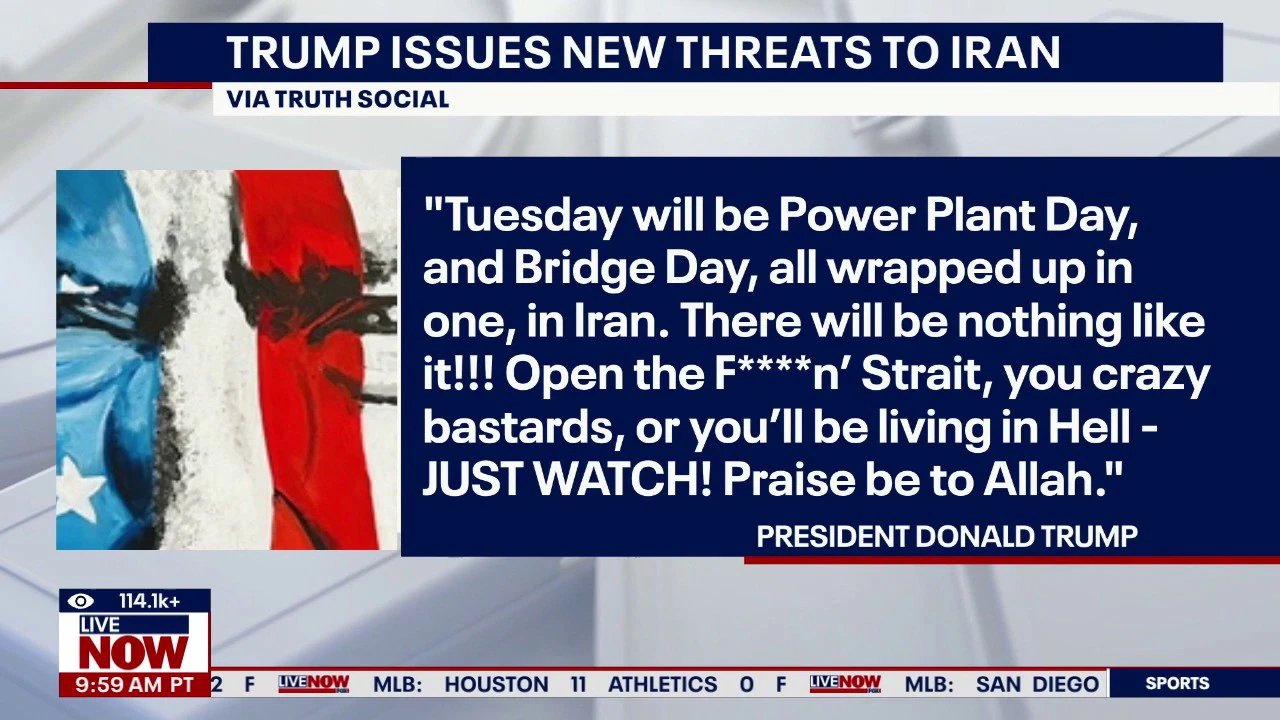
Axios suggested Trump's anger was driven by concern that Israeli escalation was threatening negotiations on a deal to end the U.S.-Israeli war with Iran.
Iran Halts Mediation Over Lebanon Fighting
Iran stopped communicating with mediators after Israel threatened to bomb Beirut, according to reports Tuesday by the Fars and Tasnim news agencies, both believed to be close to Iran's paramilitary Revolutionary Guard. A regional official involved in mediation, speaking on condition of anonymity, said Iran had not communicated at all on Tuesday after saying that a ceasefire needed to be enforced in Lebanon for negotiations to continue.
Iran insists the fighting in Lebanon is part of the wider ceasefire talks with the United States over the war. Israel and the U.S. maintain the fighting in Lebanon is separate from the Iran war talks. Foreign Minister Abbas Araghchi said the U.S.-Iran truce was "unequivocally a ceasefire on all fronts, including in Lebanon" and that "its violation on one front is a violation of the ceasefire on all fronts."
Halting communication from Tehran likely is a means to further pressure Trump over negotiations, which could potentially lead him to pressure Netanyahu to halt or slow the advance of Israeli forces deeper into Lebanon. The U.S. is eager to ease Iran's chokehold on the Strait of Hormuz, through which a fifth of all oil and natural gas passed in peacetime.
Economic Crisis Underpins Iranian Pressure
Iran faces severe economic challenges that may explain its aggressive stance in negotiations. The country's consumer price index reached 77.2% in May compared to the year before, according to Iran's Central Bank, marking inflation unseen since 1942 during World War II. The rate is 8.5% higher than in April. Inflation in daily and general needs like medicine, taxi fares, tobacco and communication fees rose 113.8% from the year before.
A private economic think tank in Iran, the Bamdad Institute of Economic Studies, described the current figures as "an unprecedented rate since World War II." Tehran-based economist Saeed Leilaz warned that annual inflation in Iran could reach 80%, adding that "Iran's society cannot tolerate above 25%" annual inflation.
The rial has collapsed from 32,000 to $1 in 2015 to over 1.7 million to $1 today. Airstrikes have greatly damaged Iranian businesses and its oil industry, while the U.S. naval blockade has been targeting Iranian crude oil shipments, a key source of hard revenue. Analyst Mohsen Jalilvand said: "I have no doubt that if Trump leaves (Iran without a formal peace deal) ... most probably, we will see something like January by the end of summer because of the economic and social situations." January protests over the rial represented the most intense demonstrations to shake the Islamic Republic since its 1979 revolution, with a crackdown killing over 7,000 people according to activists' estimates.
The sources also report that 39 hospital staff were among the 127 injured at Jabal Amel hospital in Tyre, with four in critical condition.