




A $1.24 billion headcount begins
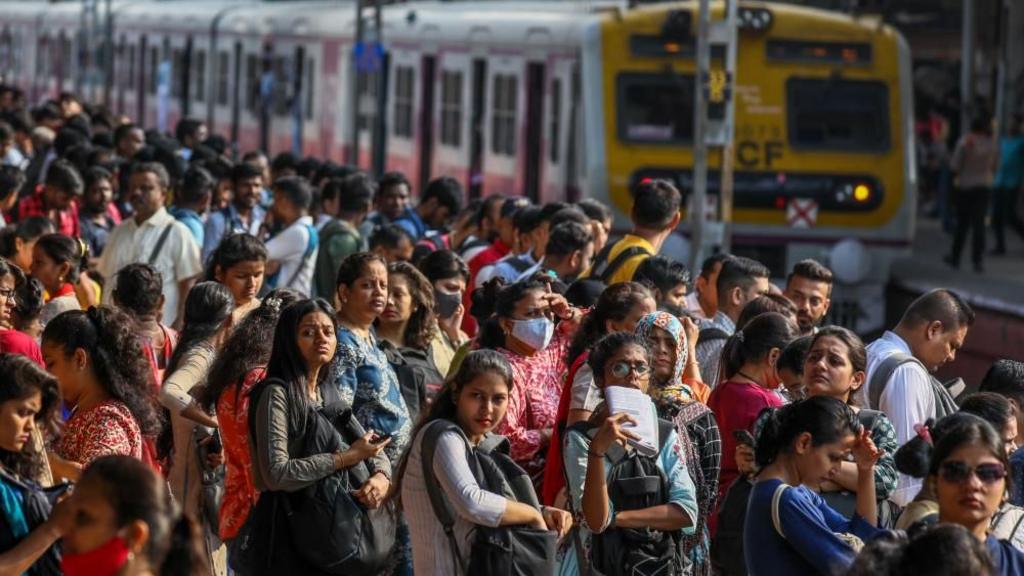
India dispatched three million officials on Wednesday to launch the world's largest census, a $1.24 billion operation that will ask 1.4 billion residents 33 questions about everything from roof materials to internet access. The exercise marks the country's first population count in more than 15 years, leaving policymakers to allocate welfare funds and redraw electoral maps using 2011 data. President Droupadi Murmu, Prime Minister Narendra Modi and Home Minister Amit Shah completed their own self-enumeration forms to kick off the 15-day online registration window in Delhi.
Your house, your cereal, your marriage
Enumerators will ask whether homes have concrete or thatched roofs, what cereal families eat, and whether couples in live-in relationships consider their union "stable," a category that will be recorded as married for the first time. The questionnaire spans housing conditions, asset ownership and access to water, electricity and transport, capturing details that determine eligibility for federal welfare schemes. Residents can answer online in 16 languages, receive a unique digital ID, then hand it to census workers who will verify answers during door-to-door visits.
Two phases, one year, 640,000 villages
Fieldwork runs through March 31 next year, split into a housing census ending this September and a population enumeration in February that will add caste data. The census covers 28 states, eight union territories, 7,000 sub-districts, 9,700 towns and 640,000 villages, with schoolteachers and local clerks serving as enumerators. Digital mobile apps replace paper forms, uploading data in real time after officials walk an estimated 2.5 billion kilometers to reach every household.
First caste count since 1931 ignites politics
India will tally every individual's caste for the first time since 1931, ending a century-long gap that left policymakers "flying blind" on how deprivation tracks the hereditary hierarchy, says Ashoka University economist Ashwini Deshpande. The Modi government reversed its long-standing opposition in May after protests from lower-caste groups and southern states that fear losing parliamentary seats to the faster-growing north. Brahmin and Dalit sub-castes will be catalogued alongside Other Backward Classes, shaping future job and education quotas as well as court battles over sub-classification of reservations.
Outdated 2011 data skews welfare math
Economists warn that using 2011 numbers misallocates billions of dollars because rural areas have urbanized, migrants have surged and fertility has fallen, yet schemes like the rural jobs guarantee still rely on the old rural-urban classification. Ashoka University's Deshpande says surveys sampling from an obsolete frame "introduce systematic errors" that undercount urban migrants living in informal housing, a flaw exposed during the pandemic lockdowns. Without current benchmarks, India has set poverty lines, school grants and health budgets using statistical projections instead of verified headcounts.
North-south seat fight looms
Census results will trigger a nationwide delimitation that may increase northern seats at the expense of the south, intensifying regional tensions already sharpened by tax-revenue disputes. A separate women's reservation law passed last year requires one-third of parliamentary seats for women, but only after the new census and delimitation are complete, tying gender representation to the population count.
Citizenship fears cloud participation
Muslim and migrant communities worry the census could feed a proposed National Register of Citizens that in Assam stripped nearly two million people of citizenship in 2019. Princeton demographer KS James notes some families may "over-report or list absent migrant members" to avoid future exclusion, risking inflated numbers in border districts.
What happens next
Self-enumeration in Delhi and five other pilot regions closes April 15, followed by house-listing visits from April 16 to May 15; the rest of India joins the first phase in rolling monthly windows. February brings the second-phase questionnaire covering education, migration, fertility and the politically charged caste column. Final totals are due by March 31 next year, after which the Election Commission must redraw constituency boundaries before the 2029 national vote, reshaping India's political map for the next decade.