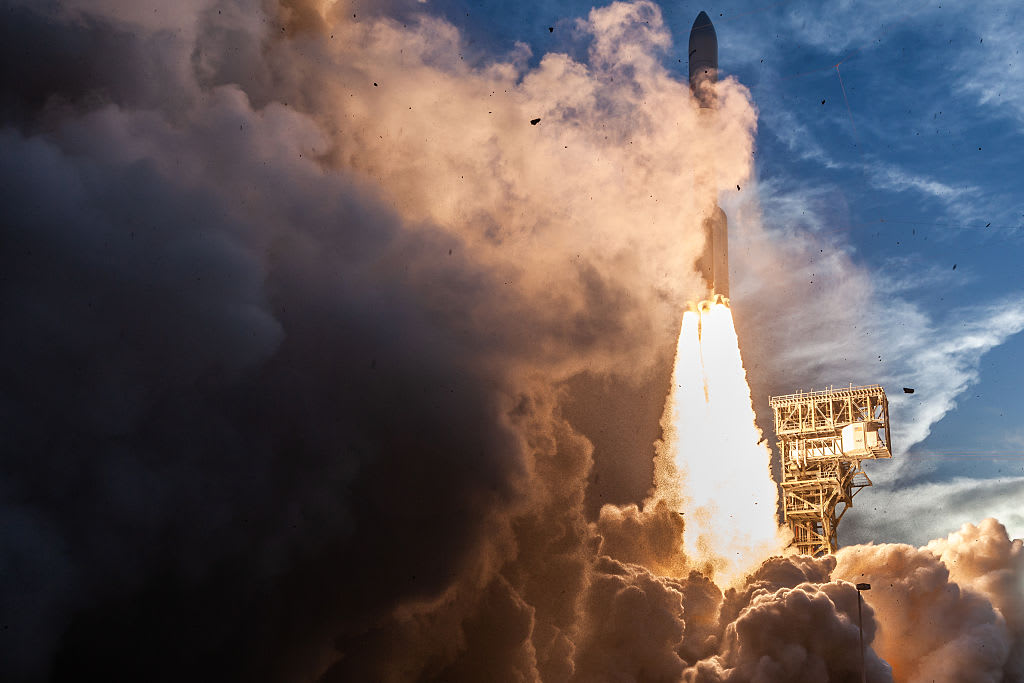
The crew, consisting of NASA astronauts Reid Wiseman, Victor Glover, and Christina Koch, along with Canadian astronaut Jeremy Hansen, lifted off from Kennedy Space Center in Florida at 6:24 p.m. EDT aboard the Space Launch System (SLS) rocket. This mission is a critical test flight in humanity's broader lunar goals.
The crew will spend their first 24 hours orbiting Earth, running checks on the Lockheed Martin Corp.-built Orion capsule, including its communications, navigation, propulsion, maneuvering, and life support systems. Commander Reid Wiseman told CBS News that this first day is "crazy," with the crew testing basic human functions such as "Can it scrub our carbon dioxide? Can it keep us alive? Can we drink water? Can we go to the bathroom?". This testing will occur while the spacecraft is close enough to Earth to allow for a quick return in case of major problems.
The Artemis II mission will achieve several milestones. Victor Glover will become the first person of color to travel beyond low Earth orbit, and Christina Koch will be the first woman to do so. Jeremy Hansen will be the first Canadian to voyage beyond that mark. NASA Chief Historian Brian Odom said this mission "signals a picking up where we last left off."
The Artemis II mission will not land on the moon, but will instead loop behind it, providing an unprecedented view of the far side. Jeremy Hansen acknowledged the risks of the mission, stating, "It's a test flight, and we have to be willing to take that risk."
Leading up to the launch, the Artemis II crew followed a controlled sleep schedule and nutrition plan to maintain energy and hydration. They began their quarantine period on March 18, avoiding close contact with anyone not quarantining with them. The astronauts received their final weather briefing at the Kennedy Space Center, where officials placed the probability of favorable conditions at 80%.
The crew departed for the launch pad in the Airstream-built Astrovan II, a modified Airstream Atlas Touring Coach leased from Boeing. They carried green bags containing their suit helmets, gloves, communication caps, and personal items. The crew took two elevators to reach the 274-foot crew access level, walking across the 60-foot-long crew access arm to the "white room" for final preparations.
Following Artemis II, NASA plans Artemis III to test lunar lander vehicles from SpaceX and Blue Origin in low Earth orbit next year. A moon landing is targeted for Artemis IV in 2028. NASA Administrator Jared Isaacman stated that NASA intends to send astronauts to and from the moon with great frequency, with the goal to stay.
NASA's Artemis II mission launched today, sending four astronauts on a nine-day journey around the moon, marking the first crewed mission to the lunar vicinity in over half a century. The crew, consisting of NASA astronauts Reid Wiseman, Victor Glover, and Christina Koch, along with Canadian astronaut Jeremy Hansen, lifted off from Kennedy Space Center in Florida at 6:24 p.m. EDT aboard the Space Launch System (SLS) rocket. The 5.7 million pound rocket launched with 8.8 million pounds of thrust. This mission is a critical test flight in humanity's broader lunar goals.
The crew will spend their first 24 hours orbiting Earth, running checks on the Lockheed Martin Corp.-built Orion capsule, including its communications, navigation, propulsion, maneuvering, and life support systems. Commander Reid Wiseman told CBS News that this first day is "crazy," with the crew testing basic human functions such as "Can it scrub our carbon dioxide? Can it keep us alive? Can we drink water? Can we go to the bathroom?". This testing will occur while the spacecraft is close enough to Earth to allow for a quick return in case of major problems.
The Artemis II mission will achieve several milestones. Victor Glover will become the first person of color to travel beyond low Earth orbit, and Christina Koch will be the first woman to do so. Jeremy Hansen will be the first Canadian to voyage beyond that mark. NASA Chief Historian Brian Odom said this mission "signals a picking up where we last left off."
The Artemis II mission will not land on the moon, but will instead loop behind it, providing an unprecedented view of the far side. The crew is expected to set a record for the farthest distance humans have ever traveled from Earth: 252,000 miles. Jeremy Hansen acknowledged the risks of the mission, stating, "It's a test flight, and we have to be willing to take that risk."
Leading up to the launch, the Artemis II crew followed a controlled sleep schedule and nutrition plan to maintain energy and hydration. They began their quarantine period on March 18, avoiding close contact with anyone not quarantining with them. The astronauts received their final weather briefing at the Kennedy Space Center, where officials placed the probability of favorable conditions at 80%.
The crew departed for the launch pad in the Airstream-built Astrovan II, a modified Airstream Atlas Touring Coach leased from Boeing. They carried green bags containing their suit helmets, gloves, communication caps, and personal items. The crew took two elevators to reach the 274-foot crew access level, walking across the 60-foot-long crew access arm to the "white room" for final preparations.
Following Artemis II, NASA plans to test lunar lander vehicles in low Earth orbit next year. A moon landing is targeted for Artemis IV in 2028. NASA Administrator Jared Isaacman stated that NASA intends to send astronauts to and from the moon with great frequency, with the goal to stay.
The Artemis II mission is the opening act in a series of missions that will send astronauts to and from the moon with great frequency as we return to stay.
Highlighted text was flagged by the council. Tap to see feedback.