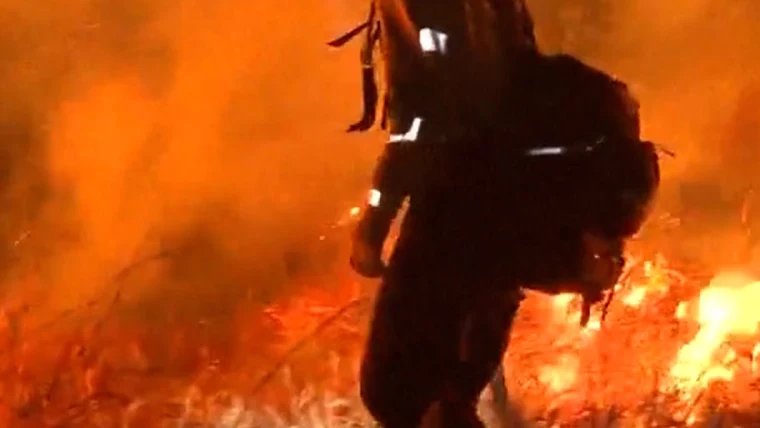
The Springs Fire ignited at 11 a.m. Friday and by 2:30 p.m. had scorched 2.34 square miles (6.06 square kilometers), prompting multiple evacuation orders and warnings east of Moreno Valley in Riverside County. The blaze erupted in a recreational area near the city of 200,000 residents, located 64 miles east of Los Angeles.
The National Weather Service issued a wind advisory for San Bernardino and Riverside County valleys through Saturday afternoon, with sustained winds and gusts up to 50 mph (80 kph) expected. The advisory warned that "tree limbs could be blown down and a few power outages may result," conditions that simultaneously fuel wildfire spread and complicate firefighting efforts.
The firestorm arrives as Southern California experiences record-breaking ocean temperatures, with the La Jolla station registering temperatures 10F above historical average last month. Unlike typical El Niño patterns caused by tropical currents, this marine heatwave stems from a high-pressure atmospheric system that has warmed both air and sea above historic levels since last fall.
Scientists compare the current ocean warming to "the Blob," a three-year marine heatwave a decade ago that devastated marine life through similar prolonged high-pressure conditions. The extended heat prevents normal upwelling, where north-westerly winds push warm surface water offshore and allow cooler, nutrient-rich water to rise. Without this process, phytoplankton populations crash, triggering harmful algal blooms that impact sea lions, dolphins, shore birds and commercial species like Dungeness crab. Researcher Melissa Carter at UC-San Diego Scripps Institution of Oceanography notes these heatwaves are becoming more frequent and persistent, creating feedback loops that reinforce warm, calm conditions.
While shifting atmospheric conditions have recently cooled water temperatures somewhat, scientists remain uncertain whether the marine heatwave will fully dissipate. The same high-pressure systems that warm ocean waters also create tinderbox conditions on land, where 50 mph winds can transform small ignitions into multi-square-mile infernos within hours, forcing entire communities to flee with little warning.
The Springs Fire ignited at 11 a.m. Friday and by 2:30 p.m. had scorched 2.34 square miles (6.06 square kilometers), prompting multiple evacuation orders and warnings east of Moreno Valley in Riverside County. The blaze erupted in a recreational area near the city of 200,000 residents, located 64 miles east of Los Angeles. Cal Fire Riverside public information officer Maggie Cline De La Rosa confirmed the fire's rapid expansion during a wind advisory period.
The National Weather Service issued a wind advisory for San Bernardino and Riverside County valleys through Saturday afternoon, with sustained winds and gusts up to 50 mph (80 kph) expected. The advisory warned that "tree limbs could be blown down and a few power outages may result," conditions that simultaneously fuel wildfire spread and complicate firefighting efforts. The cause of the fire remains under investigation, and authorities have not yet determined how many households face mandatory evacuation orders versus evacuation warnings.
The firestorm arrives as Southern California experiences record-breaking ocean temperatures, with the La Jolla station registering temperatures 10F above historical average last month. Unlike typical El Niño patterns caused by tropical currents, this marine heatwave stems from a high-pressure atmospheric system that has warmed both air and sea above historic levels since last fall. Oceanographer Andrew Leising from the National Oceanic and Atmospheric Administration warns that if warm conditions persist and are followed by a strong El Niño, "we could be looking at much larger impacts next fall and winter."
Scientists compare the current ocean warming to "the Blob," a three-year marine heatwave a decade ago that devastated marine life through similar prolonged high-pressure conditions. The extended heat prevents normal upwelling, where north-westerly winds push warm surface water offshore and allow cooler, nutrient-rich water to rise. Without this process, phytoplankton populations crash, triggering harmful algal blooms that impact sea lions, dolphins, shore birds and commercial species like Dungeness crab. Researcher Melissa Carter at UC-San Diego Scripps Institution of Oceanography notes these heatwaves are becoming more frequent and persistent, creating feedback loops that reinforce warm, calm conditions.
The convergence of record ocean temperatures and explosive wildfire growth exemplifies how climate-driven changes amplify natural disasters across California. While shifting atmospheric conditions have recently cooled water temperatures somewhat, scientists remain uncertain whether the marine heatwave will fully dissipate. The same high-pressure systems that warm ocean waters also create tinderbox conditions on land, where 50 mph winds can transform small ignitions into multi-square-mile infernos within hours, forcing entire communities to flee with little warning.
Highlighted text was flagged by the council. Tap to see feedback.







































The Scripps Institution of Oceanography researcher Melissa Carter also said that the 'Blob' years led to one of the worst Dungeness crab seasons in recent history.