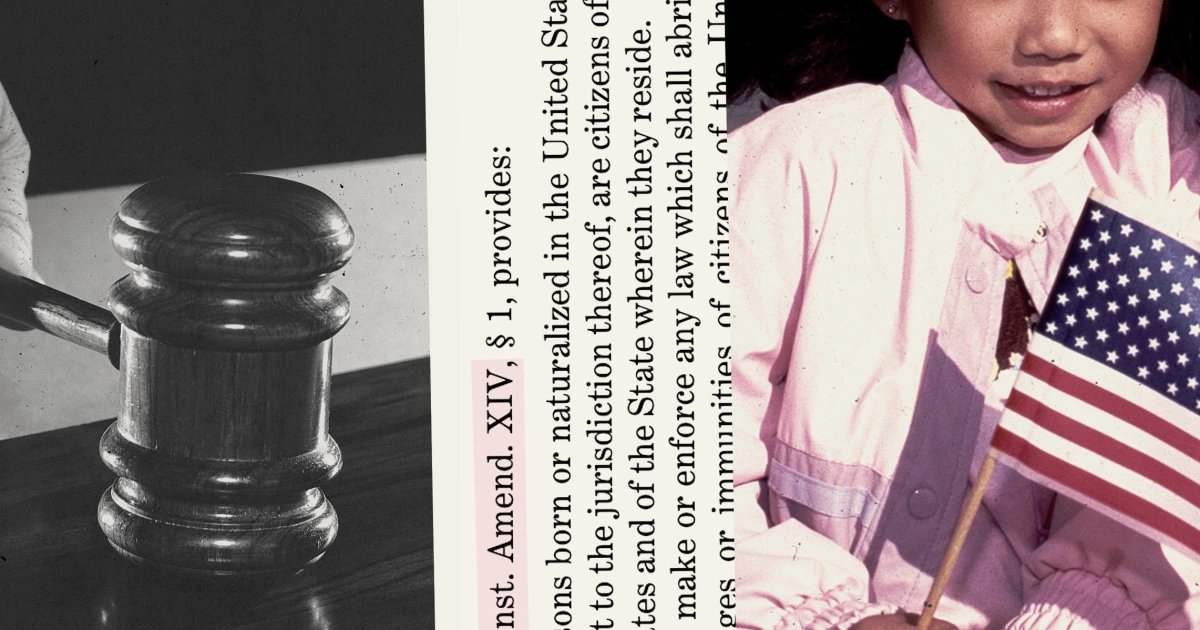
President Trump signed an executive order to block automatic citizenship for babies born in the United States to parents who entered illegally or hold temporary visas. This move challenges the 14th Amendment's provision that "all persons born or naturalized in the United States and subject to the jurisdiction thereof, are citizens of the United States." The order affects more than a quarter of a million babies born annually.
Solicitor General D. John Sauer argues that people in the country illegally or temporarily are not "subject to the jurisdiction" of the United States, drawing on the amendment's phrasing to support Trump's position. Conservative scholars, as noted in the New York Times, once agreed the 14th Amendment guaranteed citizenship for U.S.-born babies, but Trump's order has split opinions. Cecillia Wang, from the American Civil Liberties Union, counters that the administration's view ignores historical interpretations and federal laws, including the 1940 statute that codified birthright citizenship. This debate places the Constitution's original intent at the center of the case, with both sides presenting evidence from legal texts.
The Supreme Court's 1875 case, U.S. v. Cruikshank, explored federal enforcement of rights, offering a historical lens on citizenship disputes. That decision stemmed from Reconstruction-era tensions, much like the 14th Amendment's roots in reversing the Dred Scott ruling, which denied citizenship to Black people. The current case builds on this legacy, as lower courts have already ruled the order illegal, setting the stage for a potential reversal.
An Argentine woman who gave birth in Florida last year obtained a U.S. passport for her son, viewing it as proof of his citizenship. She entered the U.S. in 2016 on a visa and applied for a green card, but Trump's order threatens similar families by denying citizenship based on parental status. Her experience highlights the human cost, as she expressed relief that her child might still be protected amid the legal fight.
The Supreme Court will hear arguments on Wednesday, April 1, starting at 10 a.m. EDT, with Justice Sonia Sotomayor among those who have criticized the order as unconstitutional. Trump's administration likens the case to landmark decisions like Brown v. Board of Education, aiming to clarify misconceptions about citizenship. Opponents, including advocates for immigrants, warn that upholding the order would enable broader deportations and restrictions. This decision could reshape immigration policy, affecting how families plan their futures in the United States.
President Trump signed an executive order on January 20, 2025, to block automatic citizenship for babies born in the United States to parents who entered illegally or hold temporary visas. This move challenges the 14th Amendment's promise that "all persons born or naturalized in the United States and subject to the jurisdiction thereof, are citizens of the United States." The order affects more than a quarter of a million babies born annually, potentially altering family stability and access to education for children in immigrant households. Many Americans now face uncertainty about their children's legal status, which could impact jobs, housing, and daily life.
Solicitor General D. John Sauer argues that people in the country illegally or temporarily are not "subject to the jurisdiction" of the United States, drawing on the amendment's phrasing to support Trump's position. Conservative scholars, as noted in the New York Times, once agreed the 14th Amendment guaranteed citizenship for U.S.-born babies, but Trump's order has split opinions. Cecillia Wang, from the American Civil Liberties Union, counters that the administration's view ignores historical interpretations and federal laws, including the 1940 statute that codified birthright citizenship. This debate places the Constitution's original intent at the center of the case, with both sides presenting evidence from legal texts.
The Supreme Court's 1875 case, U.S. v. Cruikshank, explored federal enforcement of rights, offering a historical lens on citizenship disputes. That decision stemmed from Reconstruction-era tensions, much like the 14th Amendment's roots in reversing the Dred Scott ruling, which denied citizenship to Black people. Trump's claim echoes these earlier conflicts by questioning automatic citizenship guarantees. The current case builds on this legacy, as lower courts have already ruled the order illegal, setting the stage for a potential reversal.
An Argentine woman who gave birth in Florida last year obtained a U.S. passport for her son, viewing it as proof of his citizenship. She entered the U.S. in 2016 on a visa and applied for a green card, but Trump's order threatens similar families by denying citizenship based on parental status. Her experience highlights the human cost, as she expressed relief that her child might still be protected amid the legal fight. Such cases show how the ruling could disrupt lives, forcing parents to reconsider education and work opportunities for their children.
The Supreme Court will hear arguments on Wednesday, April 1, starting at 10 a.m. EDT, with Justice Sonia Sotomayor among those who have criticized the order as unconstitutional. Trump's administration likens the case to landmark decisions like Brown v. Board of Education, aiming to clarify misconceptions about citizenship. Opponents, including advocates for immigrants, warn that upholding the order would enable broader deportations and restrictions. This decision could reshape immigration policy, affecting how families plan their futures in the United States.
Highlighted text was flagged by the council. Tap to see feedback.