



A Rare Concentration of Authority
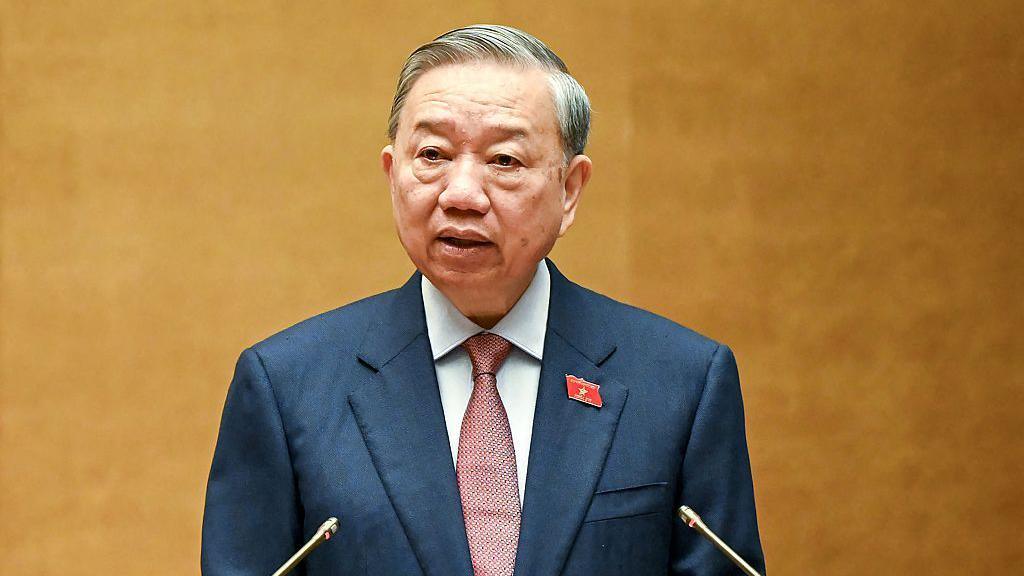
Vietnam's National Assembly elected Communist Party chief To Lam as president on Tuesday, uniting the country's two most powerful positions in a single leader for the first time in recent decades. The 500-seat assembly gave To Lam a five-year term that makes him the most powerful Vietnamese leader in recent decades.
The election represents a fundamental shift in Vietnam's governing structure. The Communist Party of Vietnam has always preferred collective leadership shared among the four most senior national positions, now expanded to five, known as the "five pillars". To Lam has now secured both the party secretary general role and the state presidency, breaking with that tradition of collective leadership.
How To Lam Built His Coalition
To Lam rose to prominence over the last decade as Minister for Public Security, where he enforced a nationwide anti-corruption drive that disgraced and purged many potential rivals. In 2024, he temporarily assumed both the party leadership and presidency following the resignation of then-president Vo Van Thuong and the death of party boss Nguyen Phu Trong. He retained his party secretary general position in January, when Chinese President Xi Jinping congratulated him and pledged to work with him to "carry forward the traditional friendship" between the two socialist neighbors.

The sources also report that To Lam was unanimously elected by all 495 deputies present at the National Assembly session, with five lawmakers absent.

The sources also report that To Lam's anti-corruption drive has disciplined and dismissed tens of thousands of officials through the "blazing furnace" campaign started by his predecessor.
Carl Thayer, an Emeritus Professor at the University of New South Wales, told the BBC that To Lam's power remains constrained by Vietnam's institutional structure. "To Lam is the first among equals, but he's also answerable to the Politburo," Thayer said, noting other senior figures in the 19-member committee. He added that "To Lam has shown that he can work collectively and build coalitions," suggesting the concentration of titles does not translate to absolute authority.
The Economic Test Ahead
To Lam told the National Assembly that his top priority was maintaining peace and stability as the foundation for growth. He called his dual role a "huge honor" and a "sacred and noble duty," and pledged to improve people's livelihoods so all could share the benefits of development.
The real pressure on To Lam lies in meeting ambitious economic targets. He has set a target of keeping annual economic growth at more than 10% and aims to transform Vietnam into an upper-income country within two decades. To achieve this, he has proposed a "new growth model" that accelerates decision-making and expands the private sector. He transformed the governance model in the country, scrapping eight ministries while pushing massive infrastructure projects.



























The sources report differing assembly sizes: BBC states 500 seats with unanimous election, while Deutsche Welle reports 495 deputies present with all endorsing the nomination, five absent.