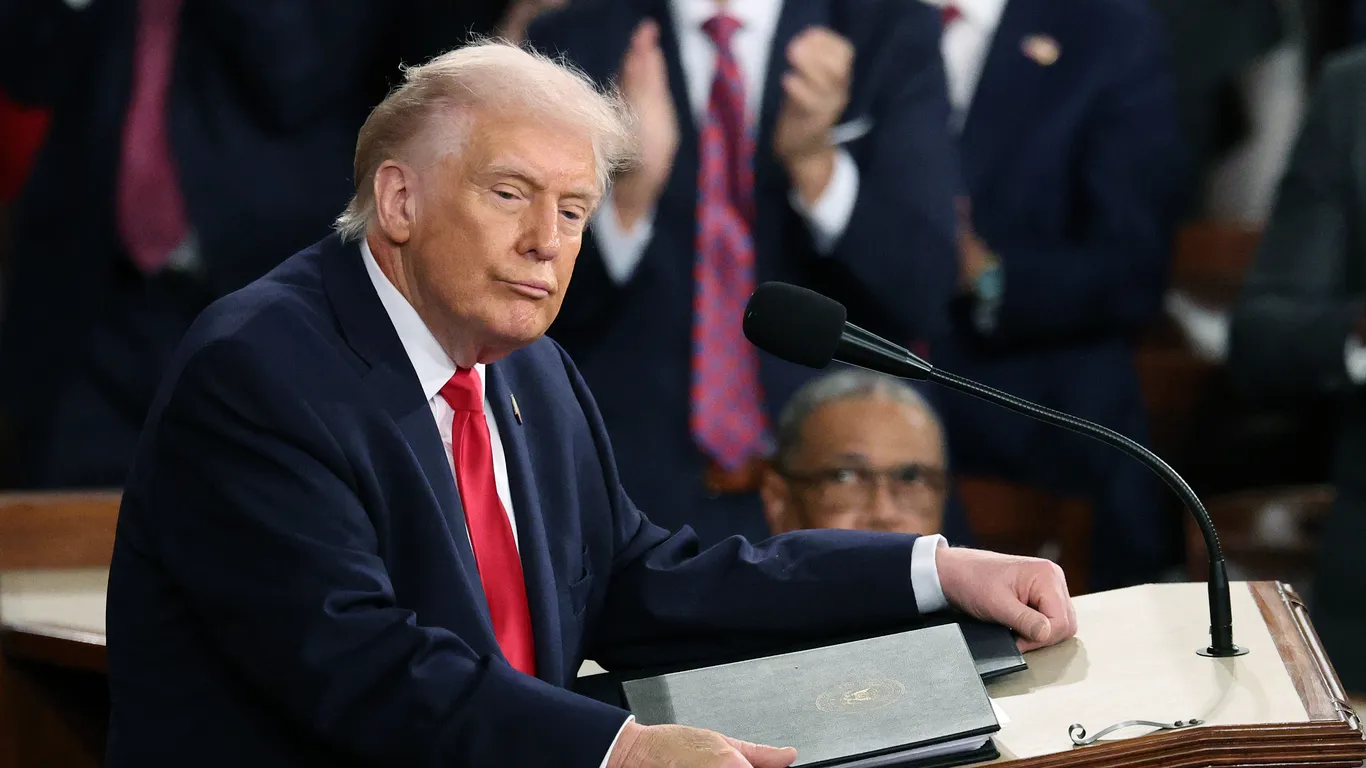
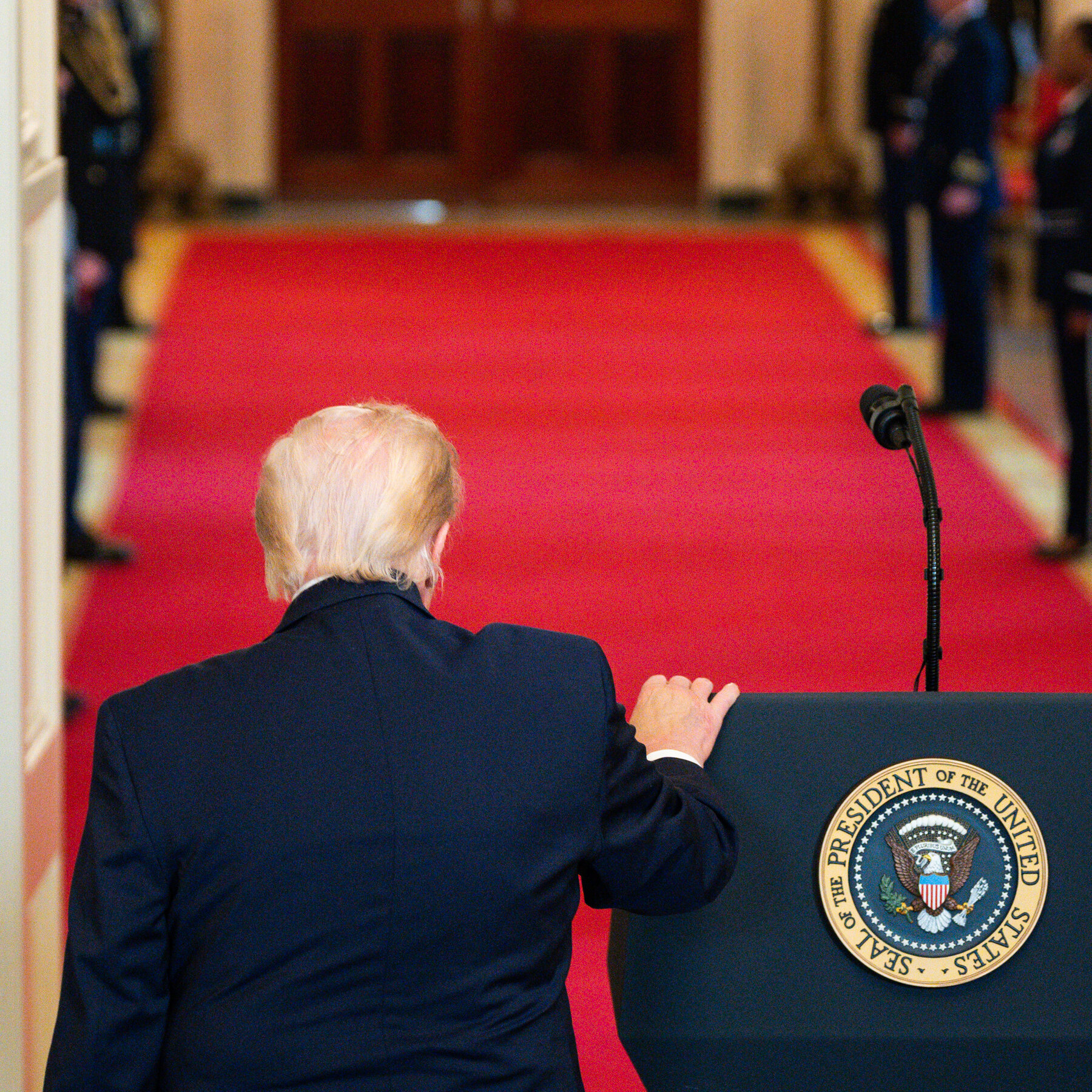
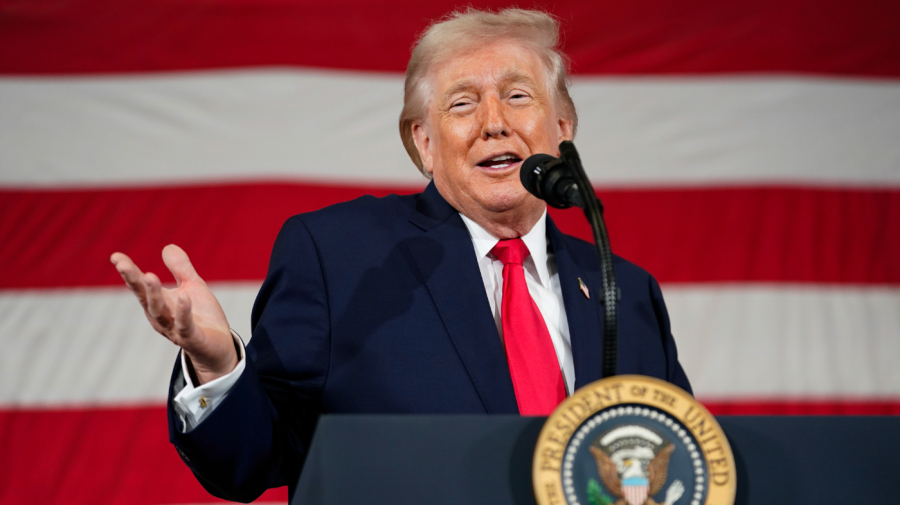
President Trump spent 108 minutes at the podium Tuesday night delivering the longest State of the Union address in American history. The speech featured Olympic heroes, decorated veterans, and medal ceremonies. A CNN flash poll conducted immediately after found that 31 percent of Americans who watched felt confident Trump would lower their cost of living, while 29 percent were not confident.
The speech came as the House simultaneously rejected a bipartisan aviation safety bill after the Pentagon withdrew support. The bill's supporters said it would have strengthened oversight of commercial air travel.
Trump claimed the U.S. economy is booming. He touted $18 trillion in foreign investment, said food prices are "plummeting," and claimed his administration achieved drug cost reductions of "300%, 400%, 500%, 600%."
PolitiFact and the Associated Press flagged these claims as exaggerated or false. The CNN flash poll showed the gap between Trump's claims and voter confidence: 31 percent felt confident he would lower their cost of living.
Trump defended his tariff agenda despite the Supreme Court striking down many of his tariffs last week, saying he would pursue them under alternative legal statutes. The chamber did not respond with raucous applause to Trump's tariff remarks, reflecting reported uneasiness among even Republican members about ceding constitutional authority to the president.
Trump announced a plan to offer Americans without employer-sponsored retirement accounts access to the same retirement plans available to federal workers, with the government matching contributions up to $1,000 annually. Roughly 50 million Americans lack employer-based retirement plans like 401(k)s. Economist Teresa Ghilarducci called it "a big deal," though she noted the looming Social Security trust fund depletion in 2033 remains unaddressed.
Trump suggested tech giants should "build their own power plants" for artificial intelligence data centers, but the White House has not released legislative text or regulatory details.
Trump awarded the Presidential Medal of Freedom to Connor Hellebuyck, the U.S. men's hockey team's goaltender. The team received one of the longest standing ovations of the night—the only moment that drew sustained bipartisan applause. Trump also presented two Congressional Medals of Honor, two Purple Hearts, and a Legion of Merit to service members and first responders, including a Coast Guard rescue swimmer who saved 164 Texans during flooding.
The women's hockey team, which also won gold, declined their invitation due to scheduling conflicts. Trump had faced backlash earlier in the week for appearing to lament having to invite them, saying he would be "impeached" if he didn't.
Roughly half of House and Senate Democrats skipped the speech entirely. Among those who attended, confrontation dominated. Reps. Rashida Tlaib and Ilhan Omar shouted at Trump repeatedly. When Trump asked the audience to stand if they agreed that "the first duty of the American government is to protect American citizens, not illegal aliens," most Democrats remained seated. Trump responded by telling them they "should be ashamed."
Omar later defended her heckling, telling CNN that Trump's administration was responsible for killing two of her constituents. Tlaib and Omar exited the chamber shortly after their confrontation with the president.
Rep. Al Green held up a sign reading "BLACK PEOPLE AREN'T APES" as Trump entered the chamber—a reference to a racist video depicting the Obamas that was posted on Trump's Truth Social account this month. A White House official was initially blamed for the posting, though Trump later said he saw the video and approved it being shared. Multiple Republicans, including House Majority Leader Steve Scalise and Sen. Markwayne Mullin, confronted Green verbally and attempted to remove the sign from his hands. Green was escorted out by Capitol police. House Speaker Mike Johnson signaled Republicans will "seriously" consider censuring Green.
A guest of Rep. Ilhan Omar, Aliya Rahman, was arrested by Capitol police for refusing to sit down during the address. Rahman is a U.S. citizen who was removed from her car by immigration agents in January during enforcement operations.
Democrats brought Epstein accusers and their family members as guests, wearing "release the files" pins. Reps. Thomas Massie (R-Ky.) and Ro Khanna (D-Calif.), a rare bipartisan pair on the Epstein issue, sat together on the Democratic side of the aisle to emphasize the need for accountability. Rep. Nancy Mace wore a butterfly pin given to her by the brother of Virginia Giuffre Roberts, a prominent Epstein accuser who died by suicide last year.
Trump's speech included strong accusations against Iran. He accused Iran of killing and maiming thousands of Americans with roadside bombs, of working to build missiles that will soon reach the U.S., and of pursuing nuclear weapons. With U.S. envoys set to meet Iranian officials in Geneva on Thursday for last-ditch nuclear talks, Trump declared: "I will make peace wherever I can, but I will never hesitate to confront threats to America wherever we must."
According to reporting, Trump has ordered the largest U.S. military buildup in the Middle East since the invasion of Iraq. Sources indicate the House is set to reject a bipartisan war powers resolution sponsored by Reps. Ro Khanna and Thomas Massie that would reassert Congress's authority to wage war.
Hours before Trump took the podium, the House rejected a bipartisan aviation safety bill after the Pentagon withdrew its support. The bill's supporters said it would have strengthened oversight of commercial air travel. The Pentagon's reversal left supporters of the measure scrambling. For the roughly 2.5 million Americans who fly weekly, the bill's defeat means no additional oversight beyond existing FAA rules.
House Minority Leader Hakeem Jeffries called the speech "riddled with dirty rotten lies," criticizing Trump's "unwillingness to confront the affordability crisis that Donald Trump has made worse throughout his entire time in office." Senate Minority Leader Chuck Schumer said Trump is "in a bubble" and "doesn't even know what the average American is going through." Former House Speaker Nancy Pelosi called the speech "lazy," arguing that Trump took credit for achievements he had nothing to do with and failed to address Epstein survivors.
Rep. Katherine Clark, the House Minority Whip, boycotted the speech, saying she would rather hear from constituents than listen to Trump speak to the nation.
The address focused on projecting strength through dramatic elements and political contrasts. With approval ratings low and voters skeptical of his economic stewardship, Trump emphasized culture-war messaging, attacked Democrats as "crazy," and laid out a case for potential military action abroad rather than address the affordability crisis voters say concerns them most.
President Trump spent 108 minutes at the podium Tuesday night delivering the longest State of the Union address in American history—but voters watching at home heard little about the economic anxiety that dominates their daily lives. Instead, Trump filled the chamber with Olympic heroes, decorated veterans, and medal ceremonies, creating a made-for-television spectacle designed to distract from sagging approval ratings and widespread concern about affordability.
The speech came as the House simultaneously rejected a bipartisan aviation safety bill after the Pentagon abruptly withdrew support, leaving a critical gap in oversight of commercial air travel. For the roughly 2.5 million Americans who fly each week, the rejection means fewer safeguards on the planes they board.
Trump claimed the U.S. economy is booming. He touted $18 trillion in foreign investment, said food prices are "plummeting," and claimed his administration achieved drug cost reductions of "300%, 400%, 500%, 600%."
Fact-checkers immediately flagged these claims as exaggerated or false. Only 31 percent of Americans who watched the speech felt confident Trump would lower their cost of living, according to a CNN flash poll conducted immediately after. The disconnect reflects a deeper political reality: voters remain anxious about their finances regardless of what the president says about them.
Trump also doubled down on his tariff agenda despite the Supreme Court striking down many of his tariffs last week. He called the ruling "very unfortunate" and hinted at using alternative legal statutes to resurrect them—potentially using tariffs to replace income taxes entirely. Even Republicans in the chamber offered muted applause, signaling discomfort with ceding constitutional authority to the president.
Buried in the bravado were two substantive proposals. Trump announced a plan to offer Americans without employer-sponsored retirement accounts access to the same retirement plans available to federal workers, with the government matching contributions up to $1,000 annually. Roughly 50 million Americans lack employer-based retirement plans like 401(k)s, making this a potentially significant expansion of retirement savings access.
Trump also unveiled a plan to force tech giants to build their own power plants for artificial intelligence data centers, addressing growing concerns about energy consumption in the AI boom.
Trump awarded the Presidential Medal of Freedom to Connor Hellebuyck, the U.S. men's hockey team's goaltender. The team received one of the longest standing ovations of the night—the only moment that drew sustained bipartisan applause. Trump also presented two Congressional Medals of Honor, two Purple Hearts, and a Legion of Merit to service members and first responders, including a Coast Guard rescue swimmer who saved 164 Texans during flooding.
The women's hockey team, which also won gold, declined their invitation due to scheduling conflicts. Trump said they would visit the White House later.
Roughly half of House and Senate Democrats skipped the speech entirely. Among those who attended, confrontation dominated. Reps. Rashida Tlaib and Ilhan Omar shouted at Trump repeatedly. When Trump asked the audience to stand if they agreed that "the first duty of the American government is to protect American citizens, not illegal aliens," most Democrats remained seated. Trump responded by telling them they "should be ashamed."
Omar later defended her heckling, telling CNN that Trump's administration was responsible for killing two of her constituents. Tlaib and Omar exited the chamber shortly after their confrontation with the president.
Rep. Al Green held up a sign reading "BLACK PEOPLE AREN'T APES" as Trump entered the chamber—a reference to a racist video depicting the Obamas that was reposted on Trump's Truth Social account this month. Multiple Republicans, including House Majority Leader Steve Scalise and Sen. Markwayne Mullin, physically confronted Green and attempted to snatch the sign from his hands. Green was escorted out by Capitol police. House Speaker Mike Johnson signaled Republicans will "seriously" consider censuring Green, as they did last year.
A guest of Rep. Ilhan Omar, Aliya Rahman, was arrested by Capitol police for refusing to sit down during the address. Rahman is a U.S. citizen who was dragged from her car by immigration agents in January as part of the Trump administration's escalated deportation efforts.
Democrats also brought Epstein accusers and their family members as guests to the speech. They wore "release the files" pins and demanded justice. Reps. Thomas Massie and Ro Khanna, a rare bipartisan pair on the Epstein issue, sat together on the Democratic side of the aisle to emphasize the need for accountability. Rep. Nancy Mace wore a butterfly pin given to her by the brother of Virginia Giuffre Roberts, a prominent Epstein accuser who died by suicide last year.
Trump used the speech to lay groundwork for a potential military confrontation with Iran. He accused Iran of killing and maiming thousands of Americans with roadside bombs, of working to build missiles that will soon reach the U.S., and of pursuing nuclear weapons. With U.S. envoys set to meet Iranian officials in Geneva on Thursday for last-ditch nuclear talks, Trump declared: "I will make peace wherever I can, but I will never hesitate to confront threats to America wherever we must."
Trump has already ordered the largest U.S. military buildup in the Middle East since the invasion of Iraq. The House appears poised to reject a bipartisan war powers resolution sponsored by Reps. Ro Khanna and Thomas Massie that would reassert Congress's authority to wage war, potentially giving Trump a freer hand to act unilaterally.
Hours before Trump took the podium, the House rejected a bipartisan aviation safety bill after the Pentagon abruptly withdrew its support. The bill would have strengthened oversight of commercial air travel at a moment when safety concerns are mounting. The Pentagon's sudden reversal left supporters of the measure scrambling and left commercial aviation with fewer safeguards than it had days earlier.
For the 2.5 million Americans who fly weekly, the rejection means less regulatory scrutiny of the aircraft they board and the maintenance practices airlines follow.
House Minority Leader Hakeem Jeffries called the speech "riddled with dirty rotten lies," particularly regarding Trump's refusal to confront what he called the affordability crisis that Trump has worsened. Senate Minority Leader Chuck Schumer said Trump is "in a bubble" and doesn't know what average Americans are experiencing. Former House Speaker Nancy Pelosi called the speech "lazy," arguing that Trump took credit for achievements he had nothing to do with.
Rep. Katherine Clark, the House Minority Whip, boycotted the speech, saying she would rather hear from constituents than listen to Trump lie to the nation.
Trump's address was not designed to persuade. It was designed to maintain narrative control ahead of November's midterm elections. By surrounding himself with heroes more popular than himself and filling the speech with made-for-TV moments, Trump attempted to project strength and success despite polling that shows most Americans aren't buying his economic claims.
The speech revealed a presidency increasingly dependent on spectacle and confrontation as strategy. With his approval ratings at their lowest point and voters skeptical of his economic stewardship, Trump chose to double down on culture-war messaging, attack Democrats as "crazy," and lay the groundwork for potential military action abroad rather than address the affordability crisis voters say keeps them up at night.
Highlighted text was flagged by the council. Tap to see feedback.