




How This Speech Hits Your Wallet
President Trump proposed matching contributions up to $1,000 per year for workers without employer-sponsored retirement plans, similar to benefits federal workers receive. Democrats' interruptions during the speech highlight a deepening divide that might stall these plans, leaving millions of Americans without the financial security they need as midterms loom. Trump's record-long address, filled with claims and policy pitches, didn't just celebrate his agenda—it exposed battles over your money that could reshape the next two years.
The Speech's Key Moments
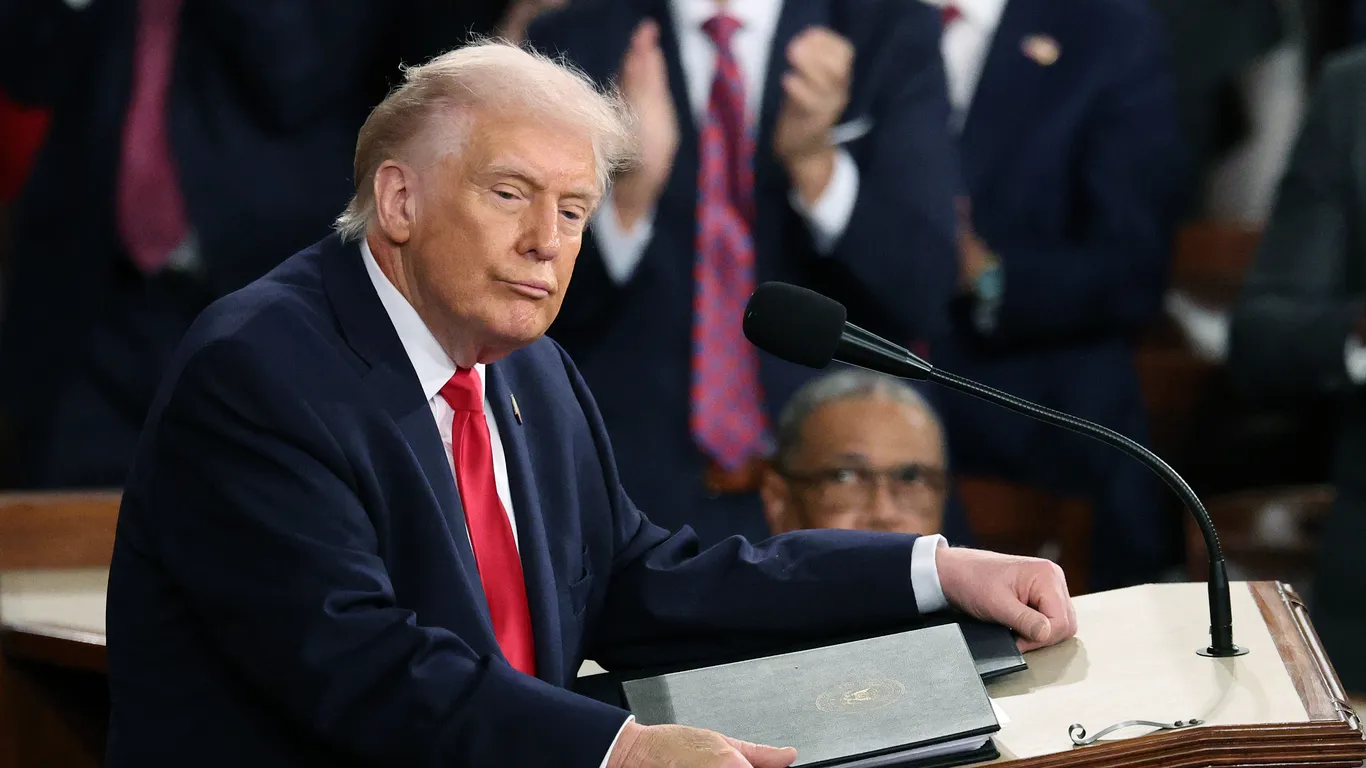
Trump commanded the House chamber, delivering the longest State of the Union in history and highlighting what he characterized as achievements. He honored everyday heroes, from Olympic gold medalists like U.S. men's hockey goalie Connor Hellebuyck to veterans receiving Medals of Honor, drawing rare bipartisan applause. Trump claimed credit for an economic surge, citing plummeting inflation and rising incomes—claims that fact-checkers later disputed. He unveiled a plan to extend retirement accounts to the 50 million Americans without employer-sponsored options. This initiative builds on a previous law by letting workers opt in via their tax forms. Trump proposed the government matching up to $1,000 annually to help them benefit from stock market gains.
Yet, the speech shifted to discussions of confrontation as Trump targeted Democrats on issues like border security and Iran. He accused Iran of killing Americans and pursuing nuclear weapons. He defended his tariffs despite a recent Supreme Court setback and proposed forcing tech companies to build their own power plants for AI, stating his aim was to ease energy demands. These pledges painted a picture of a "golden age," but FactCheck.org, France 24, and Deutsche Welle documented false or misleading claims about drug price cuts and foreign investments.
Democrats' Outrage and Protests
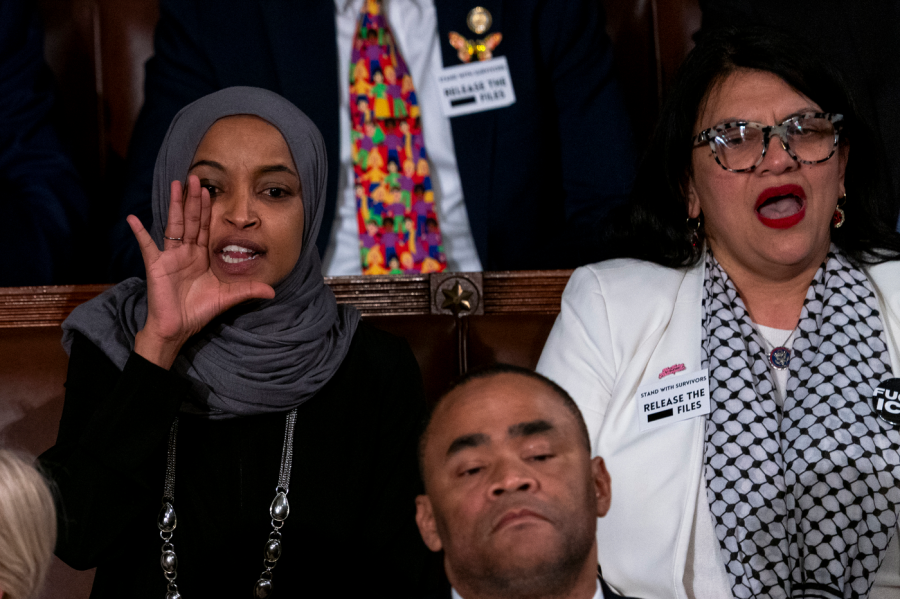
House Minority Leader Hakeem Jeffries defended Democrats' disruptions, describing the speech as containing inaccuracies. Representatives Rashida Tlaib and Ilhan Omar protested during the speech. Omar said she had to "remind him that his administration was responsible for killing two of my constituents." Tensions peaked when a guest of Omar's, Minneapolis resident Aliya Rahman, was arrested by Capitol Police on unlawful conduct charges for refusing to sit during the address. Omar claimed Capitol Police "aggressively handled" her guest, forcing her to seek medical care.
About half of Democratic lawmakers boycotted the event. Those who attended heard Senate Minority Leader Chuck Schumer later label it Trump's "state of delusion," while Republicans praised the speech's vision. Former Vice President Kamala Harris dismissed it as "full of lies." Representative Nancy Pelosi noted that Epstein survivors in the audience, wearing pins demanding justice, were not acknowledged by Trump during the speech. Jeffries defended the protests as "restrained and forceful," a change from 2025 when he privately criticized disruptive Democrats. This shift may influence Democratic strategy heading into midterms.
The Real Impact on Everyday Life
Trump's retirement proposal targets the 50 million Americans without employer-sponsored retirement plans, offering a straightforward way to build savings through tax-form opt-in. However, Democratic opposition, citing fact-checks that documented false economic claims in the speech, might delay or dilute these benefits, especially as Social Security faces depletion in 2033.
Labor economist Teresa Ghilarducci called the plan "a big deal" for addressing retirement gaps. Democrats have questioned whether Trump will follow through, citing his previous unfulfilled economic promises. For families dealing with rising costs, Trump's economic claims were disputed by fact-checkers. Whether the retirement proposal advances depends on Congressional action before midterms.
What's Next for the Nation
As midterms approach, Trump's proposals will face scrutiny in Congress. Speaker Mike Johnson must navigate disagreements between Republicans and Democrats over economic policy and other priorities. For the 50 million Americans without employer-sponsored retirement plans, the outcome could mean up to $1,000 in annual matching contributions—or nothing if political gridlock prevents passage.