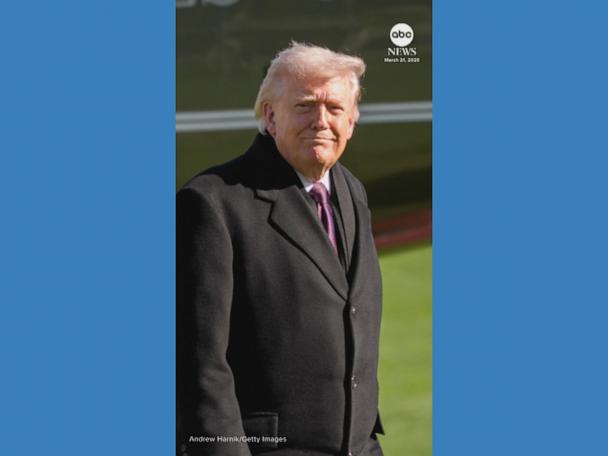
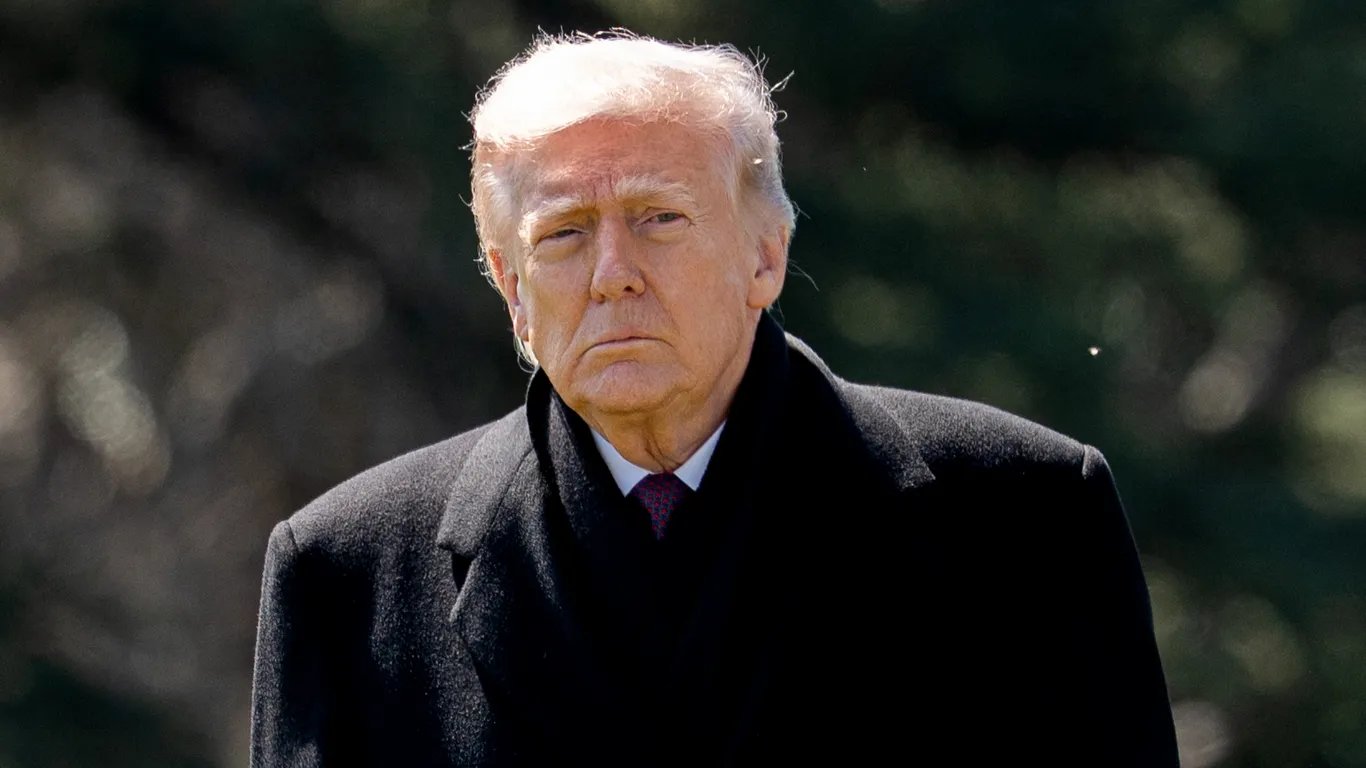
President Trump gave Iran 48 hours to fully reopen the Strait of Hormuz on Saturday night, threatening to "hit and obliterate" Iranian power plants if Tehran fails to comply. "If Iran doesn't FULLY OPEN, WITHOUT THREAT, the Strait of Hormuz, within 48 HOURS from this exact point in time, the United States of America will hit and obliterate their various POWER PLANTS, STARTING WITH THE BIGGEST ONE FIRST!" Trump wrote on Truth Social. Iran's largest power plant is the Bushehr Nuclear Power Plant, located on the Persian Gulf in southwest Iran and the country's only commercial nuclear facility.
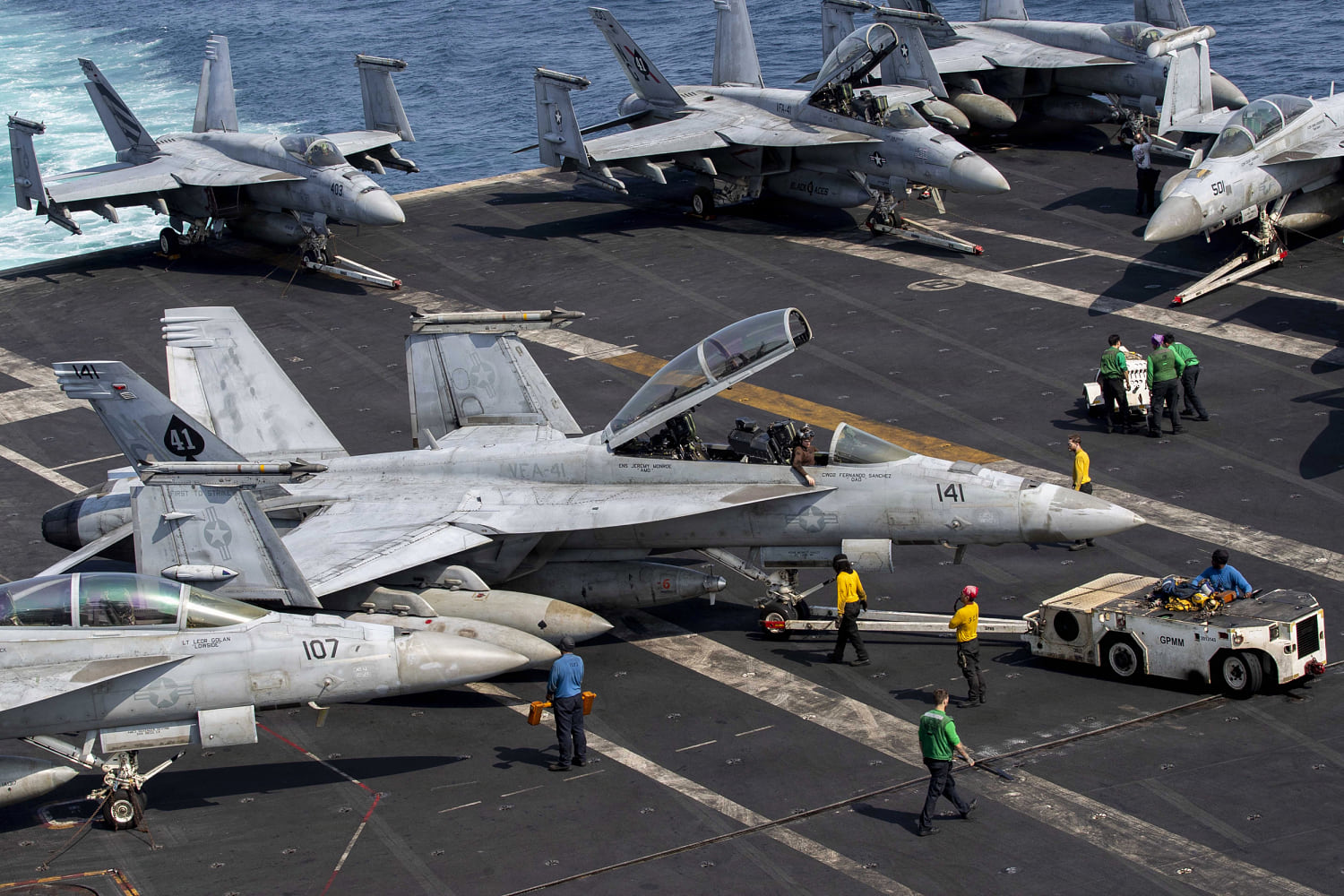
The ultimatum marks a significant escalation barely a day after Trump said the U.S. was "winding down" military operations against Iran. The Strait of Hormuz, through which roughly 20 percent of the world's oil transited before the war, has been effectively closed to most commercial traffic since Iran began attacking vessels three weeks ago. Admiral Brad Cooper of U.S. Central Command said the U.S. has struck over 8,000 military targets in the war, including 130 Iranian vessels, in what he called "the largest elimination of a navy over a three-week period since World War II."
Iran responded to Trump's threat by warning it would target energy and desalination infrastructure across the Gulf region. Mohammad Bagher Ghalibaf, speaker of Iran's parliament, wrote on X that if U.S. and Israeli attacks hit Iranian power plants, "the critical infrastructure, energy infrastructure, and oil facilities throughout the region will be considered legitimate targets and will be destroyed in an irreversible manner, and the price of oil will remain high for a long time."
On Saturday night, Iran launched missiles at two southern Israeli cities near the country's main nuclear research center. Iran's state-affiliated Tasnim news agency confirmed the missile attacks on both cities were retaliation for Israel's earlier strike on Iran's Natanz nuclear enrichment facility. The International Atomic Energy Agency said it had not "received any indication of damage to the nuclear research center Negev" in Dimona, but Director General Rafael Mariano Grossi stressed that "maximum military restraint should be observed, in particular in the vicinity of nuclear facilities."
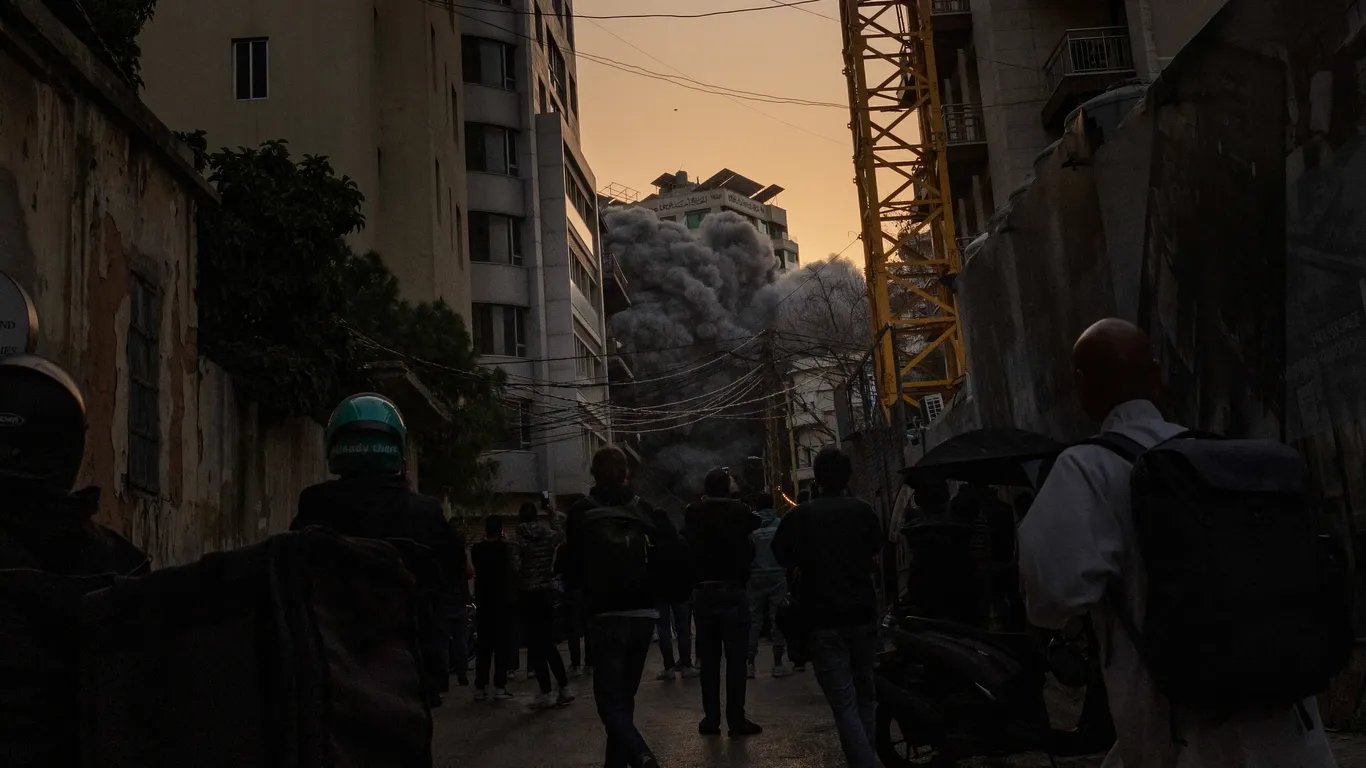
The escalation involving nuclear sites marks a dangerous shift in the conflict's trajectory. Israel's military continued striking Iranian targets overnight, with authorities reporting more than 1,300 civilians killed since the start of the war.
The attacks on energy facilities are inflicting lasting damage to global supply chains. Qatar's energy minister, Saad al-Kaabi, told Reuters that strikes wiped out 17 percent of Qatar's natural gas export capacity, with nearly 13 million tons of liquefied natural gas sidelined annually for as long as five years. Matt Bauer, a commodity strategist at Ned Davis Research, wrote that while oil markets have "so far faced logistics disruptions, not true supply destruction," attacks on South Pars and Iran's retaliation "raise the risk that the conflict is shifting toward physical damage of production capacity."
The blockage of the Strait of Hormuz and damage to energy infrastructure are affecting global supply chains. About a third of the world's seaborne fertilizer supply and almost half of the world's urea transit through the Strait of Hormuz. U.S. farmers who did not pre-order fertilizer might not get enough in time for spring planting, the American Farm Bureau told the AP, potentially resulting in lower crop yields that would put upward pressure on grocery prices into the next year. Qatar is the world's second-largest helium producer, and the damage to its natural gas facilities will squeeze production of this critical input for semiconductor manufacturers racing to keep up with AI-related demand.
Oxford Economics now expects consumer spending among Americans, adjusted for inflation, will rise by 1.9 percent this year, which would be the slowest annual growth in 13 years outside the pandemic. Global airlines face their worst financial crisis since COVID-19 due to the Iran conflict, with over 50 billion dollars wiped off major carriers' market value. United Airlines CEO Scott Kirby said the carrier was preparing for the possibility that oil prices could climb as high as $175 a barrel, though he noted he does not necessarily expect prices to reach that level. Brent crude was at about 112 dollars a barrel as of Friday evening, up from around 70 dollars before the war started.
Despite the military escalation, Trump's team has begun initial discussions on potential peace talks with Iran. Envoys Jared Kushner and Steve Witkoff are involved in discussions around potential diplomacy, with Egypt, Qatar and the United Kingdom passing messages between the two sides. Egypt and Qatar have informed the U.S. and Israel that Iran is interested in negotiating, but with very tough terms.
Iran's demands include a ceasefire, guarantees that the war will not resume in the future, and compensation. Trump said Friday that he does not oppose talks but is not interested at the moment in meeting Iran's demands for a ceasefire. He also sees the demand for reparations as a "non-starter," according to a U.S. official, though a second official said there could be room to negotiate over returning frozen assets to Iran.
Any deal to end the war would need to include reopening the Strait of Hormuz, addressing Iran's stockpile of highly enriched uranium, and establishing a long-term agreement on Iran's nuclear program, ballistic missiles and support for proxies in the region. A U.S. official said the U.S. wants Iran to make six commitments: no missile program for five years, zero uranium enrichment, decommissioning of reactors at Natanz, Isfahan and Fordow nuclear facilities, strict outside observation protocols around centrifuges, arms control treaties with regional countries with a missile cap no higher than 1,000, and no financing for proxies such as Hezbollah in Lebanon, the Houthis in Yemen or Hamas in Gaza.
Trump's team is currently trying to determine who in Iran is the best point of contact for negotiations. Araghchi has been the primary intermediary in past talks, but Trump advisers see him as a "fax machine" rather than someone empowered to actually deliver a deal. The U.S. is seeking Qatar as a mediator, ideally, due to mutual distrust with Oman, which mediated the last round of nuclear talks.
The G7 released a statement condemning Iran's attacks on regional neighbors. "We reaffirm the importance of safeguarding maritime routes, and safety of navigation, including in the Strait of Hormuz and all associated critical waterways, as well as the safety and security of supply chains and the stability of energy markets," the statement said. Twenty-two nations issued a joint statement condemning "in the strongest terms" Iran's recent attacks on unarmed commercial vessels and the "de facto closure" of the Strait of Hormuz, calling on Iran to comply with UN Security Council Resolution 2817.
Saudi Arabia declared five Iranian embassy staffers "persona non grata" and demanded they leave the kingdom within 24 hours following Iranian missile and drone attacks on the country. The kingdom intercepted one of three Iranian ballistic missiles targeting Riyadh, with the other two falling in an uninhabited area. The United Arab Emirates said its air defenses had intercepted four Iranian ballistic missiles and 26 drones on Friday, with the strikes killing eight people, including two Emirati military service members.
Former U.S. Defense Secretary and CIA Director Leon Panetta told the Guardian that Trump is stuck between "a rock and a hard place" after three weeks of war and "sending a message of weakness" to the world. National security officials were always aware of Iran's ability to create an energy crisis by blocking the strait, Panetta said, and that very scenario is now unfolding, leaving Trump with no exit strategy beyond wishful thinking.
President Trump gave Iran 48 hours to fully reopen the Strait of Hormuz on Saturday night, threatening to "hit and obliterate" Iranian power plants if Tehran fails to comply. "If Iran doesn't FULLY OPEN, WITHOUT THREAT, the Strait of Hormuz, within 48 HOURS from this exact point in time, the United States of America will hit and obliterate their various POWER PLANTS, STARTING WITH THE BIGGEST ONE FIRST!" Trump wrote on Truth Social. Iran's largest power plant is the Bushehr Nuclear Power Plant, located on the Persian Gulf in southwest Iran and the country's only commercial nuclear facility.
The ultimatum marks a significant escalation barely a day after Trump said the U.S. was "winding down" military operations against Iran. The Strait of Hormuz, through which roughly 20 percent of the world's oil transited before the war, has been effectively closed to most commercial traffic since Iran began attacking vessels three weeks ago. Admiral Brad Cooper of U.S. Central Command said the U.S. has struck over 8,000 military targets in the war, including 130 Iranian vessels, in what he called "the largest elimination of a navy over a three-week period since World War II."
Iran responded to Trump's threat by warning it would target energy and desalination infrastructure across the Gulf region. Mohammad Bagher Ghalibaf, speaker of Iran's parliament, wrote on X that if U.S. and Israeli attacks hit Iranian power plants, "the critical infrastructure, energy infrastructure, and oil facilities throughout the region will be considered legitimate targets and will be destroyed in an irreversible manner, and the price of oil will remain high for a long time."
On Saturday night, Iran launched missiles at two southern Israeli cities near the country's main nuclear research center. The Israel Defense Forces reported approximately 180 people injured, with 116 in the city of Arad and 64 in Dimona. Iran's state-affiliated Tasnim news agency confirmed the missile attacks on both cities were retaliation for Israel's earlier strike on Iran's Natanz nuclear enrichment facility. The International Atomic Energy Agency said it had not "received any indication of damage to the nuclear research center Negev" in Dimona, but Director General Rafael Mariano Grossi stressed that "maximum military restraint should be observed, in particular in the vicinity of nuclear facilities."
The escalation involving nuclear sites marks a dangerous shift in the conflict's trajectory. Iran has fired more than 400 ballistic missiles at Israel since the war began, with roughly 92 percent intercepted, according to an Israeli military spokesman. Israel's military continued striking Iranian targets overnight, with authorities reporting more than 1,300 civilians killed since the start of the war.
The attacks on energy facilities are inflicting lasting damage to global supply chains. Qatar's energy minister, Saad al-Kaabi, told Reuters that strikes wiped out 17 percent of Qatar's natural gas export capacity, with nearly 13 million tons of liquefied natural gas sidelined annually for as long as five years. Matt Bauer, a commodity strategist at Ned Davis Research, wrote that while oil markets have "so far faced logistics disruptions, not true supply destruction," attacks on South Pars and Iran's retaliation "raise the risk that the conflict is shifting toward physical damage of production capacity."
The blockage of the Strait of Hormuz combined with infrastructure destruction is cascading through global markets. About a third of the world's seaborne fertilizer supply and almost half of the world's urea transit through the Strait of Hormuz. U.S. farmers who did not pre-order fertilizer might not get enough in time for spring planting, the American Farm Bureau told the AP, potentially resulting in lower crop yields that would put upward pressure on grocery prices into the next year. Qatar is the world's second-largest helium producer, and the damage to its natural gas facilities will squeeze production of this critical input for semiconductor manufacturers racing to keep up with AI-related demand.
Oxford Economics now expects consumer spending among Americans, adjusted for inflation, will rise by 1.9 percent this year, which would be the slowest annual growth in 13 years outside the pandemic. Global airlines face their worst financial crisis since COVID-19 due to the Iran conflict, with over 50 billion dollars wiped off major carriers' market value. United Airlines CEO Scott Kirby said the carrier was preparing for the possibility that oil prices could climb as high as 175 dollars a barrel, with Brent crude at about 112 dollars a barrel as of Friday evening, up from around 70 dollars before the war started.
Despite the military escalation, Trump's team has begun initial discussions on potential peace talks with Iran. Envoys Jared Kushner and Steve Witkoff are involved in discussions around potential diplomacy, with Egypt, Qatar and the United Kingdom passing messages between the two sides. Egypt and Qatar have informed the U.S. and Israel that Iran is interested in negotiating, but with very tough terms.
Iran's demands include a ceasefire, guarantees that the war will not resume in the future, and compensation. Trump said Friday that he does not oppose talks but is not interested at the moment in meeting Iran's demands for a ceasefire. He also sees the demand for reparations as a "non-starter," according to a U.S. official, though a second official said there could be room to negotiate over returning frozen assets to Iran.
Any deal to end the war would need to include reopening the Strait of Hormuz, addressing Iran's stockpile of highly enriched uranium, and establishing a long-term agreement on Iran's nuclear program, ballistic missiles and support for proxies in the region. A U.S. official said the U.S. wants Iran to make six commitments: no missile program for five years, zero uranium enrichment, decommissioning of reactors at Natanz, Isfahan and Fordow nuclear facilities, strict outside observation protocols around centrifuges, arms control treaties with regional countries with a missile cap no higher than 1,000, and no financing for proxies such as Hezbollah in Lebanon, the Houthis in Yemen or Hamas in Gaza.
Iran's Foreign Minister Abbas Araghchi told his Indian counterpart on Saturday that normalizing the situation in the Strait of Hormuz would require the U.S. and Israel to stop attacking Iran and commit not to resume the attacks in future. Trump's team is currently trying to determine who in Iran is the best point of contact for negotiations. Araghchi has been the primary intermediary in past talks, but Trump advisers see him as a "fax machine" rather than someone empowered to actually deliver a deal. The U.S. is seeking Qatar as a mediator, ideally, due to mutual distrust with Oman, which mediated the last round of nuclear talks.
The G7 released a statement condemning Iran's attacks on regional neighbors. "We reaffirm the importance of safeguarding maritime routes, and safety of navigation, including in the Strait of Hormuz and all associated critical waterways, as well as the safety and security of supply chains and the stability of energy markets," the statement said. Twenty-two nations issued a joint statement condemning "in the strongest terms" Iran's recent attacks on unarmed commercial vessels and the "de facto closure" of the Strait of Hormuz, calling on Iran to comply with UN Security Council Resolution 2817.
Saudi Arabia declared five Iranian embassy staffers "persona non grata" and demanded they leave the kingdom within 24 hours following Iranian missile and drone attacks on the country. The kingdom intercepted one of three Iranian ballistic missiles targeting Riyadh, with the other two falling in an uninhabited area. The United Arab Emirates said its air defenses had intercepted four Iranian ballistic missiles and 26 drones on Friday, with the strikes killing eight people, including two Emirati military service members.
Former U.S. Defense Secretary and CIA Director Leon Panetta told the Guardian that Trump is stuck between "a rock and a hard place" after three weeks of war and "sending a message of weakness" to the world. National security officials were always aware of Iran's ability to create an energy crisis by blocking the strait, Panetta said, and that very scenario is now unfolding, leaving Trump with no exit strategy beyond wishful thinking.
Highlighted text was flagged by the council. Tap to see feedback.