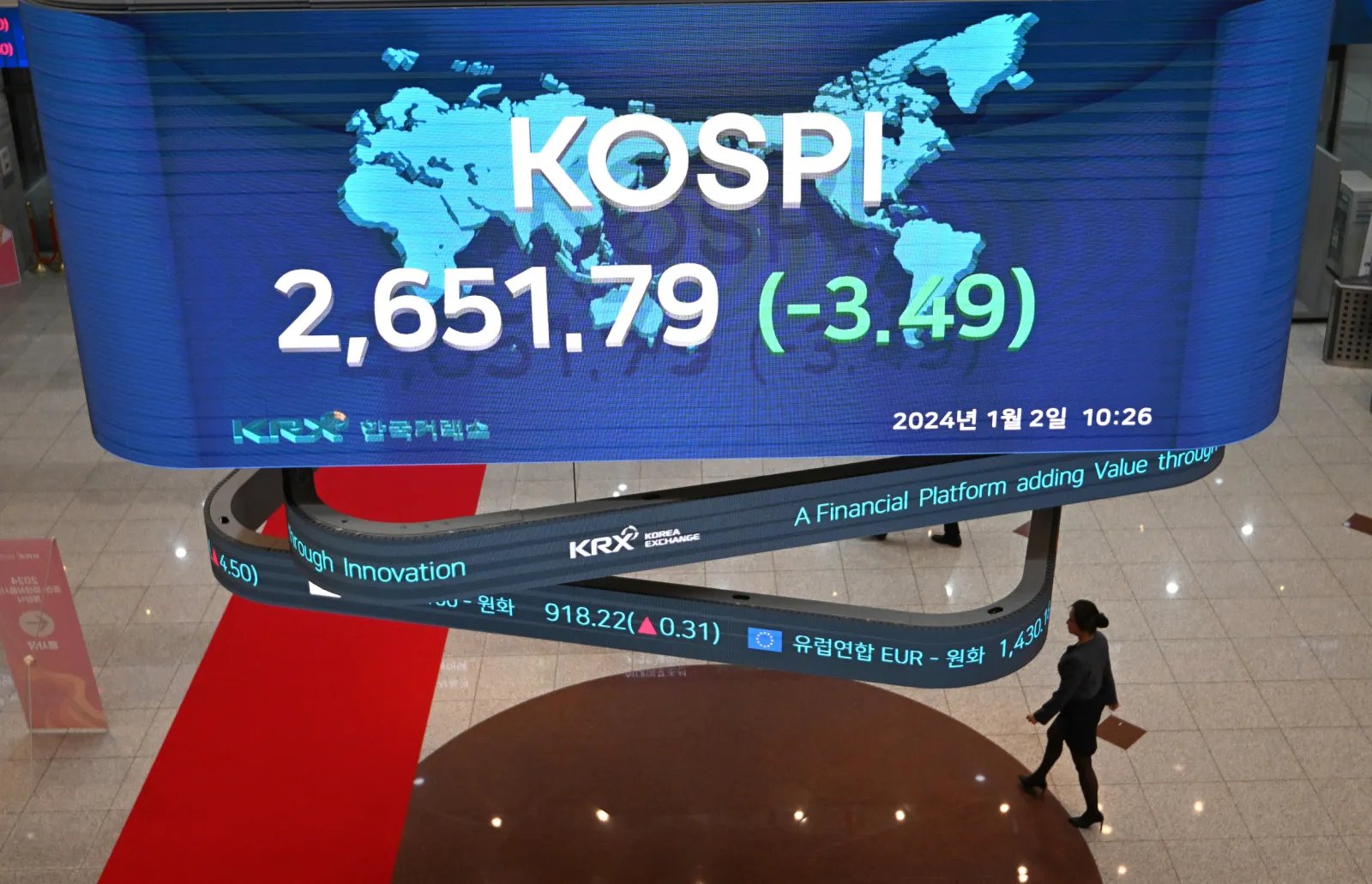
The benchmark closed at 2,847.92, its highest level since January, after Lee's economic advisers outlined plans to scrap capital-gains taxes on stock holdings under 100 million won ($72,000) and extend daily trading hours by two hours to match Tokyo's session.
The package, unveiled at an emergency Blue House meeting, eliminates the 0.23 percent transaction tax in July and doubles the annual tax-free stock-trading allowance to 20 million won per person. Foreigners will be allowed to open won-denominated accounts at local brokerages starting next month, removing a rule that currently forces overseas funds to convert currency through designated banks. The Finance Ministry estimates the changes will put 12 trillion won back into investors' pockets over the next eighteen months.
Samsung Electronics rose 4.1 percent to 85,600 won, adding $11 billion to its market capitalization in a single session. Battery maker LG Energy Solution surged 7.8 percent, while online brokerage NH Investment & Securities hit its 30 percent daily limit as trading volume tripled. Retail investors bought a net 1.9 trillion won of local shares, the largest single-day inflow since the central bank began compiling the data in 2003. The Korean won strengthened 0.6 percent against the dollar.
The government has not explained how it will replace the 8.7 trillion won in lost tax revenue. Looser rules could invite the same speculative bubbles that burst in 2022, when the Kospi later fell 30 percent. Both parties agree, however, to submit the bill within next week's legislative session.
Goldman Sachs raised its year-end Kospi target to 3,100 from 2,900, citing "regulatory momentum not seen since the 1997 IMF crisis overhaul."
The National Assembly must pass enabling legislation before the president's promised July start date, leaving a narrow eight-week window before lawmakers break for the election campaign. Government officials say they will publish detailed implementation guidelines within fifteen days, including thresholds for the tax exemption and safeguards against wash trading. Retail traders have already opened 412,000 new brokerage accounts since the announcement, according to the Korea Financial Investment Association, setting daily records for four straight sessions.
South Korean President Lee Jae-myung vowed Tuesday to dismantle regulations that "shackle" retail investors, triggering an immediate 2.3 percent surge in the Kospi index that added $28 billion to the combined value of listed companies. The benchmark closed at 2,847.92, its highest level since January, after Lee's economic advisers outlined plans to scrap capital-gains taxes on stock holdings under 100 million won ($72,000) and extend daily trading hours by two hours to match Tokyo's session.
The package, unveiled at an emergency Blue House meeting, eliminates the 0.23 percent transaction tax in July and doubles the annual tax-free stock-trading allowance to 20 million won per person. Foreigners will be allowed to open won-denominated accounts at local brokerages starting next month, removing a rule that currently forces overseas funds to convert currency through designated banks. The Finance Ministry estimates the changes will put 12 trillion won back into investors' pockets over the next eighteen months.
Samsung Electronics rose 4.1 percent to 85,600 won, adding $11 billion to its market capitalization in a single session. Battery maker LG Energy Solution surged 7.8 percent, while online brokerage NH Investment & Securities hit its 30 percent daily limit as trading volume tripled. Retail investors bought a net 1.9 trillion won of local shares, the largest single-day inflow since the central bank began compiling the data in 2003. The Korean won strengthened 0.6 percent against the dollar.
People Power Party floor leader Kweon Seong-dong dismissed the plan as "a populist handout" timed for April's parliamentary elections, noting that the government has not explained how it will replace the 8.7 trillion won in lost tax revenue. Democratic Party lawmaker Park Chan-dae warned that looser rules "invite the same speculative bubbles that burst in 2022," when the Kospi later fell 30 percent. Both parties agree, however, to submit the bill within next week's legislative session.
BlackRock's Asia Pacific chief Belinda Boa told clients the reforms "could rerate Korean equities by removing the 'Korea discount'" that has kept the market trading at 9.8 times forward earnings, compared with 13.4 times for MSCI Asia. Goldman Sachs raised its year-end Kospi target to 3,100 from 2,900, citing "regulatory momentum not seen since the 1997 IMF crisis overhaul." Nomura strategist Chetan Seth advised buying Samsung and SK hynix, arguing that foreign ownership of Korean shares at 32 percent remains well below the regional average of 42 percent.
The National Assembly must pass enabling legislation before the president's promised July start date, leaving a narrow eight-week window before lawmakers break for the election campaign. Government officials say they will publish detailed implementation guidelines within fifteen days, including thresholds for the tax exemption and safeguards against wash trading. Retail traders have already opened 412,000 new brokerage accounts since the announcement, according to the Korea Financial Investment Association, setting daily records for four straight sessions.
Highlighted text was flagged by the council. Tap to see feedback.