




The Escalation Nobody Expected
Three days ago, Iran's Supreme Leader Ayatollah Ali Khamenei was alive. Now he is dead. And the Middle East has fundamentally changed.
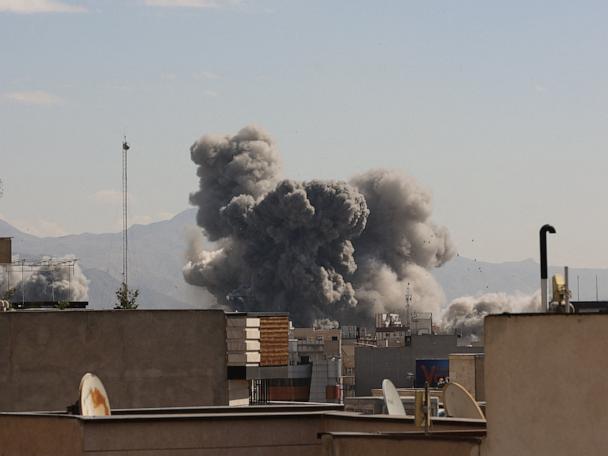
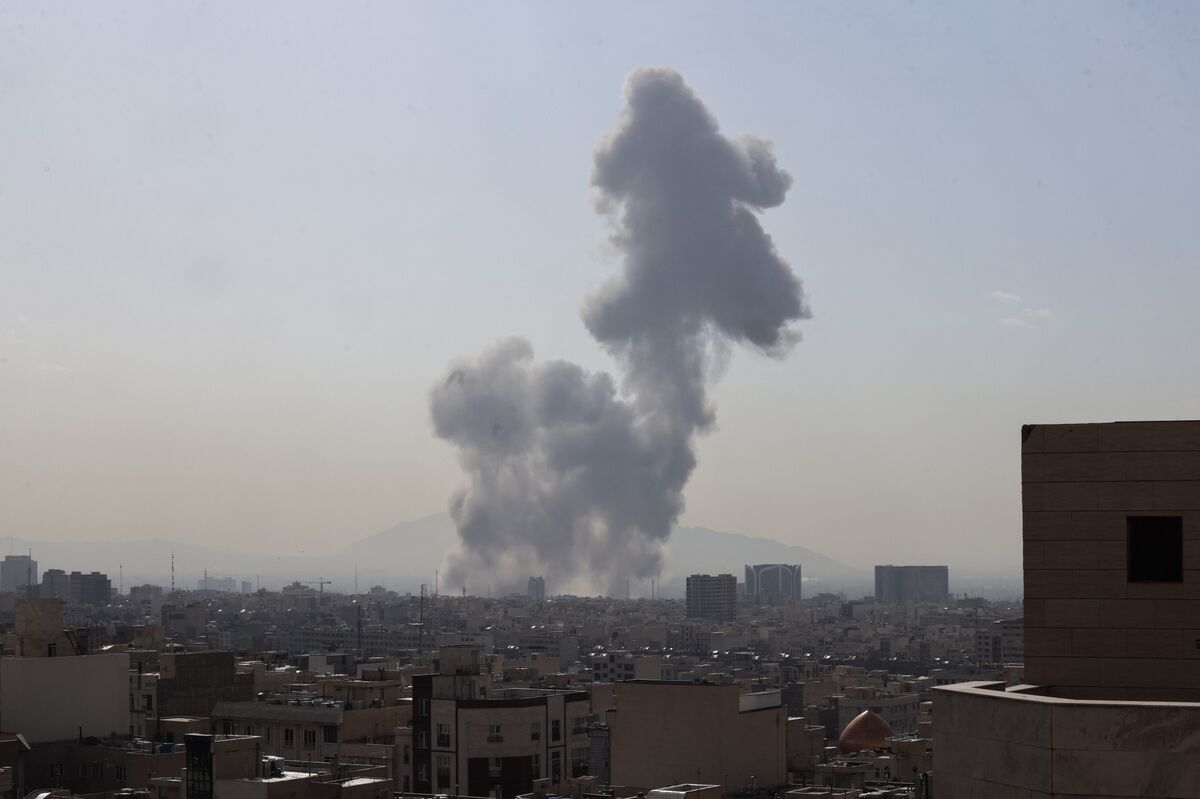
The U.S. and Israel launched coordinated strikes on Iran over the weekend, killing Khamenei along with senior Iranian officials and degrading the country's military infrastructure as part of "Operation Epic Fury," according to Israeli officials. Iran retaliated with drone and missile strikes across the Gulf, reportedly hitting U.S. bases in multiple countries, including an apparent strike on the U.S. Embassy compound in Kuwait, according to NPR. Then Hezbollah, Iran's most powerful proxy militia, fired missiles into Israel from Lebanon. Israel responded with heavy airstrikes on Beirut and southern Lebanon. The conflict has expanded from a U.S.-Iran confrontation into a regional war spanning three countries.
This is no longer a bilateral clash. This is a widening conflict with direct American military involvement, confirmed casualties, and consequences rippling through global markets and American politics.
How We Got Here
The U.S. and Israel had been walking two parallel tracks: diplomacy and war. Trump envoys Jared Kushner and Steve Witkoff were negotiating with Iran in Geneva, offering a 10-year moratorium on uranium enrichment and free nuclear fuel for civilian use. But Iran rejected the final American proposal. According to Axios, Trump's team conveyed that military force would follow if Iran rejected the proposal.
The original strike was scheduled for Saturday, February 21, but was delayed. Bad weather played a role. Coordination with Israeli forces was another factor. The delay gave Khamenei one last chance to negotiate. He did not take it.
According to a senior Israeli official cited by Axios, the opening strike was designed to kill Khamenei and his sons, along with senior Iranian officials gathered for routine Saturday meetings. Israeli intelligence grew nervous that Khamenei would flee to an underground bunker. So the U.S. and Israel deliberately signaled there was no imminent strike, intending to allow him to feel safe above ground. Khamenei remained above ground and was killed in the strike, according to the same official.
The Regional Wildfire
Hezbollah's decision to enter the war marks a critical threshold. The group fired missiles from Lebanon into Israel on Sunday. Israeli Prime Minister Benjamin Netanyahu responded with strikes on senior Hezbollah operatives in the Beirut area and southern Lebanon. At least 31 people have been killed in Israeli strikes on Lebanon, with around 150 injured. A large number of Lebanese civilians are fleeing Beirut, as reported by sources.
Israeli officials had warned both privately and publicly that if Hezbollah opened a new front during a war with Iran, Israel would retaliate harshly. That threat is now being executed. Netanyahu said Israeli strikes on Iran will "only increase" in the coming days.
Lebanese Prime Minister Nawaf Salam, whose government has limited authority over Hezbollah, condemned the rocket fire as "reckless," warning it "endangers Lebanon's security and gives Israel excuses to continue attacking it." He vowed to take measures to stop the perpetrators and protect Lebanese people. But the damage is done. Lebanon, already fragile, is now a war zone.
The Human Cost
Three American service members have been killed in action. Five were wounded. Several others sustained injuries. Trump acknowledged on Sunday that more American casualties are "likely" before the conflict ends. He vowed revenge and called on Iranians to rise up against their government.
Twenty-seven percent of Americans support the strikes, according to a Reuters/Ipsos poll released Sunday. Forty-three percent disapprove. Twenty-nine percent said they were unsure. About half of respondents said Trump is too open to using military force, including one in four Republicans, according to the poll.
The Economic Shock
Oil prices surged the most in four years. Brent crude, the global benchmark, jumped 14 percent to more than $82 per barrel, the highest level since January 2025. Petroleum analyst Patrick De Haan of GasBuddy projects that gasoline prices, now averaging close to $3 per gallon, are headed to $3.10 to $3.15 within one to two weeks, and $3.20 to $3.25 within two to three weeks.
The Strait of Hormuz, which handles one-fourth of global seaborne oil trade, has become a chokepoint. Tankers and cargo ships are avoiding the waterway, according to open-source ship tracking data. Commercial shipping has been disrupted, with many vessels anchored at sea. Analysts say the avoidance appears driven by heightened tensions and precautionary decisions by operators and insurers rather than an Iranian blockade. Analysts estimate the avoidance could result in an effective loss of 8 to 10 million barrels per day of crude oil supply.
OPEC, Russia, and allied oil-producing nations agreed Sunday to boost output by 206,000 barrels per day, a larger-than-expected increase intended to help offset potential supply disruptions from Iran. But according to RBC Capital Markets analysts, OPEC+ producers are already nearly maxed out, with Saudi Arabia the only member with real flexibility. If Iranian or proxy attacks damage oil infrastructure in Saudi Arabia or other Gulf states, prices will spike further.
The Political Fracture
Sen. Tom Cotton predicted the strikes will have "overwhelming support" among GOP lawmakers, though some Republicans have joined Democrats in demanding congressional authorization.
Democrats are divided. Sen. Jeanne Shaheen (D-N.H.) called the strikes a "necessary deterrent," while progressive Reps. Alexandria Ocasio-Cortez (D-N.Y.) and Mark Pocan (D-Wis.) condemned them as unconstitutional. Most progressives oppose the intervention, comparing it to Iraq and Afghanistan. The largest contingent, including many in leadership, focuses their criticism on Trump not seeking congressional approval before launching combat operations.
Democratic primary candidates are seizing on the issue. In North Carolina, progressive House candidate Nida Allam is criticizing Rep. Valerie Foushee for receiving donations from defense contractors and support from an Anthropic-funded PAC. Allam criticizes Trump in a campaign ad for allegedly bombing a school in Iran and "starting another endless war abroad," citing reporting on the strike. She vows never to take money from defense contractors or the pro-Israel lobby. Foushee, meanwhile, also opposes the strikes and has called for War Powers Resolutions to stop them, but Allam is criticizing her for accepting donations from defense contractors and an Anthropic-funded PAC.
In Maine, Senate candidate Graham Platner, a Marine Corps veteran running against Gov. Janet Mills for the Democratic nomination to challenge Sen. Susan Collins, organized an "emergency protest" against the war and called for a new War Powers Act to constrain presidential power to wage war unilaterally. Rep. Seth Moulton of Massachusetts, another Marine Corps veteran running to primary Sen. Ed Markey, sent a campaign email comparing the Iran operation to the Iraq War, calling it "another war built on lies."
What Happens Next
Trump said Sunday that Iran's new political leadership has agreed to talks, but he did not specify when talks would occur or whether the U.S. would pause strikes during negotiations.
Israeli officials say there is no reason for a ground invasion of Lebanon at this moment. But there is little talk of peace or negotiations anywhere in the region. The conflict is settling into a pattern of tit-for-tat airstrikes with no clear off-ramp.
Pope Leo XIV condemned the "spiral of violence," warning it risks becoming "an unbridgeable chasm." He called for "reasonable, sincere, and responsible dialogue" rather than "mutual threats" and weapons that "sow destruction, suffering, and death."
But dialogue requires both sides willing to talk. Right now, both are still fighting. The State Department has urged Americans worldwide, especially in the Middle East, to exercise increased caution. Israel closed all border crossings into Gaza as part of "security adjustments." Oil traders are pricing in the risk of a prolonged conflict, though analysts caution the outlook remains highly uncertain. For millions of Americans who depend on stable energy prices, the next weeks will test whether this regional war stays contained or expands further.