




The vote and scope
The Senate passed the 21st Century ROAD to Housing Act on Thursday with an 89-10 vote, marking the largest housing legislation in decades. The bill targets institutional investors while easing construction regulations to boost housing supply and lower costs. Ten senators voted against it: Democrats Brian Schatz of Hawaii and Republicans Ted Budd of North Carolina, Ted Cruz of Texas, Ron Johnson of Wisconsin, Mike Lee of Utah, Rand Paul of Kentucky, Rick Scott of Florida, Thom Tillis of North Carolina, Tommy Tuberville of Alabama, and Todd Young of Indiana.
Senators Elizabeth Warren of Massachusetts and Tim Scott of South Carolina sponsored the 303-page bill. Warren told NPR that the legislation succeeds because it blends priorities across party lines. "It's Democrats. It's Republicans. It's pieces they built out together," she said. "That is the strength of this bill." Scott framed the measure around homeownership access, saying "It's not a Republican issue or a Democrat Issue. It's an issue about helping moms like the one who raised me, the amazing woman that she was, become homeowners."
The investor ban and build-to-rent dispute
The bill prohibits any investor owning at least 350 single-family homes from purchasing additional ones. Investors can buy homes needing serious renovation to meet code or construct new build-to-rent housing, but must sell those homes after seven years, with renters getting first right to purchase. Build-to-rent currently represents about 7% of new single-family construction.
Warren defended the investor restrictions as essential to housing affordability. "We put this bill together with the deep-seated belief that it is families who should live in homes, and that's what homes are for," she said. "They're not there simply as investment vehicles for Wall Street private equity."
The seven-year sell requirement drew criticism from industry groups and Senator Schatz. An open letter from 79 industry groups, including the Institute of Real Estate Management, warned the provision "would effectively eliminate the production of build-to-rent housing." Ken Wingert, chief advocacy officer for the National Association of Home Builders, noted that President Trump's January executive order limiting investor purchases included a build-to-rent exemption. "Any housing bill that makes it to his desk should do the same," Wingert told NPR.
Schatz called the provision "a very bizarre thing" and "positively Soviet."
Not all industry voices opposed the measure. Shannon McGahn, chief advocacy officer for the National Association of Realtors, said the group supports the bill and shares its goal of expanding homeownership access.
Supply-side provisions and cost reductions
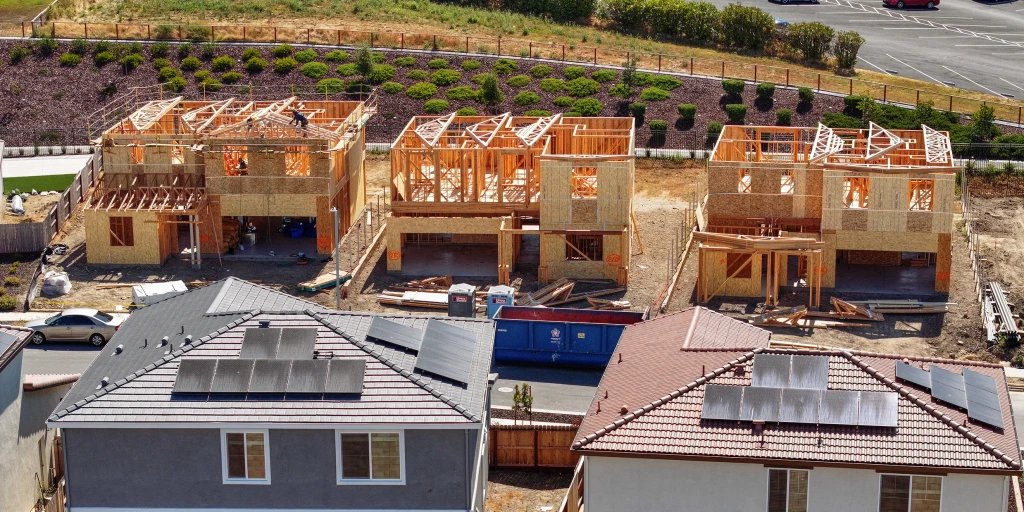
The typical home sells for around $400,000, well above what the average family can afford. Research estimates a shortage of 4 million housing units between available supply and demand.
One section removes the requirement that manufactured homes have a permanent chassis, a steel frame that allows transportation. Housing experts estimate this change could save builders $5,000 to $10,000 per unit. Manufactured housing costs nearly half the price per square foot compared to on-site construction. At least nine states have already relaxed zoning restrictions on factory-built homes to address affordability.
The bill streamlines environmental reviews for homes built between existing structures and creates a grant program for communities to develop pre-approved housing designs, reducing approval delays. It also expands the low-income housing tax credit program, which provides credits to developers who set aside units for low-income families. A provision increases the Public Welfare Investment cap for banks from 15% to 20% of risk-adjusted capital, potentially unlocking billions in additional investment for affordable housing construction. Sarah Brundage, president and CEO of the National Association of Affordable Housing Lenders, called the PWI increase "the most impactful part of this bill when it comes to housing supply."
Opposition and criticism
Some conservatives argue the bill perpetuates failed federal housing policy. Norbert Michel, vice president and director of the Cato Institute's Center for Monetary and Financial Alternatives, said the measure continues ineffective approaches. "Anybody who doesn't like where we are in housing policy right now shouldn't really like this bill, because it's just a continuation of all the crap they've been doing," he said. The Wall Street Journal's editorial board described the bill as "pork-filled" and "a blueprint for a bigger Washington."
Research on investor impact remains mixed. The Urban Institute found large investors owning at least 1,000 homes across three markets control just 3% of single-family rentals nationwide. Freddie Mac determined institutional investors play a small role in price increases compared to primary drivers like limited construction and migration to high-cost cities.
Uncertain House path
The House approved its own housing version last month 390-9, but the Senate substituted its own measure, forcing the lower chamber to reconsider. House Speaker Mike Johnson told Republican leaders at their retreat that Trump wants the SAVE America Act, a voter ID and proof-of-citizenship bill, to be the priority. A White House spokesman denied reports that Trump said "no one gives a bleep about housing," saying the president "has been laser-focused on making housing more affordable."
House Majority Leader Steve Scalise expressed hope the chambers could "find a common ground to make housing more affordable for families." Rep. Mike Flood, co-lead of the House version, told Fox News the Senate bill has "outstanding concerns," particularly regarding build-to-rent provisions and removed bipartisan House language that would have reduced construction barriers. "I think a conference may be the most viable path forward," Flood said.
Senate Majority Leader John Thune said the White House will likely work with House counterparts to pass the bill. A CBS News poll found more than 8 in 10 Americans say buying a home is now harder than for earlier generations. Homebuyers need to earn 43% more than the average worker to afford a typical home, according to Federal Reserve data.