Oil prices rose 1% after renewed Iranian attacks on the United Arab Emirates, adding pressure to energy markets. Attacks targeted the UAE's Fujairah port and the Shah gas field, contributing to energy disruption. A fire at Abu Dhabi's Shah gas field was caused by a drone attack, according to a media office.
Kharg Island, a strategic terminal 15 miles off Iran's coast, handles about 90% of the country's crude oil exports. Iran has exported 1.7 million barrels per day of crude oil so far this year, with 1.55 million barrels per day shipped via Kharg, according to a Reuters analysis of Kpler data.
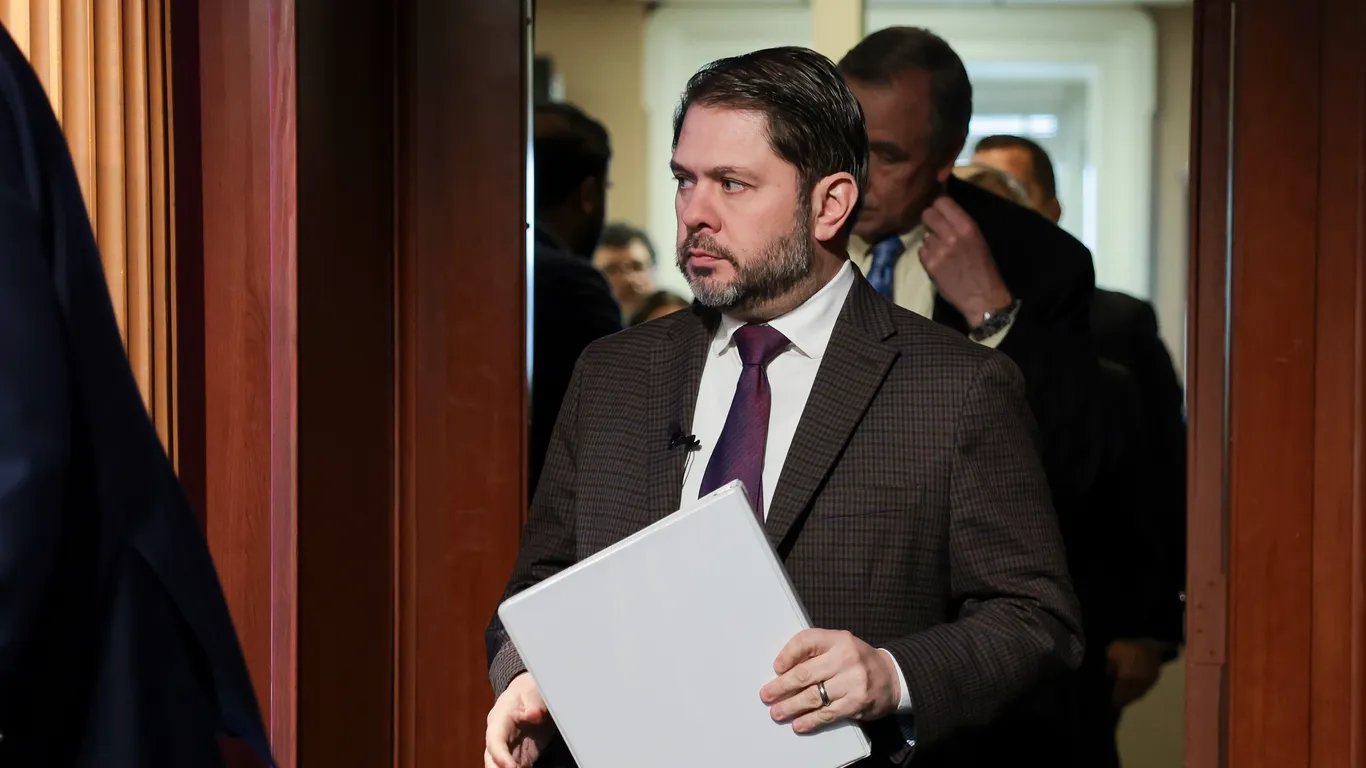
Sen. Ruben Gallego (D-Ariz.) is pressing the Energy Department for details on plans to provide oil from the Strategic Petroleum Reserve as pump prices rise. Gallego's letter to Energy Secretary Chris Wright seeks information "on how your Department plans to relieve Arizona's exceptionally high gas prices through releases from the Strategic Petroleum Reserve." This is part of a wider planned release of 400 million barrels from various member governments of the International Energy Agency.
DOE spokesman Ben Dietderich said that the reserve "exists to stabilize oil markets during supply disruptions—not to offset a president's anti-American energy policies." Trump told reporters Friday that U.S. gasoline prices "are going to come tumbling down" when the conflict is ended.
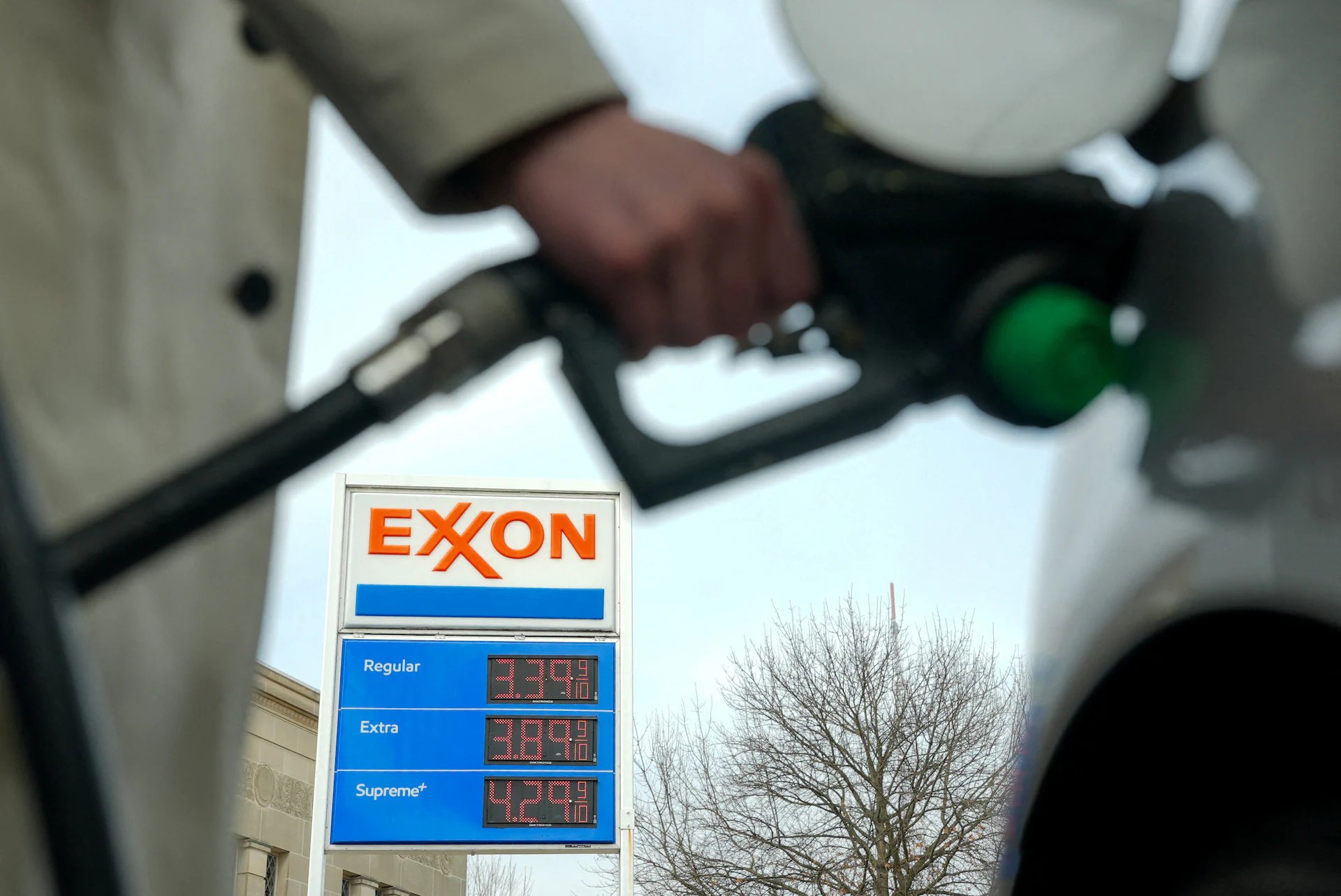
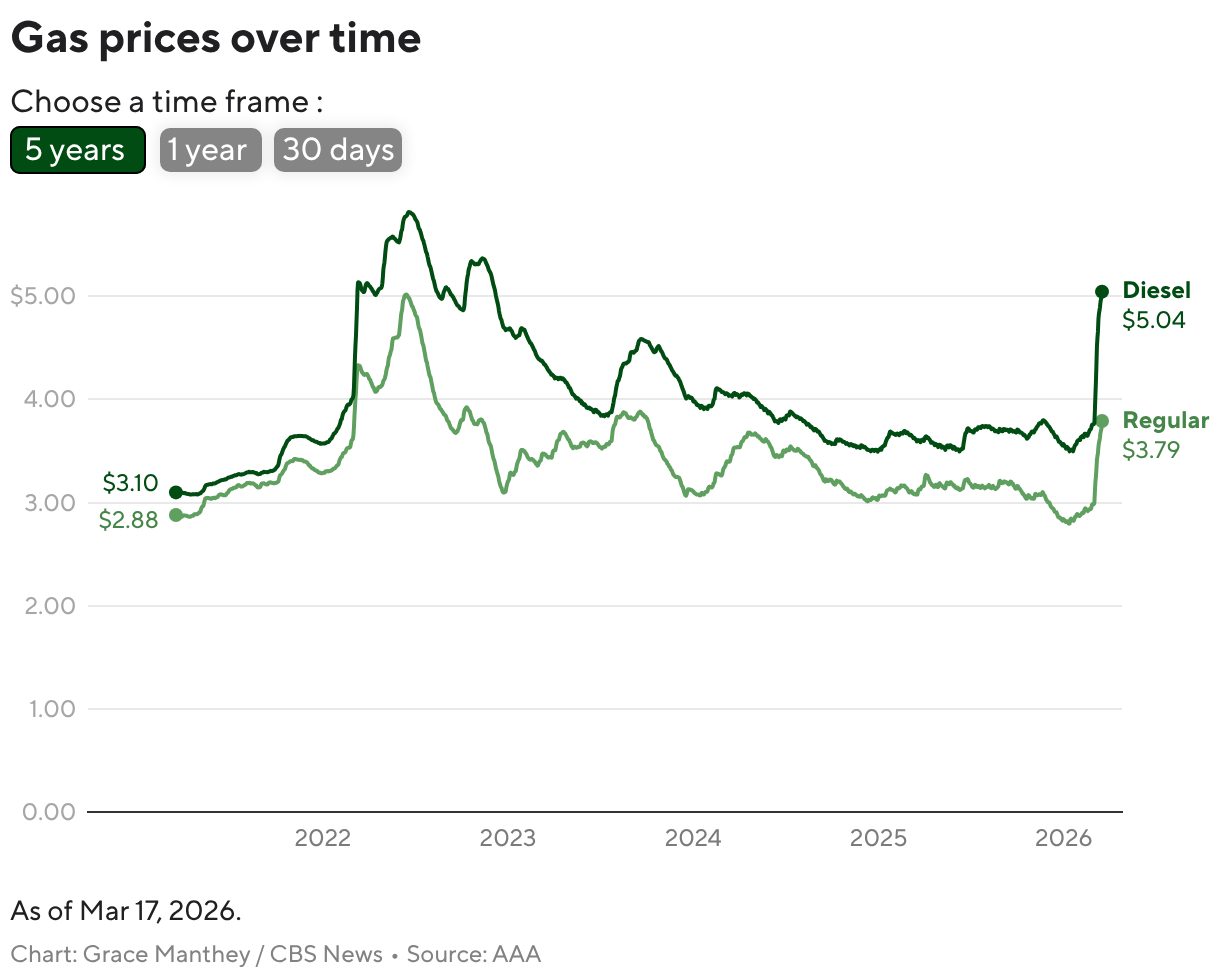
The average national gas price in the U.S. rose to $3.79 a gallon on Tuesday, up from $2.92 a month ago, according to AAA. A gallon of diesel costs more than $5, the highest level since late 2022. "If the price of oil goes up, the price of everything goes up," said Ernest Moniz, an energy researcher at MIT and former U.S. Secretary of Energy. Rising oil prices are also boosting the cost of filling planes with jet fuel, leading airlines to lift their fares. Average domestic airfares for travelers booking flights later in March have climbed by between 15% and 124%, according to a Deutsche Bank analysis. Tirupur, a major hub for undergarment manufacturing with an annual turnover of around Rs 10,000 crore, depends heavily on elastic as a key accessory, and will see prices rise 25%.
Compromising Iran's oil infrastructure at Kharg would hurt the broader global energy market. The Trump administration is finalizing an exchange that will more than replace the 172 million barrels that will be released beginning this week, according to DOE spokesman Ben Dietderich.
Oil prices rose 1% after renewed Iranian attacks on the United Arab Emirates, adding pressure to energy markets. Attacks targeted the UAE's Fujairah port and the Shah gas field, contributing to energy disruption. A fire at Abu Dhabi's Shah gas field was caused by a drone attack, according to a media office. Dubai airport resumed some flights after a drone attack.
Kharg Island, a strategic terminal 15 miles off Iran's coast, handles about 90% of the country's crude oil exports. Iran has exported 1.7 million barrels per day of crude oil so far this year, with 1.55 million barrels per day shipped via Kharg, according to a Reuters analysis of Kpler data. President Trump told reporters on Monday that he is considering further strikes to Kharg Island following U.S. attacks this weekend.
Sen. Ruben Gallego (D-Ariz.) is pressing the Energy Department for details on plans to provide oil from the Strategic Petroleum Reserve as pump prices rise. Gallego's letter to Energy Secretary Chris Wright seeks information "on how your Department plans to relieve Arizona's exceptionally high gas prices through releases from the Strategic Petroleum Reserve." The Energy Department plans a phased distribution of 172 million barrels of crude from the nation's strategic oil reserves. This is part of a wider planned release of 400 million barrels from various member governments of the International Energy Agency.
DOE spokesman Ben Dietderich said that the reserve "exists to stabilize oil markets during supply disruptions—not to offset a president's anti-American energy policies." Trump administration officials are seeking to tamp down public concern about gas prices, which per AAA data have risen over 70 cents per gallon on average since the strikes on Iran began. Trump told reporters Friday that U.S. gasoline prices "are going to come tumbling down" when the conflict is ended.
The average national gas price in the U.S. rose to $3.79 a gallon on Tuesday, up from $2.92 a month ago, according to AAA. A gallon of diesel costs more than $5, the highest level since late 2022. "If the price of oil goes up, the price of everything goes up," said Ernest Moniz, an energy researcher at MIT and former U.S. Secretary of Energy. Rising oil prices are also boosting the cost of filling planes with jet fuel, leading airlines to lift their fares. Average domestic airfares for travelers booking flights later in March have climbed by between 15% and 124%, according to a Deutsche Bank analysis. Tirupur, a major hub for undergarment manufacturing with an annual turnover of around Rs 10,000 crore, depends heavily on elastic as a key accessory, and will see prices rise 25%.
Compromising Iran's oil infrastructure at Kharg would hurt the broader global energy market. President Trump is imploring allies to help the U.S. open the Strait of Hormuz, but they have largely rebuffed his attempts. The Trump administration is finalizing an exchange that will more than replace the 172 million barrels that will be released beginning this week, according to DOE spokesman Ben Dietderich.
Highlighted text was flagged by the council. Tap to see feedback.