




The strike and immediate aftermath
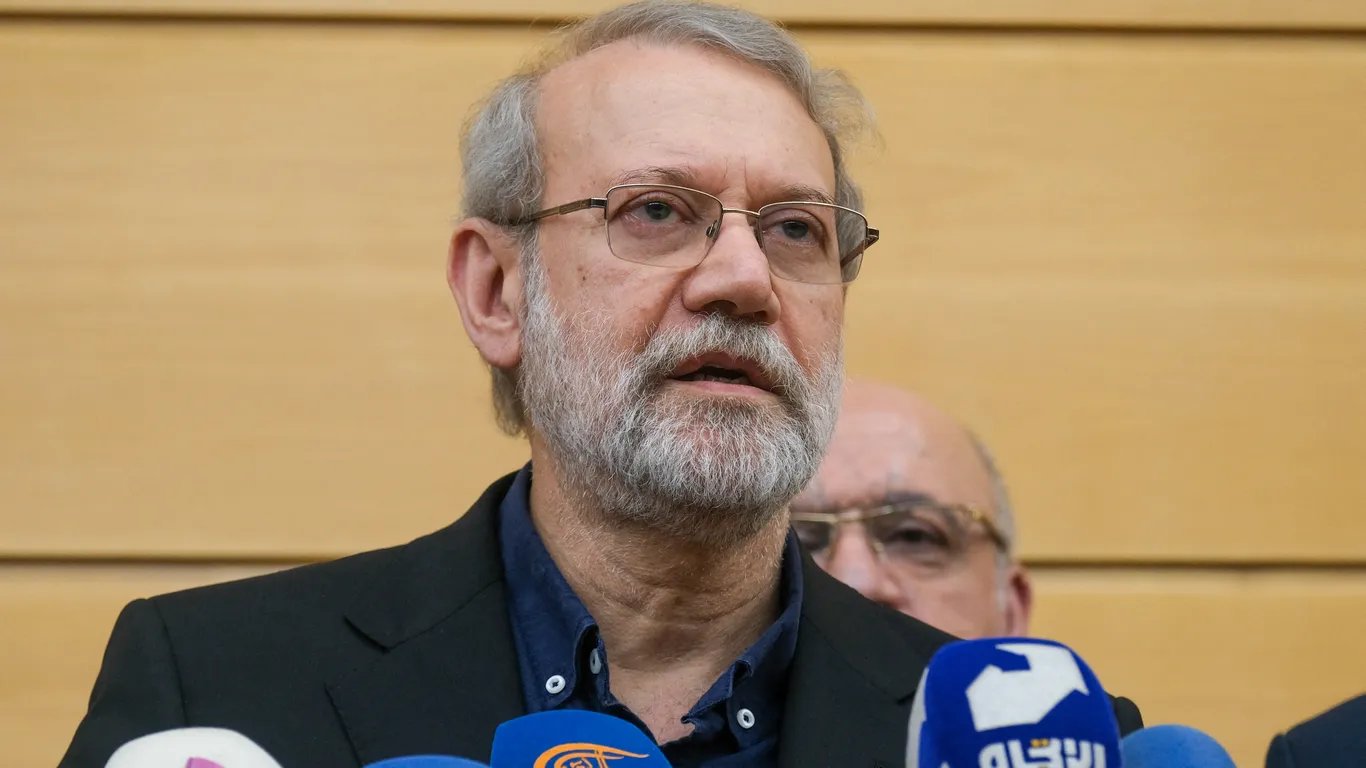
Israeli Defense Minister Israel Katz announced on Tuesday that his forces had eliminated Ali Larijani, Iran's national security chief, and Gholamreza Soleimani, commander of the Basij paramilitary force, in overnight airstrikes near Tehran. The Israel Defense Forces described the operation as a "precise strike" that killed Larijani, who consolidated power as the de facto leader of Iran following Supreme Leader Ali Khamenei's death.
Iranian state media confirmed both deaths hours later. The confirmation came after Larijani's social media accounts initially posted an undated, handwritten message about a naval commemoration before officials acknowledged the killings.
Larijani's role in Iran's wartime leadership
Larijani was appointed secretary of Iran's Supreme National Security Council by President Massoud Pezeshkian last August. After Khamenei's assassination, Larijani became the most powerful figure running Iran's war effort, even as Khamenei's son Mojtaba was chosen as successor. Israeli officials noted that Mojtaba has not appeared in public since the war began, reportedly injured in the strike that killed his father.
Before the conflict, Khamenei had tasked Larijani with developing contingency plans to ensure the Islamic Republic's survival if its leadership was decapitated. Larijani was a former Islamic Revolutionary Guard Corps commander who had previously served as head of Iran's state broadcaster for 10 years and as the country's chief nuclear negotiator. He served as Speaker of Iran's parliament for 12 years, from 2008 to 2020.
Strategic significance and regional influence
Larijani was key to Iran's reach in the Gulf region, playing a major role in bringing Iran and Gulf Cooperation Council states closer after decades of mutual suspicion. His death removes a central figure in Iran's diplomatic and security architecture at a critical moment.
An Israeli official characterized Larijani as "the most powerful figure running Iran" and described his elimination as a continuation of efforts to dismantle the regime's leadership structure. A second Israeli official noted that Larijani's influence had been waning since Mojtaba Khamenei's selection as supreme leader, and that Larijani had recently lobbied for other candidates and pushed for peace talks with the United States.
Internal power struggle and Soleimani's role
Soleimani, the Basij commander, controlled Iran's central repression apparatus. An Israeli official said his killing was aimed at enabling a popular uprising by removing the figure responsible for crushing protests. The Basij, a volunteer militia with an estimated one million members, led the main repression operations during demonstrations that intensified in recent months.
Larijani is believed to have overseen an unprecedented crackdown on protests that swept Iran in December and January. Human rights activists report that at least 6,508 protesters were killed and 53,000 arrested during that period. The Israeli military released video footage of airstrikes targeting Basij checkpoints across Tehran.
Regime fragmentation and competing factions
Israeli officials described an internal split within Iran's leadership. One faction, led by Larijani, had recently pushed to initiate peace talks with the United States. The opposing camp, led by Mojtaba Khamenei supporters including parliament speaker Mohammad Bagher Ghalibaf and Islamic Revolutionary Guard Corps commander Ahmed Vahidi, advocated continuing the war.
Prime Minister Benjamin Netanyahu said the strikes aim to destabilize the Iranian regime. "Our hope is it will give the Iranian people an opportunity to remove it. This won't happen all at once, and it won't be easy. But if we persist, we will give them a chance to take their fate into their own hands," Netanyahu stated.
Immediate retaliation and regional impact
Iran responded to the strikes with retaliatory missile and drone attacks on Tuesday. Israel reported that Iran used cluster munitions, which explode mid-air and scatter bomblets indiscriminately across wide areas. Sirens sounded across Israel after Iranian forces launched multiple missile barrages, though Israel's emergency services reported no casualties.
In the United Arab Emirates, debris from an intercepted Iranian missile killed a Pakistani national in Abu Dhabi's Bani Yas area. Oil loading at the port of Fujairah was partly halted after a third drone attack in four days.